



Introduction
Concrete foundation nails, also known as powder-actuated fasteners, represent a critical fastening solution in the construction industry, specifically for securing materials to concrete, steel, and masonry substrates. Unlike traditional drilled and wedged anchors, these nails utilize explosive force to drive a hardened steel nail directly into the base material, providing a rapid and robust connection. Their technical position within the construction chain is as a direct replacement for expansion anchors and lag bolts in applications where speed and efficiency are paramount, such as attaching sill plates, furring strips, electrical conduit, and HVAC ductwork to concrete foundations. Core performance characteristics revolve around pull-out resistance, shear strength, and embedment depth, all dictated by nail diameter, length, and the specific powder load utilized. The effectiveness of foundation nails is heavily reliant on proper application techniques and adherence to manufacturer specifications to avoid issues like insufficient penetration or substrate fracturing.
Material Science & Manufacturing
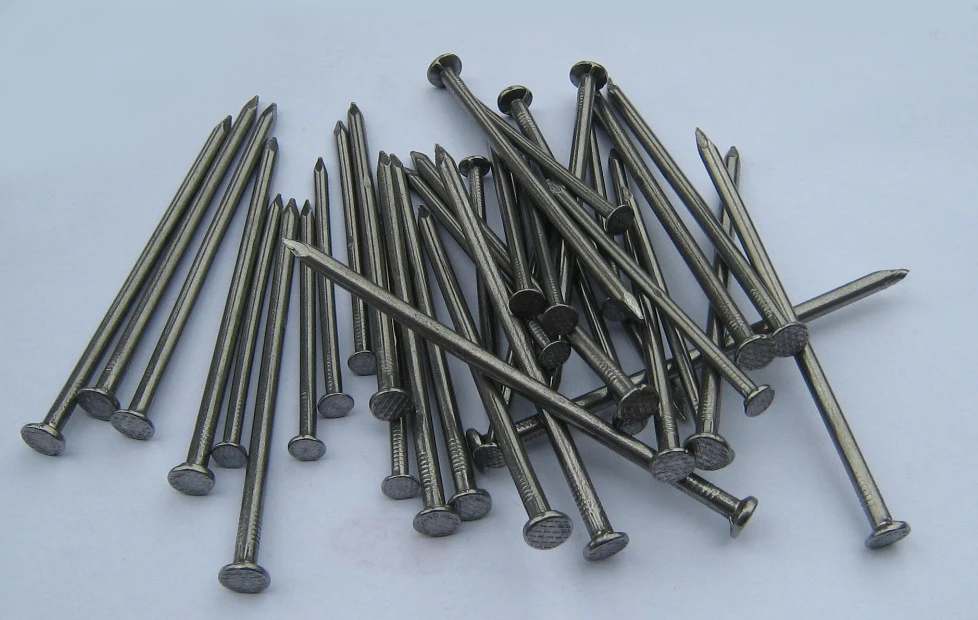
The composition of concrete foundation nails is primarily high-carbon steel, typically AISI 1045 or equivalent, chosen for its high tensile strength and ductility. The steel undergoes a heat-treating process, including carburizing and hardening, to achieve a Rockwell C hardness of 55-60, enabling penetration into concrete without excessive deformation. The nail’s surface is often coated with a corrosion-resistant finish, such as zinc plating or a polymer coating, to mitigate rust and extend service life, particularly in exposed environments. The propellant used is a controlled explosive, typically based on nitrocellulose, formulated to deliver a consistent driving force. Manufacturing involves cold heading of the steel wire to form the nail shape, followed by hardening, tempering, coating, and quality control checks. Precise control of the nail’s geometry—shank diameter, point angle, and head dimensions—is crucial for optimal performance. The powder loads are manufactured under strict quality control, ensuring consistent burning rates and gas pressure generation. Powder formulations are adjusted to suit various nail sizes and substrate densities. Improper powder load selection, based on material type, is a leading cause of installation failures.
Performance & Engineering
The performance of concrete foundation nails is fundamentally governed by force analysis. Pull-out resistance is determined by the nail’s shank diameter, embedment depth, and the compressive strength of the concrete. Shear strength, critical for resisting lateral loads, depends on the nail’s length, diameter, and the steel's yield strength. Engineering calculations consider a safety factor, typically between 4:1 and 6:1, depending on the application and local building codes. Environmental resistance is a key concern. Prolonged exposure to moisture and chlorides can lead to corrosion of the nail steel and degradation of the coating, reducing load-bearing capacity. Compliance requirements are stringent, dictated by organizations like ICC-ES (International Code Council – Evaluation Services). ICC-ES reports provide evidence that the nail system meets specific performance criteria and is suitable for use in various applications. Functional implementation demands precise alignment of the fastening tool perpendicular to the substrate. Angled impacts reduce pull-out resistance and increase the risk of nail bending. The operator must also ensure sufficient material thickness to accommodate the full nail embedment depth, preventing breakthrough. Proper selection of powder load based on concrete strength and material being fastened is crucial.
Technical Specifications
| Nail Length (inches) | Nail Diameter (inches) | Minimum Pull-Out Resistance (lbs) | Recommended Powder Load Strength |
|---|---|---|---|
| 1.5 | 0.140 | 800 | .065 |
| 2.0 | 0.165 | 1200 | .089 |
| 2.5 | 0.190 | 1600 | .110 |
| 3.0 | 0.210 | 2000 | .130 |
| 3.5 | 0.230 | 2400 | .155 |
| 4.0 | 0.250 | 2800 | .180 |
Failure Mode & Maintenance
Concrete foundation nails are susceptible to several failure modes. Fatigue cracking can occur under cyclic loading, particularly in applications subjected to vibrations or repeated stress. This typically initiates at the nail head or shank surface. Delamination of the concrete around the nail can reduce pull-out resistance, especially in lower-strength concrete. Degradation of the protective coating exposes the steel to corrosion, leading to a reduction in cross-sectional area and diminished strength. Oxidation of the steel, even under the coating, weakens the nail over time. Incorrect powder load selection is a major contributor to failure – too weak, and the nail won’t achieve sufficient embedment; too strong, and it can fracture the concrete. Maintenance is generally minimal, but regular visual inspections are recommended, particularly in corrosive environments. Look for signs of rust, coating damage, or concrete cracking around the nail. If significant corrosion is detected, the nail should be replaced. Periodic torque checks on connected components can help identify potential loosening due to nail pull-out or concrete movement. Avoid applying excessive impact loads to nails, as this can accelerate fatigue failure.
Industry FAQ
Q: What is the impact of concrete compressive strength on nail holding power?
A: Higher concrete compressive strength directly correlates to increased pull-out resistance. Nails rely on friction and mechanical interlock with the concrete aggregate. Stronger concrete provides a more robust gripping surface. Manufacturers provide load tables specifying allowable loads for different concrete strengths. It is imperative to select the appropriate nail size and powder load for the specific concrete strength encountered on the job site.
Q: Can foundation nails be used in cracked concrete?
A: Utilizing foundation nails in severely cracked concrete is not recommended. Cracks compromise the concrete's integrity and reduce the available surface area for nail engagement, significantly lowering pull-out resistance. While nails can tolerate minor hairline cracks, extensive cracking necessitates alternative fastening methods, such as epoxy anchors or mechanical expansion anchors.
Q: What are the safety precautions when using powder-actuated tools?
A: Safety is paramount. Always wear appropriate personal protective equipment (PPE), including safety glasses, hearing protection, and a hard hat. Ensure the work area is clear of obstructions and personnel. Never point the tool at yourself or others. Follow the manufacturer's instructions precisely, especially regarding powder load selection and tool operation. Regularly inspect the tool for damage or malfunctions.
Q: What is the expected service life of a concrete foundation nail in a marine environment?
A: Service life in marine environments is significantly reduced due to chloride-induced corrosion. Standard zinc-plated nails may only last a few years before substantial corrosion occurs. Using stainless steel nails or nails with specialized marine-grade coatings is essential for extended service life. Regular inspections are crucial to detect and address corrosion before it compromises structural integrity.
Q: What is the difference between full-penetration and through-penetration nail installation?
A: Full-penetration installation involves driving the nail to its full embedment depth without breakthrough. This provides maximum pull-out resistance. Through-penetration installation, where the nail passes completely through the material, is acceptable only in specific applications outlined by the manufacturer, and often requires a washer to distribute the load and prevent damage to the underlying material. Improper through-penetration can significantly reduce holding power.
Conclusion
Concrete foundation nails offer a rapid and efficient fastening solution for various construction applications, particularly where speed and ease of installation are crucial. However, their performance is heavily dependent on careful material selection, precise installation techniques, and adherence to relevant industry standards. Understanding the underlying material science – the properties of the high-carbon steel and explosive propellants – is fundamental to ensuring reliable and long-lasting connections.
Future advancements in concrete foundation nail technology are likely to focus on enhanced corrosion resistance through improved coatings, the development of more environmentally friendly propellant formulations, and the integration of smart sensor technology for real-time monitoring of nail performance. Ultimately, the successful implementation of this fastening system requires a holistic approach, encompassing proper engineering design, skilled installation, and diligent inspection to mitigate potential failure modes and maximize structural integrity.