



Introduction
Concrete Nail 3 represents a critical fastening solution within the construction and infrastructure industries. This hardened steel nail, specifically engineered for concrete and masonry applications, provides a secure mechanical interlock without reliance on chemical adhesives. Its position in the industry chain is as a direct replacement for expansion bolts and concrete screws in certain applications, offering a faster installation time and reduced skill requirement. Core performance characteristics center around shear strength, tensile strength under pull-out loads, and resistance to fatigue under cyclical loading. The design minimizes concrete spalling and provides a robust, long-term connection, addressing a key pain point in concrete fastening – the potential for loosening or failure over time due to thermal expansion and contraction, vibration, or corrosion.
Material Science & Manufacturing
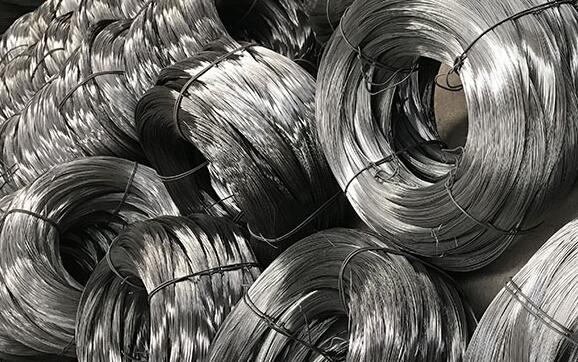
Concrete Nail 3 is typically manufactured from high-carbon steel (SAE 1045 or equivalent) offering a balance of hardness and toughness. The steel undergoes a heat treatment process, including hardening and tempering, to achieve a Rockwell hardness of 50-55 HRC. This hardness is crucial for penetration into concrete without significant deformation of the nail body. The manufacturing process begins with wire drawing, forming the nail shank. A heading process then forms the nail head, with precise control over head diameter and thickness to optimize load distribution. Surface treatment is paramount. Concrete Nail 3 generally receives a hot-dip galvanization coating, adhering to ASTM A153 standards, providing a zinc layer to protect against corrosion. Alternative coatings, like epoxy powder coating, are employed for enhanced corrosion resistance in aggressive environments. Critical parameters during manufacturing include precise wire diameter control (+/- 0.02mm), consistent head forging pressure (+/- 5%), and galvanization coating thickness (+/- 2μm) to ensure dimensional accuracy and performance consistency. Quality control uses eddy current testing for surface defects and tensile testing to verify mechanical properties. The steel's microstructure is characterized by a fine-grained martensitic matrix, contributing to its high strength and resistance to brittle fracture.
Performance & Engineering
The performance of Concrete Nail 3 is dictated by several engineering principles. Force analysis centers on the shear and tensile forces applied to the nail during service. The nail’s shank creates a compressive force on the concrete, generating friction that resists pull-out. The nail’s geometry – specifically the shank diameter, length, and head size – directly impacts its load-bearing capacity. Finite element analysis (FEA) is commonly used during design to optimize these parameters. Environmental resistance is a major consideration. Concrete Nail 3 must withstand temperature fluctuations, humidity, and exposure to corrosive agents (e.g., chlorides from de-icing salts). Galvanization provides corrosion protection, but in severely corrosive environments, supplemental coatings or stainless steel alloys are necessary. Compliance requirements are stringent. Concrete Nail 3 typically needs to meet ICC-ES AC318 acceptance criteria for concrete fasteners. This testing protocol assesses pull-out capacity, shear capacity, and durability under various loading conditions. The design considers concrete compressive strength (f'c), and nail spacing to prevent concrete cone failure, a critical failure mode. Installation torque is critical; over-torquing can damage the nail or the concrete, while under-torquing can lead to insufficient holding power. The nail’s surface finish influences friction coefficient, impacting pull-out resistance.
Technical Specifications
| Nail Diameter (mm) | Nail Length (mm) | Head Diameter (mm) | Minimum Pull-Out Strength (kN) |
|---|---|---|---|
| 4.0 | 50 | 10 | 4.5 |
| 5.0 | 75 | 12 | 7.0 |
| 6.0 | 100 | 15 | 10.0 |
| 8.0 | 150 | 18 | 15.0 |
| 10.0 | 200 | 22 | 22.0 |
| 12.0 | 250 | 25 | 30.0 |
Failure Mode & Maintenance
Concrete Nail 3 can experience several failure modes in practical applications. Fatigue cracking is common under cyclical loading, initiating at stress concentrations around the nail head or shank. Pull-out failure occurs when the tensile force exceeds the frictional resistance between the nail and the concrete. Shear failure happens when the shear force exceeds the nail's shear strength, leading to the nail shearing off within the concrete. Corrosion is a significant long-term threat, especially in chloride-rich environments. Corrosion weakens the nail material, reducing its strength and leading to premature failure. Concrete spalling around the nail head can also occur, decreasing the effective bearing area and contributing to pull-out failure. Maintenance involves periodic visual inspection for signs of corrosion or deformation. If corrosion is detected, the nail should be replaced. In high-stress applications, regular torque checks are recommended to ensure continued tightness. Preventive measures include using appropriately coated nails for the specific environment and ensuring proper installation techniques to avoid over-torquing or damage to the concrete. Failure analysis often involves microscopic examination of the fractured nail to identify the failure mechanism and determine the root cause.
Industry FAQ
Q: What is the primary advantage of Concrete Nail 3 over traditional expansion anchors?
A: The primary advantage lies in speed and simplicity of installation. Expansion anchors require drilling a precise hole and then expanding the anchor within the hole, which is time-consuming and requires skilled labor. Concrete Nail 3 can be directly driven into pre-drilled or pilot holes, significantly reducing installation time and labor costs. Furthermore, it minimizes the risk of concrete cracking that can occur with expansion anchors.
Q: How does the galvanization process affect the long-term performance of Concrete Nail 3?
A: Hot-dip galvanization provides a sacrificial layer of zinc that protects the underlying steel from corrosion. The zinc corrodes preferentially, preventing the steel from rusting. The thickness of the galvanization coating directly impacts the lifespan of the nail in corrosive environments. Regular inspection is still recommended, but galvanization substantially extends the service life compared to un-coated nails.
Q: What concrete compressive strength is Concrete Nail 3 suitable for?
A: Concrete Nail 3 is generally suitable for concrete compressive strengths ranging from 25 MPa to 40 MPa (3600 psi to 5800 psi). However, performance data should always be reviewed for the specific nail size and application. Using the nails in concrete with lower compressive strength may lead to reduced holding power and potential failure.
Q: What is the recommended nail spacing for optimal performance?
A: Recommended nail spacing depends on the load requirements and concrete strength. A general guideline is to maintain a minimum edge distance of 5 times the nail diameter and a minimum center-to-center spacing of 8 times the nail diameter. However, a qualified engineer should perform calculations to determine the appropriate spacing for specific applications, considering potential cone failure scenarios.
Q: What is the impact of hole diameter on the pull-out resistance of Concrete Nail 3?
A: The hole diameter must be carefully controlled. A hole that is too large will reduce the compressive force on the concrete, leading to lower pull-out resistance. A hole that is too small can damage the nail during installation, potentially reducing its strength. The recommended hole diameter is typically slightly smaller than the nail shank diameter, allowing for a tight interference fit.
Conclusion
Concrete Nail 3 represents a significant advancement in concrete fastening technology, offering a balance of strength, durability, and ease of installation. Its engineered design, robust material selection, and adherence to industry standards make it a reliable solution for a wide range of construction applications. Proper material selection, manufacturing control, and installation techniques are crucial to maximizing its performance and longevity.
Looking ahead, continued research into advanced coating technologies and nail geometries will further enhance the corrosion resistance and load-bearing capacity of Concrete Nail 3. The development of smart nails equipped with sensors for real-time load monitoring could also revolutionize structural health monitoring in concrete structures. The adoption of digital tools for installation torque control will contribute to improved quality control and long-term reliability.