




Introduction
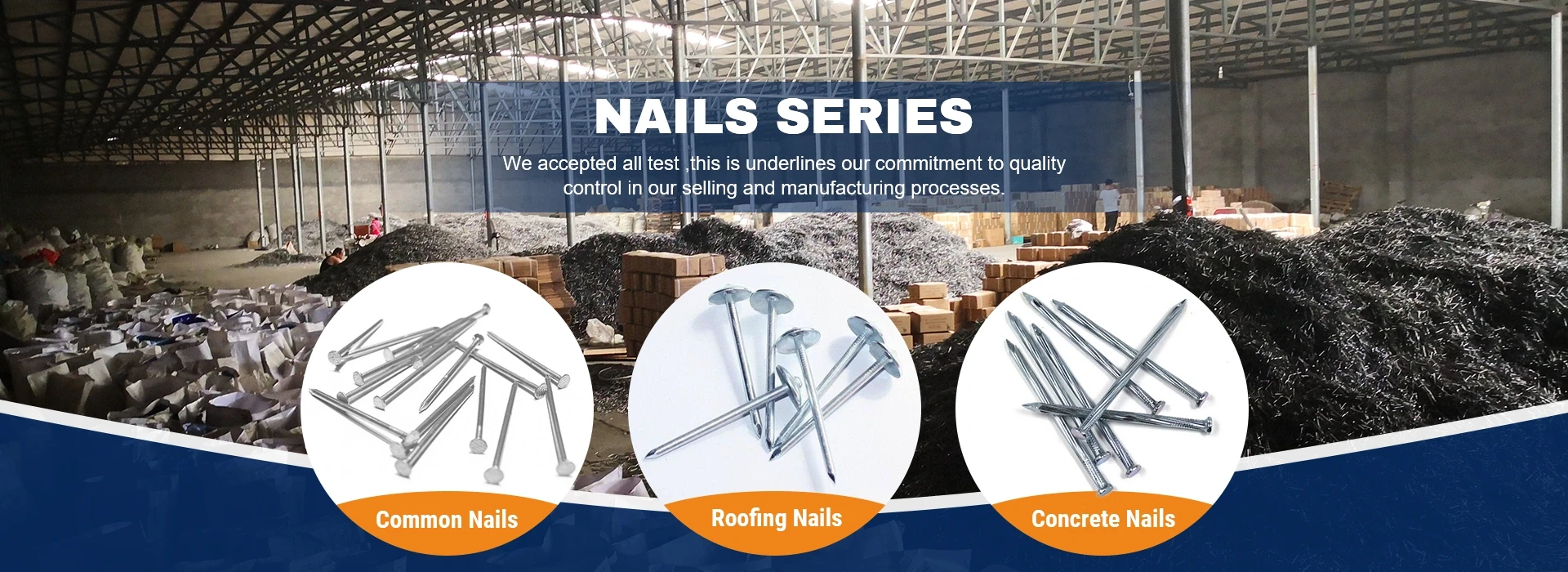
Concrete nails are specialized fasteners designed for direct fixation into concrete, brick, or other masonry materials. Unlike conventional nails driven into wood, concrete nails rely on substantial impact force and specialized metallurgy to create a mechanically interlocked and friction-based hold within the substrate. Their technical position within the construction industry chain falls between traditional powder-actuated fastening systems and drilled-and-anchored solutions, offering a balance between speed of installation and holding power. Core performance characteristics include shear strength, pull-out resistance, and resistance to deformation under sustained loads. Proper selection and installation are critical, as improper use can lead to fastener failure and structural compromise. The increasing demand for faster and more efficient construction methods has driven innovation in concrete nail design and materials, leading to specialized nail geometries and coatings optimized for specific applications. A key pain point in the industry revolves around inconsistent substrate quality and the difficulty in accurately predicting holding power in varying concrete compositions.
Material Science & Manufacturing
Concrete nail manufacturing typically begins with high-carbon steel wire, frequently AISI 1045 or equivalent, selected for its inherent tensile strength and ductility. The wire undergoes a cold heading process, where it’s forcibly deformed into the nail's characteristic shape – generally a hardened steel body with a fluted or ring-shanked design to enhance mechanical interlocking. Case hardening, involving carburization and subsequent quenching, is then applied to create a hard, wear-resistant outer layer while maintaining a tougher core. The case depth is a critical parameter, typically between 0.5mm and 1.5mm, determined by the intended application. Coatings are commonly applied to enhance corrosion resistance; zinc plating is standard, with options for epoxy or polymer coatings for more aggressive environments. The steel’s microstructure is crucial; a fine-grained martensitic structure is desired for optimal hardness and impact resistance. Manufacturing parameter control centers on precise control of the cold heading force, case hardening temperature and duration, and coating thickness. Deviation from these parameters can result in reduced hardness, increased brittleness, or diminished corrosion protection. Raw material quality is verified through chemical composition analysis and hardness testing. The fluting or ring-shank pattern is formed via a machining process, carefully controlled to ensure consistent geometry and maximize pull-out resistance.
Performance & Engineering
The performance of concrete nails is governed by a complex interplay of forces. Upon impact, the nail’s kinetic energy is transferred to the concrete, creating compressive stresses around the nail shaft. The fluted or ring-shanked design induces radial expansion, further increasing the compressive stress and mechanical interlock. Shear strength, the ability to resist forces parallel to the nail's axis, is primarily determined by the frictional resistance between the nail and the concrete, as well as the yield strength of the nail material. Pull-out resistance, or tensile capacity, depends on the combined effects of mechanical interlocking, friction, and the concrete’s compressive strength. Environmental resistance is critical; cyclic wetting and drying can induce corrosion, reducing the nail’s cross-sectional area and ultimately leading to failure. Temperature fluctuations can cause expansion and contraction, potentially loosening the nail’s grip. Compliance requirements vary by region, but generally adhere to standards established by organizations like the ICC-ES (International Code Council Evaluation Services). Engineering considerations include accurate load calculations, accounting for safety factors and dynamic loads. The nail’s penetration depth is a crucial parameter; insufficient penetration reduces holding power, while excessive penetration can weaken the concrete. Proper nail angle and alignment are also vital for optimal performance.
Technical Specifications
| Nail Diameter (mm) | Nail Length (mm) | Minimum Shear Strength (kN) | Minimum Pull-out Resistance (kN) |
|---|---|---|---|
| 3.5 | 50 | 2.5 | 1.8 |
| 3.5 | 75 | 3.8 | 2.7 |
| 4.2 | 50 | 4.0 | 3.0 |
| 4.2 | 75 | 5.5 | 4.2 |
| 5.0 | 50 | 6.0 | 4.5 |
| 5.0 | 75 | 8.0 | 6.0 |
Failure Mode & Maintenance
Concrete nail failure can manifest in several ways. Shear failure occurs when the force parallel to the nail exceeds its shear strength, resulting in a clean break or deformation. Pull-out failure happens when the nail is extracted from the concrete due to insufficient mechanical interlock or frictional resistance. Fatigue cracking can develop under cyclic loading, initiating at stress concentrations in the nail head or shank. Corrosion is a significant failure mode, particularly in humid or marine environments, leading to a reduction in the nail's cross-sectional area and diminished strength. Delamination of the concrete surrounding the nail can also contribute to failure, reducing the effective bearing area. Oxidation of the steel can also cause failure. Maintenance primarily focuses on preventative measures. Regularly inspect installations for signs of corrosion or deformation. For applications exposed to harsh environments, consider using nails with enhanced corrosion-resistant coatings. Avoid overloading the fasteners; adhere to specified load limits. If a nail shows signs of failure, it should be immediately replaced with a new nail of the same specifications. In cases of extensive corrosion, consider applying a corrosion inhibitor to the surrounding concrete. Careful selection of the appropriate nail length and diameter for the substrate and application is paramount to preventing premature failure.
Industry FAQ
Q: What is the impact of concrete compressive strength on the holding power of a concrete nail?
A: Higher concrete compressive strength generally translates to increased holding power. The concrete provides greater resistance to the nail’s penetration and expansion, enhancing both mechanical interlock and frictional resistance. However, very high-strength concrete can also be more brittle, potentially leading to cracking around the nail if the impact force is excessive. Selecting the appropriate nail size and impact energy for the specific concrete mix is essential.
Q: How does the nail’s surface coating affect its long-term performance?
A: The surface coating is critical for preventing corrosion. Zinc plating provides a basic level of protection, but epoxy or polymer coatings offer superior resistance to saltwater, chemicals, and abrasive environments. The coating thickness and uniformity are important parameters; thinner or uneven coatings can compromise corrosion protection.
Q: What are the key considerations when using concrete nails in cracked concrete?
A: Using concrete nails in cracked concrete significantly reduces their holding power. The cracks create pathways for the nail to loosen and potentially pull out. In such cases, consider using alternative fastening methods, such as drilled anchors or epoxy-based adhesives, specifically designed for cracked concrete. If concrete nails must be used, increase the nail density and reduce the applied load.
Q: What is the recommended installation angle for concrete nails?
A: A 90-degree (perpendicular) installation angle is generally recommended for maximizing holding power. Angled installations reduce the effective bearing area and can increase the risk of bending or shear failure. However, slight deviations from 90 degrees may be acceptable in certain applications, provided that adequate safety factors are applied.
Q: How do different fluting or ring-shank designs compare in terms of pull-out resistance?
A: Ring-shanked nails generally offer higher pull-out resistance compared to fluted nails, due to their more aggressive mechanical interlock with the concrete. The rings create a larger deformation zone and provide a greater resistance to linear displacement. However, ring-shanked nails may require higher driving forces and can be more prone to splitting the concrete in certain applications.
Conclusion
Concrete nails represent a valuable fastening solution for a wide range of construction applications, offering a balance of speed, convenience, and holding power. The performance of these fasteners is intrinsically linked to material properties, manufacturing precision, and proper installation techniques. Understanding the underlying engineering principles, including force analysis, failure modes, and environmental resistance, is crucial for ensuring structural integrity and long-term durability.
Future advancements in concrete nail technology are likely to focus on improved materials, enhanced corrosion protection, and optimized geometries for specific applications. The integration of smart sensing technologies to monitor nail performance and detect potential failures is also a promising area of development. Continued research and adherence to industry standards are essential for maximizing the reliability and safety of concrete nail fasteners.