



Introduction
The application of nails into concrete block represents a fundamental fastening technique within the construction industry, bridging the gap between lightweight materials and the structural integrity of masonry. While seemingly simple, the successful implementation relies on a complex interplay of material science, impact force dynamics, and a thorough understanding of concrete block composition. Unlike fastening into solid concrete, concrete blocks – typically composed of cement and aggregate – possess inherent porosity and lower density, necessitating specialized nail designs and installation methodologies. This guide provides a comprehensive technical overview of nails for concrete block, covering material properties, manufacturing processes, performance characteristics, failure modes, and relevant industry standards. A critical pain point for construction professionals is achieving reliable and durable fastening without causing block fracture or pull-through, a challenge directly addressed by understanding the nuanced mechanics involved. Incorrect nail selection or installation can lead to structural compromise, rework, and potential safety hazards, highlighting the importance of informed decision-making.
Material Science & Manufacturing
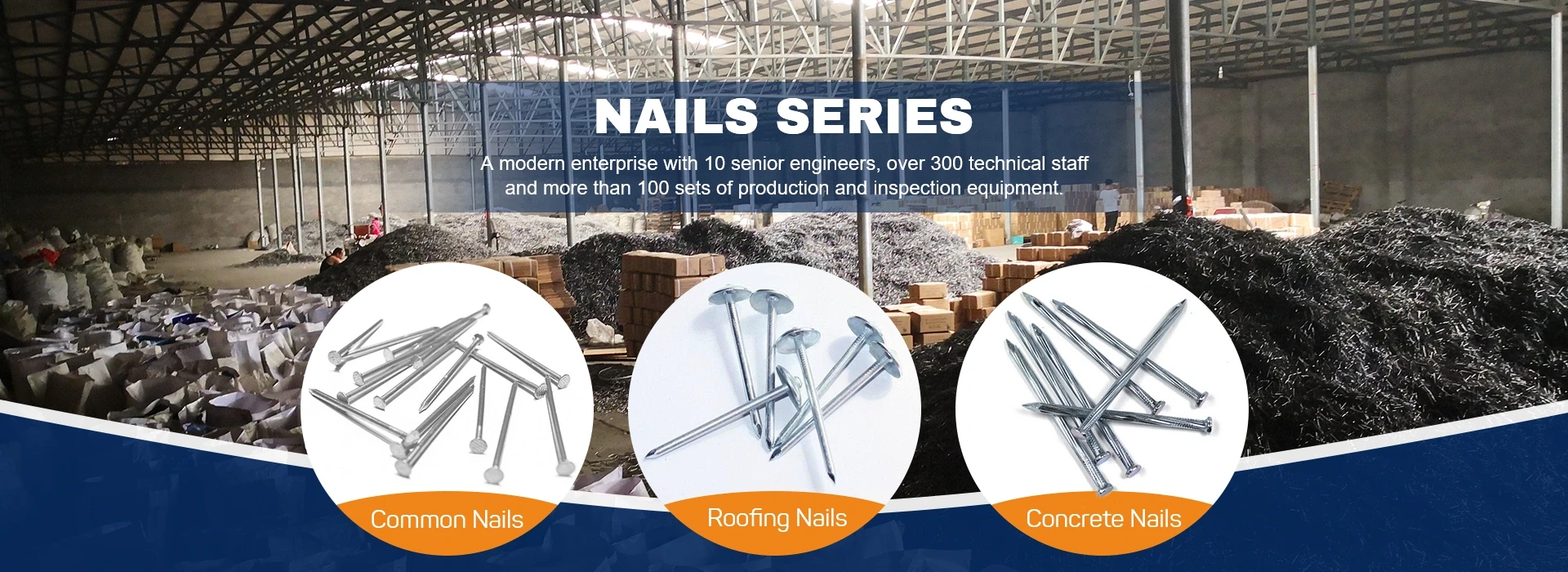
Concrete blocks are typically manufactured from a mixture of Portland cement, sand, and aggregates like limestone or clay. The cement hydrates, binding the materials together. Key properties impacting nail performance include compressive strength (typically 2.8 – 7 MPa for standard blocks, though higher strengths exist), porosity (15-25%), and density (1400 – 2200 kg/m³). Nails designed for concrete block are almost exclusively manufactured from hardened steel, primarily carbon steel alloys (e.g., AISI 1045, 1050) or alloy steels incorporating manganese, silicon, and chromium for enhanced strength and ductility. Manufacturing processes involve cold heading, where wire stock is fed into a machine that forms the nail head and shank through a series of dies. Heat treatment – specifically hardening and tempering – is crucial to achieve the desired Rockwell hardness (typically Rc 50-60) for penetration and shear strength. Nail surface coatings, such as galvanization (zinc coating) or epoxy coatings, provide corrosion resistance, a vital aspect in outdoor applications. The shank geometry is a key manufacturing consideration; common types include smooth, ring shank (with helical rings for increased pull-out resistance), and screw shank (with spiral threads). Precise control of die angles and heat treatment temperatures are paramount to ensure consistent nail dimensions and mechanical properties, preventing premature failure during installation or service. Steel wire quality must be rigorously tested for chemical composition and tensile strength prior to forming.
Performance & Engineering
The performance of a nail in a concrete block is dictated by several engineering principles. Impact force during installation generates both tensile and compressive stresses within the block material. Nail penetration relies on localized compressive stress exceeding the block's tensile strength, causing material displacement. Shear forces are generated when loads are applied perpendicularly to the nail axis. A nail’s shear strength, determined by its material properties and shank geometry, dictates its load-bearing capacity. Pull-out resistance, critical for preventing fastener failure, is influenced by friction between the nail shank and the block’s pores, and enhanced by ring or screw shanks which mechanically interlock with the concrete material. The block’s inherent porosity introduces variability; water absorption can reduce compressive strength and promote corrosion of the nail. Environmental factors, such as temperature fluctuations and freeze-thaw cycles, can exacerbate block degradation, decreasing nail holding power. Compliance with building codes (e.g., International Building Code - IBC) dictates minimum nail spacing, edge distances, and allowable load capacities based on block strength and nail specifications. Finite element analysis (FEA) is increasingly used to model nail-block interactions, predicting stress distributions and optimizing nail design for specific applications. Considerations include the block's mortar joint configuration and the presence of reinforcing steel.
Technical Specifications
| Nail Diameter (mm) | Nail Length (mm) | Hardness (Rockwell C) | Shear Strength (MPa) |
|---|---|---|---|
| 2.5 | 50 | 55-60 | 250 |
| 3.1 | 65 | 58-62 | 320 |
| 3.8 | 80 | 56-61 | 400 |
| 4.2 | 90 | 57-63 | 480 |
| 5.0 | 100 | 59-64 | 550 |
| 6.3 | 120 | 60-65 | 650 |
Failure Mode & Maintenance
Nail failure in concrete block applications typically manifests in several modes. Shear Failure occurs when the nail fractures due to excessive lateral loading, indicating insufficient shear strength or material defect. Pull-out Failure happens when the nail is extracted from the block, primarily due to inadequate shank engagement or block degradation. Block Fracture is a critical failure, where the concrete block itself splits or cracks around the nail, resulting from excessive impact force or low block compressive strength. Corrosion gradually weakens the nail, reducing its cross-sectional area and diminishing both shear and pull-out resistance. Fatigue Failure, although less common, can occur in dynamic loading scenarios, initiating from microscopic cracks and propagating over time. Maintenance is largely preventative. Regularly inspect nail connections, particularly in exposed environments, for signs of corrosion or block cracking. Replace corroded nails promptly. If block damage is observed, consider using larger diameter nails or supplemental fastening methods (e.g., adhesive anchors) to restore structural integrity. Proper installation technique – avoiding overdriving which can damage the block – is critical to prevent premature failure. Applying a protective coating to the block surface can mitigate water absorption and reduce corrosion risk.
Industry FAQ
Q: What is the primary difference between nails designed for solid concrete and those for concrete blocks?
A: Nails for solid concrete are typically hardened steel with a smooth shank designed to rely on compressive force for retention. Concrete block nails prioritize mechanical interlock due to the block's porosity. They feature ring or screw shanks to enhance pull-out resistance, as compressive force alone is insufficient in the less dense block material.
Q: How does the type of concrete block (e.g., density, composition) impact nail selection?
A: Higher density blocks with greater compressive strength can accommodate larger diameter nails and support higher loads. Lower density blocks necessitate smaller diameter nails and closer spacing to avoid fracture. The aggregate type also matters; softer aggregates reduce holding power compared to harder aggregates.
Q: What are the common causes of pull-out failure and how can they be mitigated?
A: Pull-out failure is often caused by insufficient shank engagement, low friction between the nail and block, or block degradation. Mitigation strategies include using ring or screw shank nails, ensuring proper nail length, and employing adhesive anchors for additional support.
Q: Is galvanization sufficient corrosion protection in all environments?
A: Galvanization provides good corrosion resistance in mild environments. However, in coastal regions or areas with high salt exposure, epoxy coatings or stainless steel nails offer superior long-term protection. The specific environment dictates the required level of corrosion resistance.
Q: What impact does mortar joint configuration have on nail holding power?
A: Nails installed directly into mortar joints have significantly lower holding power than those installed into the block itself. It’s critical to position nails within the solid block material whenever possible. If nailing into mortar is unavoidable, consider using specialized mortar nails or adhesive anchors.
Conclusion
Selecting and installing nails into concrete block is a seemingly simple process that demands a deep understanding of material properties, engineering principles, and potential failure modes. The success of this fastening method hinges on choosing the appropriate nail type – considering shank geometry, material hardness, and corrosion resistance – in relation to the specific characteristics of the concrete block itself. Proper installation techniques, avoiding overdriving and maximizing shank engagement, are equally crucial.
Moving forward, advancements in nail technology, such as self-tapping concrete nails and the development of novel coating materials, will likely enhance fastening performance and durability. Furthermore, increased adoption of finite element analysis (FEA) for optimizing nail design and predicting long-term performance will contribute to safer and more reliable construction practices. Adhering to established industry standards and best practices remains paramount for ensuring structural integrity and preventing costly failures.