



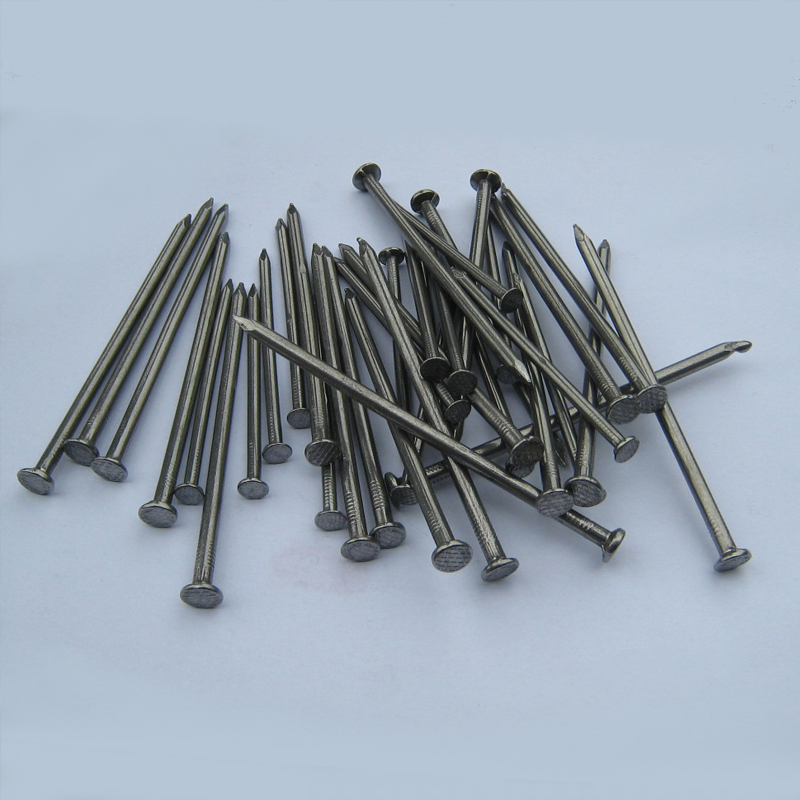
Introduction
Steel concrete pins are specialized fasteners employed in concrete construction and repair, providing a robust and reliable method for anchoring components to concrete substrates. Positioned within the broader category of concrete anchors, these pins distinguish themselves through their typically smaller diameter, high tensile strength, and suitability for applications demanding shear resistance. They are commonly utilized in precast concrete, facade anchoring, and seismic retrofitting, functioning as critical elements in maintaining structural integrity. Their performance is directly linked to the steel grade, pin geometry, and the concrete's compressive strength. The increasing demand for durable and efficient construction materials has driven the development of various steel pin designs, addressing specific load requirements and installation constraints. This guide provides a comprehensive technical overview of steel concrete pins, encompassing material science, manufacturing processes, performance characteristics, failure modes, and relevant industry standards.
Material Science & Manufacturing
The primary material for steel concrete pins is typically medium to high-carbon steel, commonly AISI 1045, 4140, or equivalent alloy steels. These steels offer a balance of strength, ductility, and weldability. The steel’s composition dictates its mechanical properties: higher carbon content increases tensile strength but reduces ductility, while alloying elements like manganese, chromium, and molybdenum enhance hardenability and corrosion resistance. Manufacturing begins with hot rolling or wire drawing to achieve the desired pin diameter. Subsequent processes include precision cutting to length, followed by thread rolling (for threaded pins) or cold heading (for headed pins). Heat treatment is crucial, involving hardening and tempering to achieve the specified hardness (typically 45-60 HRC) and tensile strength. Surface treatments, such as zinc plating, hot-dip galvanizing, or epoxy coating, are applied to prevent corrosion. The concrete interface is a critical consideration; the pin’s surface roughness and any applied coatings influence the bond strength. Quality control at each stage is paramount, including dimensional checks, hardness testing, tensile testing, and metallographic examination to ensure adherence to specifications. Parameter control during heat treatment, specifically quenching medium and temperature, is vital for achieving optimal material properties without introducing residual stresses that could lead to premature failure.

Performance & Engineering
The performance of steel concrete pins is governed by several key engineering principles. Shear strength is paramount, particularly in applications subjected to lateral loads, and is determined by the pin’s diameter, steel grade, and the concrete’s compressive strength. Tensile strength is critical for resisting pull-out forces. Force analysis necessitates considering the pin’s geometry (e.g., smooth shank, threaded shank, headed), the embedment depth, and the concrete’s properties. Environmental resistance is a significant factor; exposure to chlorides, sulfates, and freeze-thaw cycles can induce corrosion and reduce the pin’s load-carrying capacity. Compliance requirements, such as those stipulated by building codes (ACI 318, Eurocode 2), dictate minimum pin dimensions, material specifications, and installation procedures. The pin’s performance is also influenced by the concrete’s quality; low-strength concrete or concrete with high porosity will result in reduced bond strength. Detailed calculations, often employing finite element analysis (FEA), are used to predict the pin’s behavior under various loading conditions and ensure adequate safety factors. Galvanic corrosion between the steel pin and the concrete, particularly in the presence of chlorides, must be mitigated through proper material selection and protective coatings. Bond stress-slip relationships are fundamental to understanding the load transfer mechanism between the pin and the surrounding concrete.
Technical Specifications
| Diameter (mm) | Material Grade | Tensile Strength (MPa) | Shear Strength (MPa) |
|---|---|---|---|
| 6 | AISI 1045 | 600 | 400 |
| 8 | AISI 4140 | 800 | 550 |
| 10 | AISI 1045 | 650 | 430 |
| 12 | AISI 4140 | 850 | 600 |
| 16 | AISI 1045 | 700 | 460 |
| 20 | AISI 4140 | 900 | 630 |
Failure Mode & Maintenance
Steel concrete pins are susceptible to several failure modes in practical applications. Fatigue cracking can occur under cyclic loading, particularly at stress concentrations around the pin head or threads. Delamination of the concrete surrounding the pin can reduce bond strength and lead to pull-out failure. Corrosion is a significant concern, especially in aggressive environments, causing pitting, section loss, and ultimately, reduced load capacity. Hydrogen embrittlement, induced by cathodic protection or exposure to acidic conditions, can lead to brittle fracture. Shear failure occurs when the pin’s shear stress exceeds its shear strength, often due to excessive lateral loads. Oxidation of the steel surface, even with protective coatings, can gradually diminish corrosion resistance. Maintenance typically involves periodic inspection for signs of corrosion, cracking, or concrete deterioration. For corroded pins, surface preparation and re-coating may be feasible, but severely corroded pins require replacement. Preventative measures include selecting appropriate materials and coatings for the specific environment, ensuring proper installation according to manufacturer’s instructions, and implementing regular inspection programs. Non-destructive testing methods, such as ultrasonic testing or dye penetrant inspection, can be used to detect internal flaws or surface cracks before they lead to catastrophic failure. The concrete’s condition should also be monitored for cracking or spalling, as these can compromise the pin’s effectiveness.
Industry FAQ
Q: What is the impact of concrete compressive strength on the pull-out capacity of a steel concrete pin?
A: The pull-out capacity is directly proportional to the square root of the concrete compressive strength. Higher compressive strength concrete provides a greater resistance to cone failure, the dominant mechanism in pull-out. Therefore, using a higher grade of concrete significantly increases the pin's ability to withstand tensile forces.
Q: How does thread form affect the shear strength of a threaded steel concrete pin?
A: The thread form influences the contact area between the pin and the concrete, which directly impacts shear strength. Pins with coarser threads generally exhibit higher shear strength due to increased material volume and a larger contact surface. However, finer threads may provide better performance in applications requiring greater embedment depth.
Q: What is the recommended embedment depth for a steel concrete pin in a typical concrete application?
A: The recommended embedment depth varies depending on the pin diameter, material grade, concrete strength, and applied load. Generally, an embedment depth of at least 6 to 8 times the pin diameter is recommended to ensure adequate pull-out resistance. Always consult the manufacturer's specifications and relevant building codes for specific requirements.
Q: What are the best practices for preventing corrosion of steel concrete pins in marine environments?
A: In marine environments, the use of hot-dip galvanized pins or pins with epoxy coatings is crucial. Additionally, cathodic protection can be implemented to mitigate corrosion. Regular inspection and maintenance, including the application of protective coatings to exposed surfaces, are also essential.
Q: How does the hole diameter in the concrete affect the pin’s performance?
A: The hole diameter should be precisely matched to the pin diameter. An oversized hole reduces the contact area and bond strength, significantly diminishing the pin’s load-carrying capacity. Undersized holes can induce stress concentrations and potentially damage the pin during installation. Using the correct drill bit size and ensuring a tight fit are critical for optimal performance.
Conclusion
Steel concrete pins represent a vital fastening solution in modern construction, offering a robust and reliable means of securing components to concrete. Their performance hinges on a complex interplay of material properties, manufacturing precision, and proper engineering design. Understanding the inherent failure modes – corrosion, fatigue, shear failure, and concrete degradation – is paramount for ensuring long-term structural integrity.
Continued advancements in material science and coating technologies will undoubtedly lead to even more durable and corrosion-resistant steel concrete pins. Adherence to stringent quality control procedures, coupled with meticulous installation practices and regular maintenance programs, remains essential for maximizing the service life and reliability of these critical fasteners. Furthermore, the incorporation of predictive modeling and non-destructive testing techniques will enable more accurate assessment of pin performance and proactive identification of potential failure points.