



Introduction
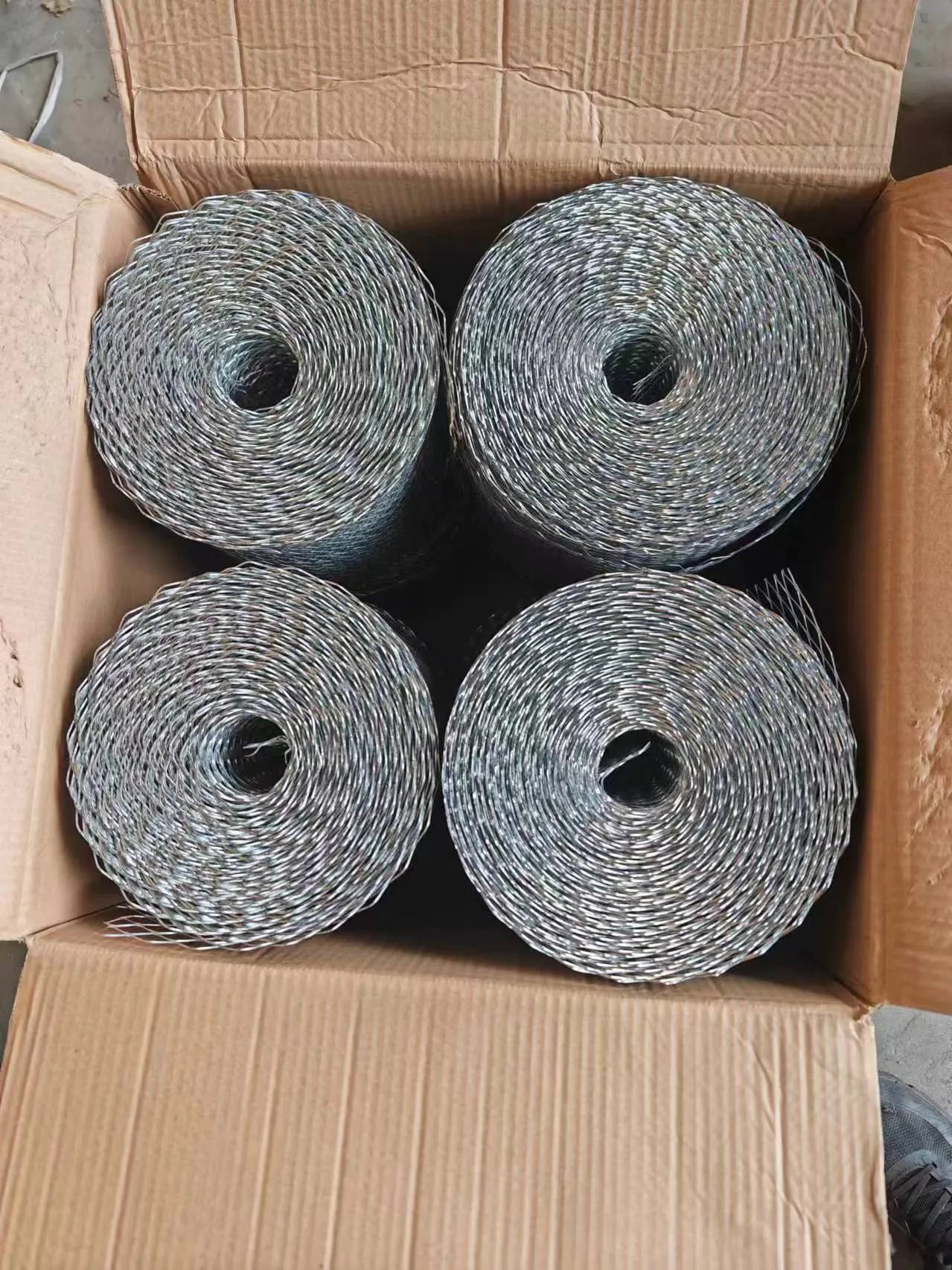
1 ½ inch galvanized chicken wire, also known as poultry netting, is a woven wire mesh commonly utilized in agricultural, industrial, and residential applications. Positioned within the broader family of wire mesh products, its defining characteristic is its hexagonal opening pattern and protective zinc coating. This coating provides crucial corrosion resistance, extending the service life of the wire in exposed environments. The product's technical position in the supply chain begins with steel rod production, progressing through wire drawing, galvanization, and finally, weaving or twisting into the characteristic hexagonal mesh. Core performance metrics include tensile strength, galvanization coating thickness, mesh opening size consistency, and resistance to environmental degradation. A key industry pain point is maintaining consistent zinc coating quality and preventing premature corrosion, particularly in aggressive climates or applications involving high salt exposure.
Material Science & Manufacturing
The primary raw material for 1 ½ inch galvanized chicken wire is low carbon steel, typically SAE 1008 or similar grades, selected for its ductility and weldability. The steel’s composition directly impacts its formability during the weaving process. Manufacturing commences with the drawing of steel rod into wire, a process requiring precise control of die angles and lubrication to achieve consistent diameter. Galvanization, typically achieved through hot-dip galvanizing, is critical. The steel wire is immersed in a bath of molten zinc (98% purity or greater) to create a metallurgical bond. The zinc coating’s thickness is governed by standards (discussed later) and significantly influences corrosion resistance. Post-galvanization, the wire undergoes a twisting process and is then woven using automated machinery. The hexagonal weave is formed by passing two adjacent wires over and under each other, and a third wire is twisted around the intersection. Key manufacturing parameters include wire diameter, twist pitch, mesh opening size, and zinc coating thickness. Consistent tension during weaving is crucial to maintain dimensional accuracy. The quality of the zinc coating is heavily dependent on the steel surface preparation prior to galvanizing – removal of rust, scale, and oil is essential for good adhesion. The cooling rate after galvanization also affects the coating’s microstructure and its protective properties.
Performance & Engineering
The performance of 1 ½ inch galvanized chicken wire is primarily governed by its mechanical strength and corrosion resistance. Tensile strength, measured in MPa or psi, dictates the wire’s ability to withstand applied loads without yielding or fracturing. This is particularly important in applications like animal containment, where the wire must resist impact and stretching. Force analysis reveals that the load distribution is concentrated at the wire intersections, making the integrity of the twisted joints critical. Environmental resistance is dictated by the zinc coating’s sacrificial protection. Zinc corrodes preferentially to the steel, preventing rust formation. However, the rate of zinc corrosion is influenced by factors like humidity, temperature, salinity, and exposure to acidic or alkaline environments. Compliance requirements vary by region but generally adhere to standards specifying minimum coating thickness and wire gauge. Furthermore, the mesh size directly impacts its suitability for specific applications; 1 ½ inch mesh is often chosen for containing poultry or smaller animals. The weave pattern introduces a degree of flexibility, which must be considered in engineering designs to prevent deformation or loosening over time. Fatigue analysis is relevant in applications involving repeated stress cycles, such as fencing exposed to wind loads.
Technical Specifications
| Parameter | Typical Value | Testing Standard | Units |
|---|---|---|---|
| Wire Diameter | 1.8 mm - 2.0 mm | ASTM A641 | mm |
| Mesh Opening | 38.1 mm (1.5 inch) | Visual Inspection | mm |
| Zinc Coating Thickness | 45 – 60 g/m² | ASTM B693 | g/m² |
| Tensile Strength | 380 – 500 | ASTM A641 | MPa |
| Elongation | 12 – 18 | ASTM A641 | % |
| Roll Width | 0.914 m (3 ft) – 1.22 m (4 ft) | Measurement | m |
Failure Mode & Maintenance
Common failure modes for 1 ½ inch galvanized chicken wire include corrosion, mechanical failure due to excessive loading, and degradation of the zinc coating. Corrosion is the most prevalent issue, manifesting as rust formation and eventual wire breakage. This is accelerated in marine environments or areas with high sulfur dioxide pollution. Failure analysis reveals that corrosion typically initiates at scratches or abrasions in the zinc coating. Mechanical failure can occur through fatigue cracking, particularly in applications subject to cyclic loading, or through direct impact damage. Delamination of the zinc coating, caused by poor surface preparation during galvanization, significantly reduces corrosion resistance. Maintenance strategies involve regular inspection for corrosion and damage. Applying a protective coating, such as zinc-rich paint or an epoxy coating, can extend the service life. For localized corrosion, cleaning the affected area and applying a zinc-rich primer followed by a topcoat is recommended. Replacing severely corroded sections is often the most practical solution. Preventing mechanical damage through careful handling and installation is also crucial. Annual inspections, particularly in harsh environments, are essential to identify and address potential failure points proactively.
Industry FAQ
Q: What is the difference between Class 1 and Class 3 galvanized chicken wire?
A: The classification refers to the zinc coating weight. Class 1 has a lower zinc coating weight (around 45 g/m²) and is suitable for less corrosive environments. Class 3 has a higher zinc coating weight (around 60 g/m²) and provides superior corrosion resistance, making it ideal for harsh environments like coastal areas or agricultural settings with high ammonia levels.
Q: How does the wire gauge impact the strength of the chicken wire?
A: Lower wire gauges (thicker wire) provide significantly higher tensile strength and resistance to deformation. A heavier gauge wire is essential for applications requiring greater load-bearing capacity or security. However, thicker wire is also more expensive and may be less flexible.
Q: What is the best way to repair a break in the chicken wire?
A: Small breaks can be repaired by threading a length of wire through the mesh and twisting it securely to both sides of the break. Larger breaks require replacing the damaged section with a new piece of wire, overlapping and securely twisting the wires together. Consider using hog rings or wire connectors for a more durable repair.
Q: How does temperature affect the corrosion rate of galvanized chicken wire?
A: Higher temperatures generally accelerate the corrosion rate of zinc. However, the effect is complex and also dependent on humidity and the presence of other corrosive agents. In extremely cold temperatures, the corrosion rate may slow down, but freeze-thaw cycles can cause mechanical stress and contribute to coating degradation.
Q: Is galvanized chicken wire suitable for use in contact with concrete?
A: Prolonged contact with wet concrete can accelerate the corrosion of the zinc coating due to the alkaline nature of concrete. It is generally not recommended for direct contact. If unavoidable, consider using a barrier material between the wire and the concrete, such as polyethylene sheeting, or selecting a more corrosion-resistant material like stainless steel wire mesh.
Conclusion
1 ½ inch galvanized chicken wire remains a cost-effective and versatile solution for a wide range of applications. Its performance is fundamentally tied to the quality of the steel, the integrity of the galvanization process, and the suitability of its specifications for the intended environment. Understanding the material science, manufacturing parameters, and potential failure modes is crucial for selecting the appropriate wire gauge, zinc coating class, and implementing effective maintenance strategies.
Future advancements may focus on developing alternative coating materials with enhanced corrosion resistance, such as zinc-aluminum alloys, and improving manufacturing processes to achieve more uniform and durable zinc coatings. Continued research into the long-term performance of galvanized chicken wire in various environmental conditions will further refine design guidelines and extend its service life, maximizing its value in diverse industrial and agricultural sectors.