



Introduction
1.6 mm garden wire, typically galvanized steel wire, represents a fundamental component in horticultural applications, agricultural fencing, and various light-duty support structures. Its position within the industry chain resides between raw material production (steel billets, zinc) and the manufacturing of finished goods like netting, trellises, and plant supports. Core performance characteristics center around tensile strength, ductility, corrosion resistance, and cost-effectiveness. A significant industry pain point is balancing these characteristics; higher tensile strength often compromises ductility and increases susceptibility to brittle fracture, while enhanced corrosion protection typically adds to material cost. This guide provides an in-depth analysis of the material science, manufacturing processes, performance parameters, failure modes, and maintenance considerations for 1.6 mm garden wire, addressing these critical industry challenges.
Material Science & Manufacturing
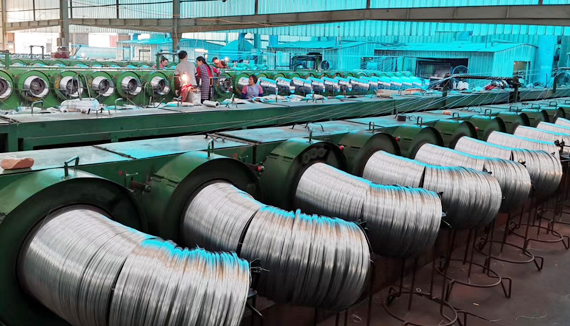
The primary raw material for 1.6 mm garden wire is typically low-carbon steel (e.g., SAE 1008, 1018) due to its balance of cost, ductility, and weldability. The steel’s chemical composition is crucial, with carbon content typically ranging from 0.08% to 0.18%, manganese between 0.30% and 0.60%, phosphorus and sulfur kept at low levels (<0.04% and <0.03% respectively) to improve ductility and minimize weld cracking. Zinc, with a purity of 99.995% or higher, is used for galvanization. The manufacturing process begins with drawing the steel wire from larger diameter stock through a series of dies to achieve the final 1.6 mm diameter. This process work-hardens the wire, increasing its tensile strength but reducing ductility. Annealing, typically performed in a controlled atmosphere furnace, is then used to restore ductility. Galvanization is commonly achieved through hot-dip galvanizing, where the wire is immersed in molten zinc. The metallurgical reaction forms a series of zinc-iron alloy layers, providing corrosion protection. Key parameter control during galvanization includes maintaining consistent zinc bath temperature (around 450-460°C), immersion time, and cooling rate to ensure uniform coating thickness and adhesion. Precise control of the drawing process is vital to maintain consistent diameter and eliminate surface defects that could initiate premature failure. The resulting coating thickness is a critical parameter, directly influencing corrosion resistance.
Performance & Engineering
The performance of 1.6 mm garden wire is fundamentally governed by its tensile strength, yield strength, elongation, and corrosion resistance. Tensile strength, typically ranging from 350-500 MPa for galvanized steel wire, determines the load-bearing capacity of the wire. Yield strength, usually around 200-300 MPa, defines the point at which permanent deformation occurs. Elongation, typically 10-20%, represents the wire’s ductility and its ability to withstand deformation before fracture. Environmental resistance is crucial, particularly in agricultural settings. Galvanization provides sacrificial protection, corroding preferentially to the steel substrate. However, the rate of zinc corrosion is influenced by factors such as humidity, temperature, and the presence of chlorides and sulfates in the environment. Force analysis must account for both static and dynamic loads, including wind loads, plant weight, and accidental impacts. Engineering calculations should incorporate a safety factor to account for variations in material properties and unforeseen loading conditions. Compliance requirements often pertain to zinc coating thickness (e.g., ASTM A646) and the presence of restricted substances (e.g., RoHS compliance). The wire's performance also depends on its ability to resist creep, especially under sustained tensile loads, which can lead to gradual deformation over time. The impact of temperature fluctuations on wire tension, and consequent system integrity, needs to be considered during design.
Technical Specifications
| Parameter | Typical Value | Test Method | Units |
|---|---|---|---|
| Diameter | 1.6 | Micrometer | mm |
| Tensile Strength | 380-480 | ASTM A646 | MPa |
| Yield Strength | 220-320 | ASTM A646 | MPa |
| Elongation | 12-18 | ASTM A646 | % |
| Zinc Coating Thickness | 40-60 | ASTM B693 | µm |
| Corrosion Resistance (Salt Spray Test) | 120-360 | ASTM B117 | Hours to Red Rust |
Failure Mode & Maintenance
Common failure modes for 1.6 mm garden wire include corrosion-induced embrittlement, fatigue cracking (especially under cyclic loading), and brittle fracture. Corrosion, particularly in chloride-rich environments, leads to the formation of zinc corrosion products and eventually exposes the underlying steel to rusting. Fatigue cracking initiates at stress concentrators, such as kinks, bends, or surface defects, and propagates under repeated loading. Brittle fracture can occur at low temperatures or due to sudden impacts. Failure analysis should focus on identifying the root cause of the failure, considering factors such as environmental conditions, loading history, and material defects. Maintenance primarily involves regular inspection for signs of corrosion, damage, or deformation. Severely corroded or damaged sections should be replaced promptly. Applying a protective coating, such as an anti-corrosion spray, can extend the wire's service life. Avoiding excessive tension during installation and minimizing sharp bends can help prevent fatigue cracking and brittle fracture. Periodic re-galvanizing is generally impractical for small-diameter wire but can be considered for larger installations. Proper storage of unused wire in a dry environment will also mitigate corrosion.
Industry FAQ
Q: What is the impact of varying zinc coating thickness on the long-term performance of the wire?
A: Increasing zinc coating thickness provides enhanced corrosion protection, extending the wire’s service life, particularly in harsh environments. However, thicker coatings are more expensive and can potentially become brittle, leading to cracking during handling or installation. The optimal coating thickness represents a trade-off between cost, corrosion resistance, and mechanical properties.
Q: How does the steel’s carbon content affect the wire’s ductility and tensile strength?
A: Higher carbon content generally increases tensile strength but reduces ductility and weldability. Lower carbon content promotes greater ductility but lowers tensile strength. The typical carbon content range (0.08-0.18%) in 1.6 mm garden wire represents a compromise between these competing properties.
Q: What are the primary causes of hydrogen embrittlement in galvanized steel wire?
A: Hydrogen embrittlement can occur during the hot-dip galvanizing process due to the reaction between zinc and residual moisture on the steel surface. This generates atomic hydrogen, which can diffuse into the steel lattice and cause embrittlement, leading to premature failure under tensile stress.
Q: Can the wire be powder coated after galvanization to provide additional corrosion protection?
A: Yes, powder coating can be applied over galvanized steel wire to provide an additional barrier against corrosion and improve aesthetic appearance. However, proper surface preparation is essential to ensure good adhesion of the powder coating. The powder coating must be flexible enough to accommodate the wire’s deformation without cracking.
Q: What are the limitations of using 1.6 mm garden wire for high-load applications?
A: 1.6 mm garden wire is designed for light-duty applications. Its relatively small diameter limits its load-bearing capacity. Using it in high-load applications could lead to yielding, permanent deformation, or catastrophic failure. For higher loads, larger diameter wire or alternative materials (e.g., stainless steel) should be considered.
Conclusion
1.6 mm garden wire represents a cost-effective solution for a range of horticultural and light-duty applications. Its performance is critically dependent on the interplay of material properties – specifically, the balance between tensile strength, ductility, and corrosion resistance provided by the galvanized coating. Understanding the manufacturing processes, potential failure modes, and appropriate maintenance practices is essential for maximizing its service life and ensuring the structural integrity of the supported systems.
Future developments may focus on enhanced galvanizing techniques, such as zinc-nickel alloy coatings, to provide superior corrosion protection, and on the use of advanced steel alloys with improved strength-to-weight ratios. Continued research into the effects of environmental factors on long-term performance will also be crucial for optimizing wire design and ensuring its reliability in diverse applications.