



Introduction
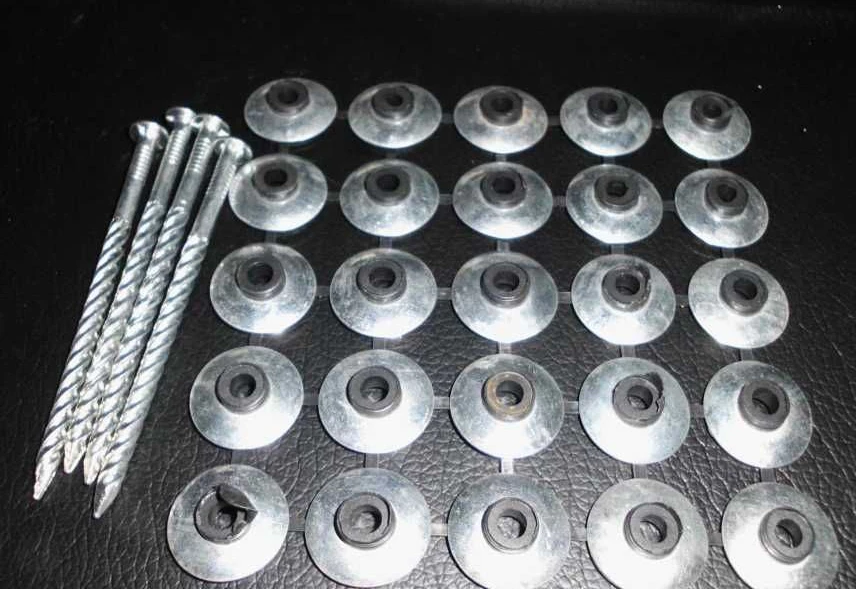
10d common wire nails represent a fundamental fastening solution in construction, woodworking, and general repair applications. Defined by their length – approximately 3 inches (76.2 mm) – and gauge (typically 16 gauge, equating to a shank diameter of 0.099 inches or 2.51 mm), these nails are characterized by a bright, often galvanized, finish and a relatively large head. Positioned within the fastener supply chain, they serve as a crucial intermediary between raw material suppliers (steel manufacturers) and end-users (construction companies, carpenters, DIY enthusiasts). Core performance attributes include shear strength, tensile strength, and penetration capability, influencing their suitability for various load-bearing and non-load-bearing applications. The economic viability and widespread availability of 10d common nails underscore their continued relevance despite competition from alternative fastening technologies like screws and adhesives.
Material Science & Manufacturing
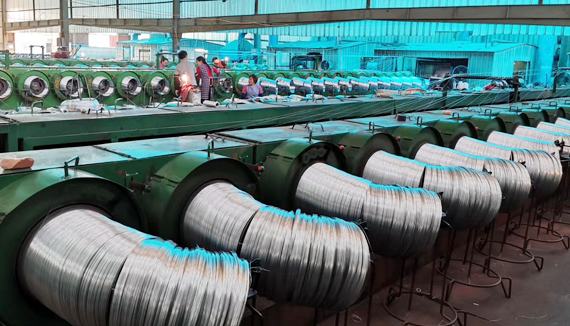
The dominant material for 10d common wire nails is low-carbon steel, typically SAE 1008 or similar grades, chosen for its balance of ductility and cost-effectiveness. The steel composition primarily consists of iron with controlled amounts of carbon (0.08-0.12%), manganese (0.30-0.60%), phosphorus (≤0.04%), and sulfur (≤0.05%). These trace elements influence weldability, machinability, and the formation of the nail head. Manufacturing begins with wire drawing, reducing the steel billet diameter to the desired 16 gauge. This process induces work hardening, increasing the steel’s yield strength. Subsequently, the wire undergoes a heading process, where it is fed into a machine that forms the nail head via impact forging. Precise die control is vital to ensure consistent head dimensions and flatness. Following heading, nails are often subjected to galvanization – either hot-dip or electrogalvanization – to provide corrosion resistance. Hot-dip galvanization involves immersing the nails in molten zinc, creating a metallurgical bond. Electrogalvanization uses an electrolytic process to deposit a zinc coating. Quality control involves rigorous checks for head defects, shank straightness, and coating thickness. Parameter control during wire drawing (reduction ratio, die lubrication) and heading (impact force, die temperature) is crucial for optimizing nail quality and minimizing defects like splits or deformed heads.
Performance & Engineering
The performance of 10d common nails is largely dictated by their shear strength and tensile strength. Shear strength, the resistance to forces acting parallel to the nail shank, is critical in applications where lateral loads are prominent. Tensile strength, the resistance to pulling forces, is essential for applications where nails are subjected to direct tension. Engineering calculations typically utilize established material properties for the steel grade employed, coupled with geometric factors (shank diameter, nail length). Withdrawal resistance, or pull-out strength, is dependent on the wood species, nail shank diameter, and nail length, conforming to standards like ASTM D1033. Environmental resistance is primarily governed by the galvanization coating. Zinc provides sacrificial corrosion protection, preventing rust formation on the steel substrate. However, zinc's effectiveness diminishes over time, particularly in highly corrosive environments (e.g., saltwater exposure). Compliance requirements include adherence to industry standards like those set by the American National Standards Institute (ANSI) and relevant building codes, dictating acceptable nail materials, dimensions, and performance characteristics. The angle of nail penetration significantly impacts holding power; typically, a slight angle (around 6-8 degrees) optimizes resistance to both shear and pull-out forces.
Technical Specifications
| Parameter | Typical Value | Test Method | Units |
|---|---|---|---|
| Nominal Length | 3.0 inches | ASTM D1033 | in |
| Shank Diameter (Gauge) | 16 (0.099 in) | Direct Measurement | in |
| Head Diameter | 0.375 - 0.400 | Direct Measurement | in |
| Head Thickness | 0.125 - 0.140 | Direct Measurement | in |
| Shear Strength (Minimum) | 600 | ASTM D1033 | lbs |
| Tensile Strength (Minimum) | 450 | ASTM D1033 | lbs |
Failure Mode & Maintenance
Common failure modes for 10d common nails include bending (yielding of the shank under excessive load), shear failure (fracture along the shank cross-section), pull-out failure (nail withdrawal from the wood), and corrosion-induced weakening. Fatigue cracking can occur in applications involving repetitive loading, initiating at stress concentration points such as the nail head-shank junction. Delamination of the wood surrounding the nail can also contribute to reduced holding power. Corrosion, particularly in untreated nails, leads to oxidation and reduction in the effective cross-sectional area of the shank, diminishing its strength. Preventive maintenance primarily revolves around selecting appropriately galvanized nails for the intended environment. In corrosive environments, utilizing stainless steel nails or applying a corrosion-inhibiting coating to the nails can significantly extend their service life. Periodic inspection of nailed joints is recommended to identify signs of corrosion or loosening. For minor corrosion, a wire brush can remove surface rust, followed by application of a rust-preventative primer. Replacing severely corroded or bent nails is crucial to maintain structural integrity. Proper nailing technique – ensuring perpendicular penetration and avoiding overdriving – minimizes stress concentrations and reduces the risk of bending or splitting the wood.
Industry FAQ
Q: What is the difference between bright, galvanized, and stainless steel 10d common nails, and how does it affect cost and longevity?
A: Bright nails offer the lowest cost but minimal corrosion resistance, suitable only for dry, indoor applications. Galvanized nails provide a zinc coating for improved corrosion protection, offering a good balance of cost and longevity for general outdoor use. Stainless steel nails offer superior corrosion resistance, ideal for harsh environments (coastal, chemically exposed) but come at a significantly higher cost. The choice depends on the application's environmental demands and budget constraints.
Q: How does wood density and species affect the holding power of 10d common nails?
A: Denser hardwoods (oak, maple) generally offer significantly higher holding power than softer woods (pine, fir). The wood fibers provide greater resistance to nail withdrawal. Nail shank diameter is also crucial; larger diameter nails have more surface area in contact with the wood fibers, enhancing holding power. Moisture content also plays a role; drier wood generally provides better holding power.
Q: What is the appropriate nail spacing for structural applications using 10d common nails?
A: Appropriate nail spacing is governed by building codes and engineering calculations, dependent on the load-bearing requirements. Generally, a spacing of 6-12 inches along the length of the joint is common for non-load-bearing applications. For load-bearing applications, closer spacing and potentially staggered patterns are required, typically defined by structural engineers based on load calculations.
Q: How does the angle of nail penetration impact the strength of the connection?
A: A slight angle (approximately 6-8 degrees) generally maximizes holding power, providing better resistance to both shear and pull-out forces. Driving nails perfectly perpendicular can sometimes lead to splitting the wood, particularly in drier, brittle species. However, excessively angled nails reduce shear strength.
Q: What are the key quality control checks performed during the manufacturing of 10d common nails?
A: Key quality control checks include verifying nail length and gauge tolerances, assessing head dimensions (diameter, thickness, flatness), inspecting for surface defects (splits, cracks), evaluating galvanization coating thickness and uniformity, and performing shear and tensile strength testing on sample batches. Statistical Process Control (SPC) is often employed to monitor and maintain consistent quality.
Conclusion
10d common wire nails remain a ubiquitous and cost-effective fastening solution, particularly in applications where high precision or extreme corrosion resistance are not paramount. Their manufacturing process, while seemingly simple, requires stringent control over material properties, wire drawing parameters, and heading operations to ensure consistent quality and performance. Understanding the failure modes associated with these nails – bending, shear, pull-out, and corrosion – is crucial for proper selection, installation, and maintenance.
Looking ahead, the industry may see a growing adoption of more advanced coating technologies to enhance corrosion resistance and reduce reliance on higher-cost materials like stainless steel. Further research into nail shank geometries and surface treatments could also lead to improvements in holding power and fatigue life. Despite the emergence of alternative fastening methods, the inherent simplicity and economic advantages of 10d common wire nails will likely ensure their continued presence in the construction and woodworking sectors.