



Introduction
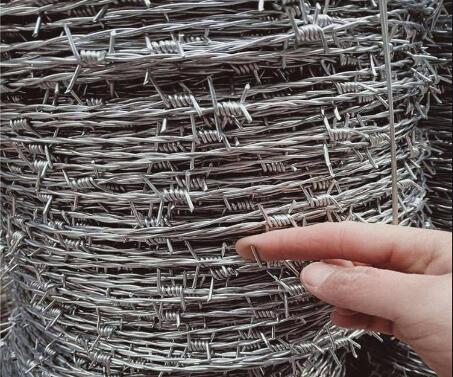
12 gauge galvanised wire represents a fundamental construction material, occupying a critical position within the broader landscape of metallic fastening and structural support. Defined by its diameter of approximately 2.64mm (equivalent to 0.104 inches), this wire is predominantly composed of carbon steel, coated with a protective layer of zinc through a galvanisation process. Its technical significance stems from the combination of tensile strength inherent in the steel core and the corrosion resistance provided by the zinc coating. Applications span diverse sectors including construction (fencing, binding rebar, mesh), agriculture (poultry netting, vineyard training), manufacturing (springs, cable bracing), and telecommunications (guy wires). Core performance characteristics center around its load-bearing capacity, ductility, resistance to environmental degradation, and ease of manipulation for various fabrication processes. The industry frequently contends with issues relating to coating uniformity, hydrogen embrittlement during galvanisation, and long-term performance in aggressive chemical environments. Understanding these nuances is crucial for optimal material selection and service life prediction.
Material Science & Manufacturing
The base material for 12 gauge galvanised wire is typically low-carbon steel, commonly AISI 1006 or similar grades. This steel possesses a relatively simple composition consisting primarily of iron, with controlled levels of carbon (0.05-0.15%), manganese (0.6-0.9%), phosphorus, and sulfur. These elements influence the steel’s weldability, ductility, and overall strength. The manufacturing process begins with wire drawing, where hot-rolled steel rods are pulled through a series of progressively smaller dies to achieve the desired 2.64mm diameter. This process work-hardens the steel, increasing its tensile strength but reducing its ductility. Annealing, a heat treatment process, is often employed to restore ductility. The crucial step is galvanisation. Hot-dip galvanisation, the most common method, involves immersing the cleaned wire in a bath of molten zinc (typically 98% pure) at approximately 450°C (842°F). A metallurgical reaction occurs, forming a series of zinc-iron alloy layers followed by a layer of pure zinc. Key parameters during galvanisation include bath temperature, immersion time, steel surface preparation (pickling, fluxing), and cooling rate. Proper control of these parameters ensures uniform coating thickness and optimal adhesion. Electrolytic galvanisation offers more precise control over coating thickness but is generally more expensive. Post-galvanisation processes may include passivation treatments to further enhance corrosion resistance.
Performance & Engineering
The performance of 12 gauge galvanised wire is dictated by its mechanical properties and its resistance to environmental factors. Tensile strength, typically ranging from 480-550 MPa, determines its load-bearing capacity. Yield strength, approximately 300 MPa, indicates the point at which permanent deformation begins. Ductility, measured by elongation at break (typically 15-25%), signifies its ability to deform before fracturing. The galvanised coating provides cathodic protection, meaning the zinc corrodes preferentially to the steel, preventing rust formation. However, the coating's effectiveness diminishes over time due to corrosion and mechanical damage. Engineering applications require consideration of several factors. For fencing, wire spacing and post strength are critical to withstand wind loads and animal pressure. In rebar tying, the wire must maintain sufficient strength and flexibility to securely bind the bars. For suspension applications, fatigue life under cyclic loading must be evaluated, considering the wire's susceptibility to stress corrosion cracking in certain environments. Compliance with relevant building codes and industry standards (discussed in the conclusion) is paramount. Force analysis often involves calculating tensile stress based on applied loads and wire cross-sectional area. Environmental resistance assessments consider exposure to chlorides, sulfates, and acidic conditions.
Technical Specifications
| Parameter | Unit | Typical Value | Test Method |
|---|---|---|---|
| Diameter | mm | 2.64 | Micrometer |
| Tensile Strength | MPa | 480-550 | ASTM A653 |
| Yield Strength | MPa | 300 | ASTM A653 |
| Elongation at Break | % | 15-25 | ASTM A653 |
| Zinc Coating Weight | g/m² | 60-275 | ASTM B693 |
| Zinc Coating Thickness | µm | 8-85 | ASTM B693 |
Failure Mode & Maintenance
12 gauge galvanised wire is susceptible to several failure modes. Corrosion is the most common, particularly in marine or industrial environments. Uniform corrosion gradually reduces the zinc coating thickness, eventually exposing the steel to rust. Localized corrosion, such as pitting, can occur due to imperfections in the coating or the presence of chlorides. Hydrogen embrittlement, a risk during the hot-dip galvanisation process, can lead to brittle fracture. Mechanical damage, including bending, abrasion, and cutting, can compromise the coating and reduce the wire's strength. Fatigue cracking can occur under cyclic loading, especially in applications involving repeated bending or tension. Failure analysis often involves microscopic examination of fractured surfaces to identify the root cause. Maintenance strategies include periodic inspection for corrosion, application of protective coatings (e.g., zinc-rich paints) to damaged areas, and replacement of corroded or damaged wire. In agricultural applications, removing debris and vegetation that trap moisture can mitigate corrosion. For tension wire, regular checks for strand breaks and proper tension adjustment are crucial. Preventing sharp bends and avoiding abrasive contact during handling will prolong service life.
Industry FAQ
Q: What is the typical service life of 12 gauge galvanised wire in an outdoor environment?
A: The service life is highly variable depending on the environment. In rural environments with low chloride exposure, it can exceed 20 years. However, in coastal or industrial areas, the life may be reduced to 5-10 years due to accelerated corrosion.
Q: How does the galvanisation process impact the mechanical properties of the steel wire?
A: The galvanisation process, particularly hot-dip galvanisation, can slightly reduce the ductility of the steel due to the formation of brittle iron-zinc alloy layers. Hydrogen embrittlement is also a potential concern, which can decrease the wire’s resistance to fracture. Annealing after galvanisation can mitigate these effects.
Q: What are the advantages of electrolytic galvanisation compared to hot-dip galvanisation?
A: Electrolytic galvanisation offers more precise control over coating thickness and provides a smoother, more uniform coating. It also avoids the risk of hydrogen embrittlement. However, it is generally more expensive and may not offer the same level of adhesion as hot-dip galvanisation.
Q: What is the effect of different coating weights on corrosion resistance?
A: Higher coating weights provide greater corrosion resistance, as there is more zinc available to sacrificially corrode. However, the relationship is not linear; increasing the coating weight beyond a certain point yields diminishing returns. The optimal coating weight depends on the severity of the exposure environment.
Q: How can I identify signs of hydrogen embrittlement in galvanised wire?
A: Hydrogen embrittlement is difficult to detect visually. Signs may include unexpected brittle fractures during bending or tension tests, and a tendency for the wire to crack under relatively low loads. Destructive testing, such as slow-bend tests, can confirm the presence of hydrogen embrittlement.
Conclusion
12 gauge galvanised wire remains a vital component across numerous industries, its utility stemming from a balance of tensile strength and corrosion resistance achieved through careful material selection and manufacturing processes. Understanding the underlying principles of steel metallurgy, galvanisation chemistry, and potential failure modes is essential for ensuring reliable performance and extending service life. Optimizing coating uniformity, mitigating hydrogen embrittlement, and implementing appropriate maintenance strategies are critical considerations for engineers and procurement managers alike.
Future developments may focus on enhanced galvanisation techniques, such as zinc-nickel alloys, which offer superior corrosion resistance. Advancements in protective coatings and inspection methods will also play a role in prolonging the life of galvanised wire structures. Continued adherence to relevant industry standards and a commitment to rigorous quality control will be paramount to maintaining the integrity and reliability of this fundamental material.