



Introduction
16 common nails represent a foundational fastening element in construction, woodworking, and numerous industrial applications. These nails, typically manufactured from carbon steel wire, serve to mechanically join materials through shear and tensile forces. Their prevalence stems from their cost-effectiveness, ease of use, and versatility across a broad spectrum of materials including wood, plastics, and thin metals. The “16” designation refers to the penny size (d), a historical unit of measurement relating to nail length and gauge. This guide provides an in-depth technical analysis of 16 common nails, encompassing material science, manufacturing processes, performance characteristics, failure modes, and relevant industry standards. Understanding these facets is crucial for ensuring structural integrity, optimizing material selection, and minimizing potential risks in diverse engineering applications. The core industry pain points addressed here are nail material degradation, load-bearing capacity assessment, and selecting the appropriate coating for longevity and corrosion resistance.
Material Science & Manufacturing
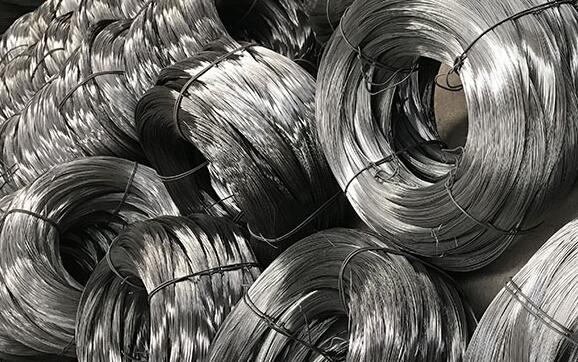
The primary raw material for 16 common nails is carbon steel, typically AISI 1008 or similar low-carbon steel grades. These steels offer a balance of ductility for forming and sufficient strength for fastening. The chemical composition typically consists of 0.05-0.25% carbon, 0.60-0.90% manganese, 0.040% phosphorus, and 0.030% sulfur. Higher carbon content increases hardness but reduces ductility, making it less suitable for nail production. Manufacturing begins with wire drawing, reducing the steel rod’s diameter to the desired gauge for the nail. This process induces work hardening, which is subsequently addressed through annealing to restore ductility. The nail forming process typically employs cold heading, where the wire is fed into a machine that cuts and forms the nail head. Critical parameters include die lubrication to reduce friction and prevent galling, wire feed rate to ensure consistent nail length, and heading pressure to form a robust nail head. Following heading, nails are often subjected to surface treatments, including galvanization (zinc coating) or electroplating (various coatings) to enhance corrosion resistance. Quality control involves rigorous dimensional checks (length, head diameter, shank diameter) and hardness testing (Rockwell C scale) to ensure adherence to specifications. A critical manufacturing defect is the presence of inclusions within the steel, which can act as stress concentrators and lead to premature failure. Material inconsistencies also manifest as variations in hardness across batches, influencing bending resistance and shear strength.
Performance & Engineering
The performance of a 16 common nail is largely dictated by its shear strength, tensile strength, and bending resistance. Shear strength is the primary load-bearing parameter in most applications, representing the force required to shear the nail shank. Tensile strength measures the nail’s resistance to being pulled out of the joined materials, dependent on friction between the nail and the material, as well as the nail’s shank geometry. Bending resistance determines the nail’s ability to withstand lateral forces without permanent deformation. Engineering analysis involves calculating the required nail spacing and penetration depth to ensure adequate joint strength under anticipated loads. Factors influencing performance include wood density (for wood applications), material thickness, and angle of nail insertion. Nail coatings significantly impact corrosion resistance and, consequently, long-term performance. Galvanization provides sacrificial protection, corroding preferentially to the steel substrate. However, galvanic corrosion can occur in the presence of dissimilar metals. Finite element analysis (FEA) is often employed to model stress distribution within the nail and surrounding materials, optimizing nail geometry and placement for enhanced structural integrity. Compliance requirements often dictate specific nail materials and coatings based on the intended application (e.g., exterior construction, marine environments). Proper nail selection is paramount to avoiding joint failure and ensuring structural safety, addressing common industry concerns regarding building code adherence and long-term durability.
Technical Specifications
| Parameter | Units | Typical Value (16d Common Nail) | Test Standard |
|---|---|---|---|
| Nominal Length | inches | 3.5 | ASTM F1578 |
| Shank Diameter | inches | 0.120 | ASTM F1578 |
| Head Diameter | inches | 0.375 | ASTM F1578 |
| Shear Strength (Parallel to Grain - Pine) | psi | 650 | ASTM F1578 |
| Tensile Strength | psi | 80,000 | ASTM F1578 |
| Hardness (Rockwell C) | HRC | 35-45 | ASTM E18 |
Failure Mode & Maintenance
16 common nails are susceptible to several failure modes. Fatigue cracking can occur under cyclic loading, initiated at stress concentration points such as the nail head-shank junction or surface imperfections. Corrosion is a significant contributor to failure, particularly in exposed environments. Galvanic corrosion can accelerate the degradation of the steel. Shear failure occurs when the applied shear force exceeds the nail’s shear strength. Withdrawal failure happens when the nail is pulled out of the material due to insufficient holding power. Bending failure results from excessive lateral forces causing permanent deformation or breakage. Maintenance primarily focuses on corrosion prevention. Regularly inspecting nailed joints in exterior applications and reapplying protective coatings (paint, sealant) can extend the service life. For galvanized nails, ensuring the zinc coating remains intact is crucial. Avoiding the use of dissimilar metals in contact with galvanized nails can minimize galvanic corrosion. Preventive measures such as proper nailing technique (avoiding bending or overdriving nails) and selecting appropriate nail size and spacing can significantly reduce the risk of failure. Failure analysis often involves microscopic examination of fracture surfaces to identify the root cause of failure and inform future design or material selection decisions.
Industry FAQ
Q: What is the impact of wood moisture content on the holding power of 16 common nails?
A: Wood moisture content significantly affects holding power. As wood dries, it shrinks, increasing the clamping force on the nail shank and enhancing withdrawal resistance. Conversely, wet wood offers lower holding power as the reduced friction allows easier nail withdrawal. It's recommended to use properly seasoned wood for optimal nail performance.
Q: How does the type of galvanization (hot-dip vs. electrogalvanizing) affect corrosion resistance?
A: Hot-dip galvanization provides a thicker, more durable zinc coating than electrogalvanizing, offering superior corrosion protection. Electrogalvanizing provides a thinner, more uniform coating, suitable for less demanding environments. Hot-dip galvanization generally offers a longer service life in harsh conditions.
Q: What considerations should be made when using 16 common nails with pressure-treated lumber?
A: Pressure-treated lumber contains chemicals that can corrode certain nail coatings. It is crucial to use nails specifically designed for use with pressure-treated lumber, typically featuring a specialized coating that resists chemical attack. Standard galvanized nails may exhibit accelerated corrosion in contact with treated wood.
Q: What is the significance of the “d” (penny) designation in nail sizing?
A: The “d” or penny designation is a historical unit of measurement related to nail length. Originally, it referred to the weight of a specific number of nails of that size. While the correlation to weight is no longer direct, the “d” number continues to indicate nail length, with higher numbers representing longer nails. 16d nails are approximately 3.5 inches long.
Q: Can 16 common nails be used in structural applications requiring high load-bearing capacity?
A: While 16 common nails are versatile, they are not typically recommended for critical structural applications requiring very high load-bearing capacity. Engineered nails, such as ring-shank nails or screw nails, are designed specifically for structural applications and offer superior holding power. Proper engineering analysis and adherence to building codes are essential for structural nail selection.
Conclusion
The 16 common nail, despite its seemingly simple construction, represents a complex interplay of material science, manufacturing precision, and engineering principles. Its widespread use is a testament to its cost-effectiveness and adaptability, yet a thorough understanding of its performance characteristics, potential failure modes, and relevant standards is vital for ensuring structural integrity and longevity. Proper selection of nail material and coating, combined with appropriate installation techniques, are crucial for maximizing its performance and mitigating the risks associated with corrosion, fatigue, and shear failure.
Future developments may focus on enhanced coatings for improved corrosion resistance, innovative nail geometries for increased holding power, and the integration of sensor technology for real-time monitoring of nail stress and fatigue. Continuous research and adherence to evolving industry standards will be essential for optimizing the design and application of 16 common nails and other fastening elements, ultimately enhancing the safety and durability of constructed structures.