



Introduction
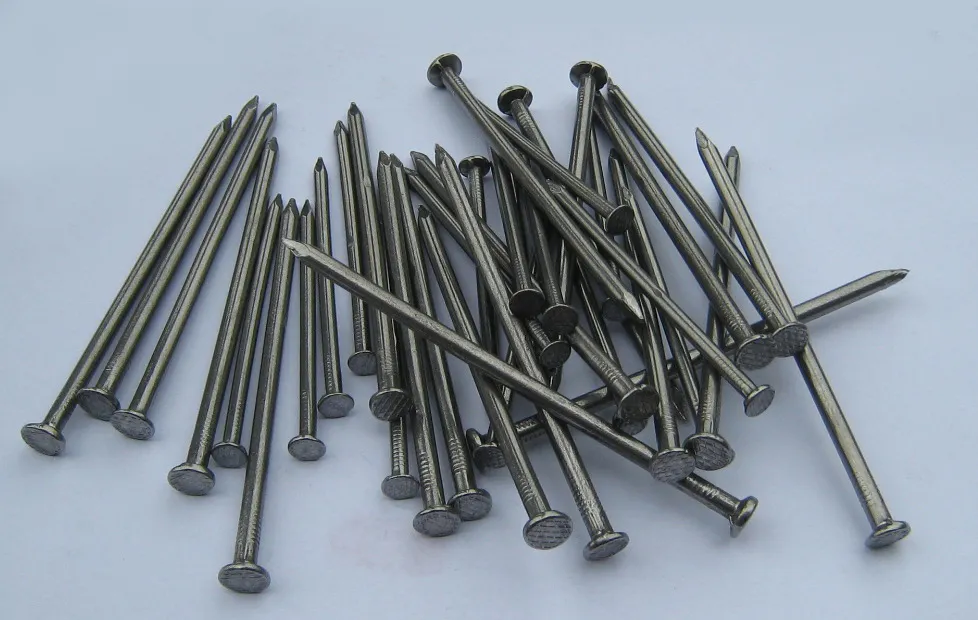
The 16d common nail is a fundamental fastening element within the construction industry, primarily utilized in framing, sheathing, and general carpentry applications. Designated ‘16d’, this nomenclature refers to the nail’s pennyweight (pd), historically indicating approximate weight per hundred nails. A 16d nail is approximately 3.5 inches (89 mm) in length and possesses a shank diameter of 0.120 inches (3.05 mm). Its core function is to provide robust mechanical fastening through shear and withdrawal resistance. The nail’s tapered shank and broad head design optimize these properties, making it a cornerstone component in structural wood connections. Compared to other nail types – such as box nails or finishing nails – the 16d common nail prioritizes holding power over aesthetic integration. Current industry pain points include material cost fluctuations impacting nail steel composition, maintaining consistent nail quality for large-scale projects, and ensuring adherence to evolving building code requirements regarding fastener performance. Its widespread application necessitates a deep understanding of its material properties, manufacturing processes, performance characteristics, and potential failure modes.
Material Science & Manufacturing
16d common nails are predominantly manufactured from high-carbon steel, typically AISI/SAE 1045 or 1050 steel grades. These steels offer a balance of strength, ductility, and hardenability. The steel’s chemical composition includes iron (Fe) as the base element, with carbon (C) content ranging from 0.45% to 0.55% to enhance hardness and tensile strength. Manganese (Mn) is commonly added (0.60% - 0.90%) to improve hardenability and toughness, while silicon (Si) (0.15% - 0.30%) acts as a deoxidizer during steelmaking. Sulfur (S) and phosphorus (P) are present in limited quantities as impurities; their levels are carefully controlled to avoid brittleness. The manufacturing process begins with wire drawing, reducing the steel billet diameter to the desired nail shank size. This is followed by heading, where the nail head is formed using a heading machine, impacting and deforming the steel wire. Critical parameters during heading include die profile, impact force, and heading speed; deviations can result in head defects like splits or incomplete formation. After heading, nails undergo a cleaning and coating process. Common coatings include bright basic zinc coating (BBZC) for corrosion resistance, or galvanization (hot-dip galvanizing or electrogalvanizing). Galvanization offers superior long-term corrosion protection. Quality control throughout the process involves dimensional checks, hardness testing (Rockwell C scale), and coating thickness measurements. Inconsistent steel composition can lead to variations in nail ductility and susceptibility to brittle fracture. Improper heat treatment during galvanization can compromise the coating’s integrity, accelerating corrosion.
Performance & Engineering
The performance of a 16d common nail is governed by its shear strength, tensile strength, and withdrawal resistance. Shear strength – the nail's ability to resist forces acting parallel to its shank – is primarily dictated by the steel’s shear modulus and cross-sectional area. Tensile strength, the resistance to forces pulling the nail out along its axis, is dependent on the material's ultimate tensile strength and the shank's geometry. Withdrawal resistance, the force required to extract the nail from the wood, is influenced by friction between the nail shank and wood fibers, as well as the deformation of the wood around the nail. Engineering analyses often employ finite element analysis (FEA) to model nail-wood connections, considering material nonlinearities and geometric complexities. Key parameters include nail diameter, length, embedding depth, wood species (and associated density and moisture content), and the angle of loading. Building codes, such as the International Building Code (IBC), specify minimum nail size and spacing requirements for various structural applications based on calculated load demands and safety factors. Corrosion is a significant performance concern. Environmental factors, such as exposure to moisture, salt spray, and acidic compounds, can accelerate corrosion, weakening the nail and reducing its load-carrying capacity. Galvanic corrosion can occur when nails are in contact with dissimilar metals. Proper coating selection and application are crucial for mitigating corrosion. Fatigue loading – repeated cyclic stresses – can also induce nail failure over time, particularly in structures subject to dynamic loads, such as wind or seismic events.
Technical Specifications
| Parameter | Typical Value | Testing Standard | Units |
|---|---|---|---|
| Nominal Length | 3.5 | ASTM F1578 | inches |
| Shank Diameter | 0.120 | ASTM F1578 | inches |
| Head Diameter | 0.375 - 0.400 | ASTM F1578 | inches |
| Steel Grade | AISI/SAE 1045/1050 | ASTM A576 | - |
| Minimum Shear Strength | 600 | ASTM F1578 | lbs |
| Coating Type | Bright Basic Zinc/Galvanized | ASTM B695 | - |
Failure Mode & Maintenance
Common failure modes for 16d common nails include bending (yielding of the shank under excessive load), shear failure (fracture along the shank's cross-section), withdrawal (pull-out from the wood), and corrosion-induced failure. Bending typically occurs when the nail is subjected to lateral forces exceeding its bending moment capacity. Shear failure is more common in hardwood applications, where higher forces are encountered. Withdrawal failure is dependent on wood density and nail surface characteristics. Corrosion, particularly in untreated steel nails, results in a gradual reduction in the nail’s cross-sectional area, weakening it and increasing the likelihood of brittle fracture. Hydrogen embrittlement can also occur in galvanized nails under certain conditions. Preventive maintenance primarily focuses on corrosion protection. Regularly inspecting nailed connections for signs of corrosion – rust formation, discoloration, or pitting – is crucial. Applying a protective coating to the nail heads and exposed shanks can extend their service life. For critical structural applications, consider using stainless steel nails or encapsulated nails with enhanced corrosion resistance. Replacing corroded or damaged nails is essential to maintain structural integrity. Avoid overloading nailed connections, and ensure proper nail spacing and penetration depth as specified by building codes. In situations where nail withdrawal is a concern, supplementary fastening methods, such as adhesives or structural screws, may be employed.
Industry FAQ
Q: What is the impact of wood moisture content on the withdrawal resistance of a 16d common nail?
A: Wood moisture content significantly affects withdrawal resistance. As wood dries, it shrinks, increasing the friction between the nail shank and the wood fibers, thus boosting withdrawal resistance. Conversely, wetter wood reduces friction and lowers withdrawal resistance. Kiln-dried lumber typically offers higher withdrawal capacity than green lumber.
Q: How does the nail coating affect its long-term performance in marine environments?
A: In marine environments, salt spray accelerates corrosion. Bright basic zinc coatings offer limited protection and will corrode relatively quickly. Hot-dip galvanizing provides significantly superior corrosion resistance, but even galvanizing can eventually degrade in prolonged exposure to seawater. Stainless steel nails are the optimal choice for marine applications, offering the highest level of corrosion protection.
Q: What are the key considerations when selecting nail size and spacing for shear wall construction?
A: Nail size and spacing are critical for shear wall performance. Building codes (e.g., IBC) specify minimum nail schedules based on wind and seismic loads. Factors include the wood species, thickness of the sheathing, and the framing member size. Edge nailing vs. field nailing also impacts shear resistance. Proper nail penetration into the framing member is essential.
Q: What causes nail bending under load, and how can it be prevented?
A: Nail bending is typically caused by excessive lateral forces or insufficient nail shank diameter for the applied load. Prevention involves using larger diameter nails, increasing nail spacing to distribute the load, or providing additional support to resist lateral movement. Ensuring proper nail driving technique – avoiding angled insertion – is also important.
Q: Are there specific standards for the quality control of 16d common nail manufacturing?
A: Yes, several standards govern nail manufacturing quality. ASTM F1578 covers specifications for steel nails, including dimensional tolerances, hardness requirements, and shear strength. ASTM A576 specifies requirements for carbon steel nails. ASTM B695 covers zinc coating specifications. Manufacturers often conduct internal quality control tests to ensure compliance with these standards.
Conclusion
The 16d common nail remains a vital fastening element in modern construction, prized for its strength, simplicity, and cost-effectiveness. Its performance is inextricably linked to the material science of its constituent steel, the precision of its manufacturing process, and the understanding of its mechanical behavior within wood structures. Addressing industry challenges – such as steel price volatility and corrosion prevention – through material innovation, optimized coatings, and adherence to rigorous quality control standards is paramount.
Continued research into advanced fastening technologies and the development of more durable and corrosion-resistant nail materials will further enhance the reliability and longevity of nailed connections. Ultimately, a comprehensive understanding of the 16d common nail – encompassing its material properties, engineering principles, and potential failure modes – is essential for ensuring the structural integrity and safety of buildings and infrastructure.