



Introduction
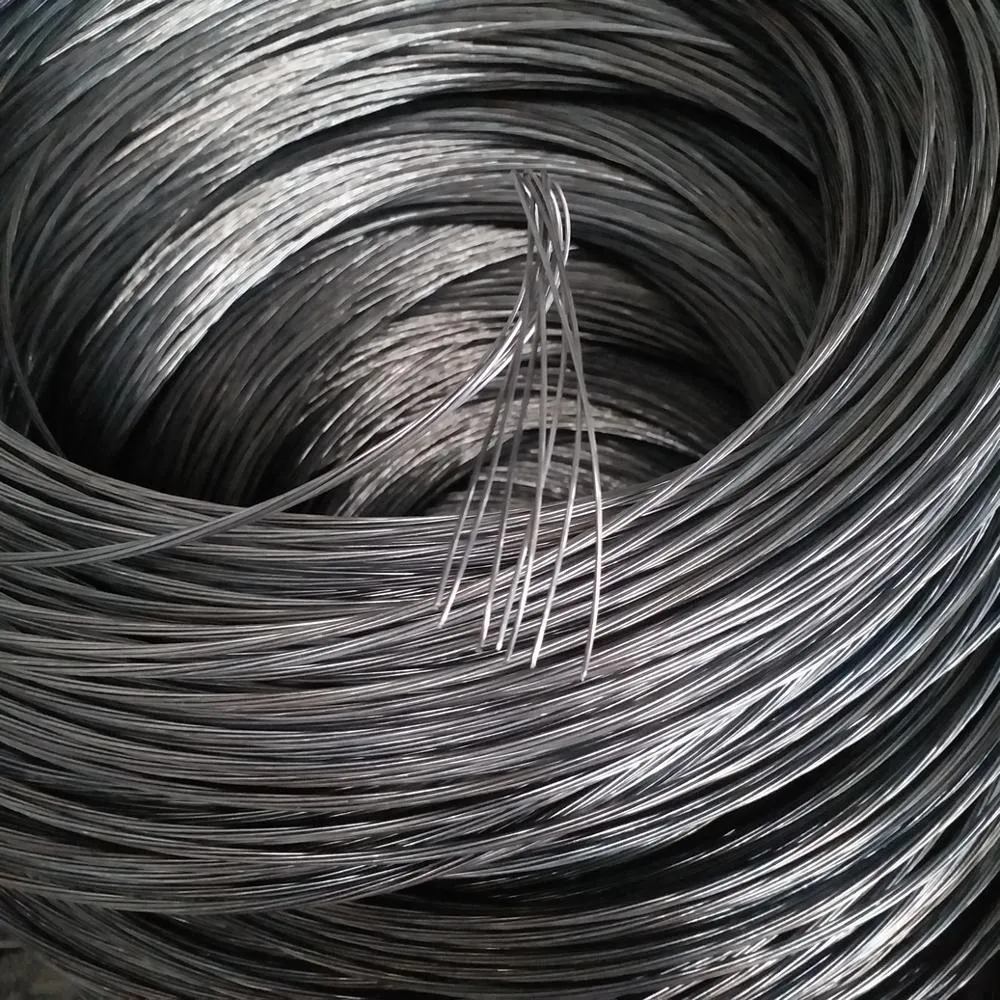
16 gauge black annealed wire is a ferrous metal product commonly utilized across diverse industrial applications. Defined by its diameter of 1.291 millimeters (0.0508 inches) according to American Wire Gauge (AWG) standards, this wire is produced from low carbon steel and undergoes an annealing process, resulting in enhanced ductility and malleability. Its primary position within the industrial chain is as a foundational material for fabrication, binding, and forming. Core performance characteristics revolve around its formability, tensile strength (typically around 483 MPa / 70,000 psi depending on steel composition), and its susceptibility to controlled deformation without fracturing. The black finish is a result of the annealing process, providing minimal corrosion resistance and serving as a preparatory surface for further coatings or processing. A key industry pain point centers around consistent material properties, particularly regarding ductility batch-to-batch, and the potential for hydrogen embrittlement during processing.
Material Science & Manufacturing
The primary raw material for 16 gauge black annealed wire is low carbon steel, typically containing 0.05% to 0.25% carbon. The steel’s composition influences its ductility, tensile strength, and weldability. Other elements present, though in smaller quantities, include manganese (0.30-0.90%) for improved strength, phosphorus (≤0.04%) and sulfur (≤0.05%), carefully controlled to minimize brittleness. The manufacturing process begins with hot rolling of steel billets into wire rod. This rod is then drawn through a series of dies to achieve the desired 1.291 mm diameter. The drawing process work-hardens the steel, increasing its strength but reducing its ductility. Critical parameters during drawing include die lubrication (typically utilizing soaps or specialized lubricants to minimize friction and die wear), reduction ratio per die (generally 15-25% to prevent fracture), and drawing speed. Following drawing, the wire undergoes annealing. This is achieved by heating the wire to a temperature between 593°C and 649°C (1100°F and 1200°F) in a controlled atmosphere (often a reducing atmosphere using hydrogen or nitrogen) and then slowly cooling it. Annealing relieves internal stresses introduced during drawing, restoring ductility and malleability. The slow cooling rate is crucial to prevent the formation of undesirable microstructures. The black finish results from the controlled oxidation that occurs during the annealing process in the absence of protective coatings. Post-annealing, the wire is typically spooled for transport and further processing.
Performance & Engineering
The performance of 16 gauge black annealed wire is largely dictated by its mechanical properties. Tensile strength, typically 483 MPa, defines the force required to break the wire under tension. Yield strength (around 241 MPa) represents the point at which the wire begins to deform permanently. Elongation, usually between 15-25%, indicates the wire’s ductility. These properties are essential for applications involving forming, tying, and binding. Environmental resistance is limited; the black oxide finish provides minimal protection against corrosion. Exposure to moisture and corrosive agents will lead to oxidation and eventual degradation, necessitating coatings (galvanization, plastic coating) for outdoor or harsh environments. Engineering considerations involve calculating the appropriate wire gauge for specific load-bearing applications, accounting for safety factors to prevent failure. Force analysis using principles of stress and strain is critical. Furthermore, the wire's bending radius should be considered to avoid kinking or fracturing during forming. Compliance requirements vary depending on the end application; for example, wire used in food packaging must comply with relevant FDA regulations regarding material purity and coating safety. Wire used in electrical applications, even as a binding wire, must meet fire safety standards. The potential for hydrogen embrittlement, especially during pickling or electroplating processes, requires careful control of process parameters and the use of appropriate inhibitors.
Technical Specifications
| Parameter | Value (Typical) | Testing Standard | Tolerance |
|---|---|---|---|
| Diameter | 1.291 mm (0.0508 inch) | ASTM A641 | ±0.005 mm |
| Tensile Strength | 483 MPa (70,000 psi) | ASTM A641 | ±10% |
| Yield Strength | 241 MPa (35,000 psi) | ASTM A641 | ±5% |
| Elongation | 18-22% | ASTM A641 | ±2% |
| Carbon Content | 0.08-0.15% | ASTM E415 | ±0.02% |
| Manganese Content | 0.30-0.90% | ASTM E415 | ±0.05% |
Failure Mode & Maintenance
Common failure modes for 16 gauge black annealed wire include: Fatigue Cracking: Repeated bending or flexing can initiate cracks, particularly at stress concentration points. Corrosion: Exposure to moisture and corrosive environments leads to oxidation and weakening of the wire. The black oxide finish offers limited protection. Hydrogen Embrittlement: Exposure to hydrogen (e.g., during pickling or electroplating) can diffuse into the steel lattice, making it brittle and prone to cracking under stress. Overload Failure: Exceeding the tensile strength of the wire results in immediate fracture. Kinking/Fracture during Forming: Bending the wire beyond its allowable radius or forming it sharply can cause kinking or fracture. Surface Defects: Scratches or other surface imperfections can act as stress concentrators and initiate failure. Maintenance primarily focuses on prevention. For applications exposed to corrosive environments, applying protective coatings (galvanization, epoxy coating) is crucial. Regular inspection for signs of corrosion or damage is recommended. Avoid excessive bending or stressing the wire. Proper storage in a dry environment prevents corrosion. If hydrogen embrittlement is a concern, consider using a different material or applying a post-treatment to remove hydrogen. For applications where fatigue is a factor, periodic replacement of the wire is advisable.
Industry FAQ
Q: What is the impact of varying carbon content on the wire's ductility and strength?
A: Higher carbon content generally increases tensile strength but reduces ductility. Lower carbon content prioritizes ductility and formability. The typical range of 0.08-0.15% in 16 gauge black annealed wire represents a balance between these properties, optimizing it for forming and tying applications. A precise carbon control is crucial for consistent batch properties.
Q: How does the annealing process specifically influence the wire’s workability?
A: The annealing process relieves internal stresses induced during the wire drawing process. Drawing work-hardens the steel, making it strong but brittle. Annealing recrystallizes the grain structure, restoring ductility and making the wire much easier to bend, tie, and form without fracturing. The cooling rate during annealing is also critical; slow cooling prevents the formation of hard, brittle phases.
Q: What are the common coatings applied to black annealed wire to improve corrosion resistance?
A: The most common coating is galvanization (zinc coating), which provides a sacrificial layer protecting the steel from corrosion. Plastic coatings (PVC, nylon) are also frequently used, offering excellent resistance to various chemicals and environmental factors. Epoxy coatings are also employed, providing robust corrosion protection and electrical insulation.
Q: What are the implications of hydrogen embrittlement, and how can it be mitigated?
A: Hydrogen embrittlement occurs when atomic hydrogen diffuses into the steel lattice, reducing its ductility and increasing its susceptibility to cracking under stress. It’s a concern during pickling, electroplating, or other processes where hydrogen is present. Mitigation strategies include using inhibitors in pickling solutions, controlling the potential during electroplating, and baking the wire after processing to drive out the hydrogen.
Q: Is there a significant difference in performance between wire produced by different manufacturers, even if they meet the same ASTM standards?
A: While ASTM standards define minimum requirements, variations in manufacturing processes, raw material sourcing, and quality control can lead to performance differences. Specifically, subtle variations in the annealing process (temperature uniformity, cooling rate) and die quality during drawing can affect the wire’s ductility and surface finish. Thorough vendor qualification and material testing are crucial to ensure consistent performance.
Conclusion
16 gauge black annealed wire, while seemingly simple, embodies a complex interplay of material science and manufacturing processes. Its utility stems from the balance of strength and ductility achieved through controlled steel composition and annealing procedures. Understanding the potential failure modes – corrosion, hydrogen embrittlement, and fatigue – is paramount for ensuring reliable performance in diverse applications. The material’s inherent limitations regarding corrosion resistance necessitates consideration of protective coatings for extended service life.
Looking ahead, advancements in steel alloy design and annealing techniques may lead to improved performance characteristics, such as enhanced corrosion resistance and increased ductility. Furthermore, the adoption of more sophisticated non-destructive testing methods will enable more precise quality control and ensure consistent material properties. The ongoing demand for cost-effective and versatile binding and forming materials will continue to drive innovation in the production and application of 16 gauge black annealed wire.