



Introduction
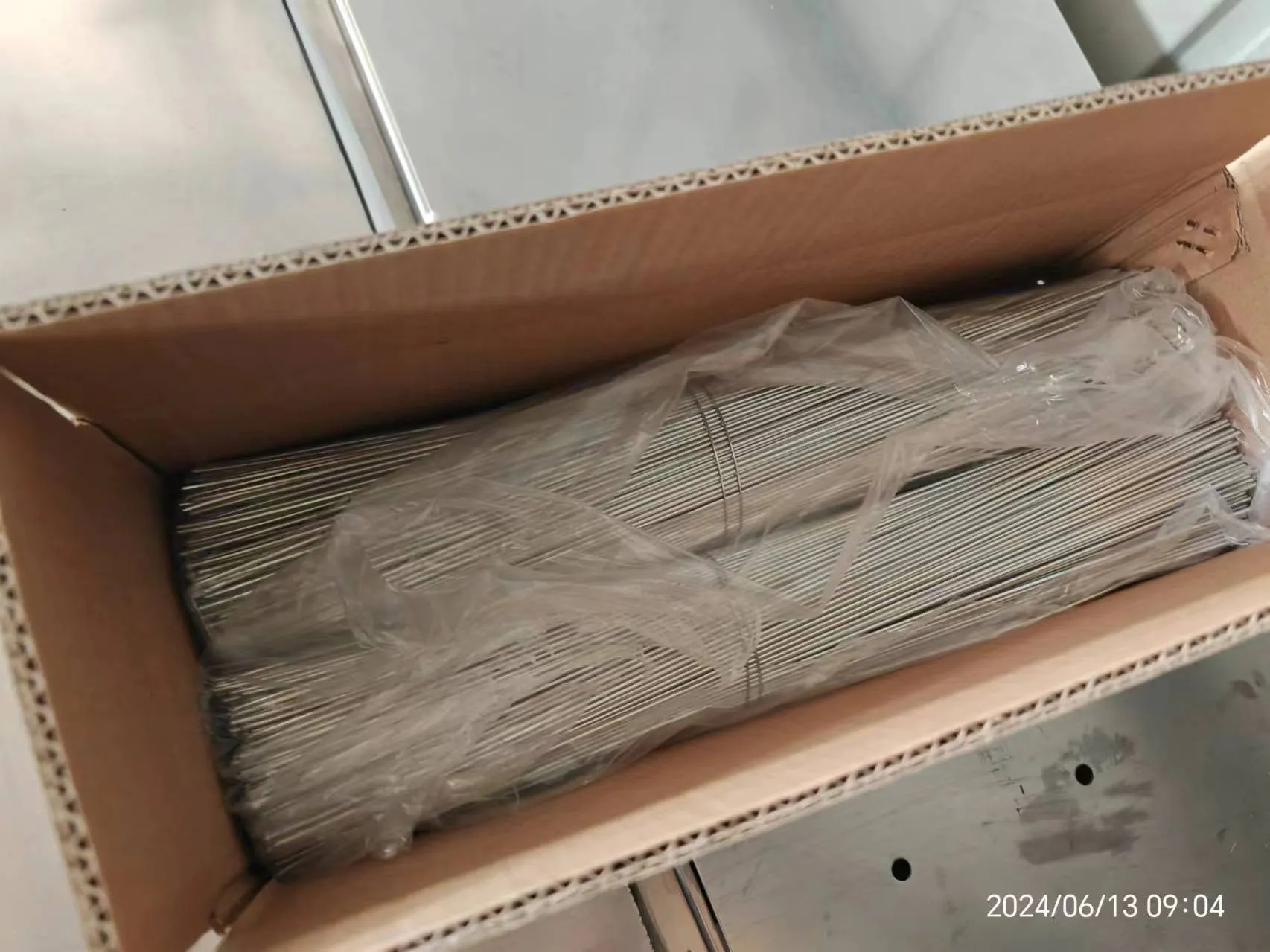
16 gauge galvanized tie wire is a crucial fastening component widely utilized across diverse industrial applications, notably in construction, agriculture, and manufacturing. Its primary function is to securely bind materials, providing structural support and stability. Positioned within the broader category of binding wires, it differentiates itself through its galvanized coating – a zinc layer applied to a steel core – conferring significant corrosion resistance. The ‘16 gauge’ designation refers to the wire diameter, impacting its tensile strength and handling characteristics. Core performance characteristics include tensile strength, elongation, coating thickness, and resistance to environmental degradation. The increasing demand for durable and cost-effective fastening solutions drives the continued importance of 16 gauge galvanized tie wire in modern industrial processes. A key pain point in its application lies in ensuring consistent zinc coating adhesion and preventing hydrogen embrittlement during the galvanization process, which can compromise long-term structural integrity.
Material Science & Manufacturing
The foundational material for 16 gauge galvanized tie wire is typically low-carbon steel, specifically SAE 1008 or similar grades. This steel exhibits sufficient ductility for wire drawing and possesses acceptable weldability. The chemical composition typically consists of 0.08% carbon, 0.60-0.90% manganese, 0.04% phosphorus, and 0.05% sulfur, with the remainder being iron. The manufacturing process begins with hot rolling of steel billets into wire rod. This rod is then subjected to a series of cold drawing operations through progressively smaller dies, reducing the diameter to 16 gauge (approximately 1.291 mm). Critical parameters during wire drawing include die lubrication (often employing stearates) and drawing speed, which affect the wire’s surface finish and mechanical properties. Following drawing, the wire undergoes annealing to relieve work hardening and enhance ductility. The galvanization process, typically hot-dip galvanizing, is then performed. This involves immersing the cleaned wire in a molten zinc bath (typically 98% pure zinc) at temperatures around 450°C. The zinc metallurgically bonds to the steel surface, forming a protective coating. Controlling the bath temperature, immersion time, and cooling rate are critical to achieving a uniform and adherent zinc coating. Post-galvanization, the wire may undergo passivation treatments to further enhance corrosion resistance.
Performance & Engineering
The performance of 16 gauge galvanized tie wire is fundamentally governed by its tensile strength, yield strength, and elongation. Typical tensile strength values range from 600-800 MPa, while yield strength falls between 300-500 MPa, and elongation is typically 10-15%. Engineering considerations involve calculating the load-bearing capacity of the wire based on the expected application stresses. In applications subject to dynamic loading (e.g., earthquake bracing), fatigue analysis is essential to predict the wire’s lifespan. The galvanized coating provides corrosion protection through a sacrificial mechanism; the zinc corrodes preferentially, protecting the underlying steel. The effectiveness of this protection depends on the coating thickness (typically 20-50 μm) and the environmental conditions. Exposure to chlorides (e.g., marine environments) accelerates corrosion. Compliance requirements are often dictated by industry-specific standards, such as ASTM A641 for zinc coatings, and regional building codes which may specify minimum wire gauge and tensile strength requirements for structural applications. Force analysis needs to account for creep, the slow deformation of the wire under sustained load, particularly at elevated temperatures. This is especially important in applications involving long-term structural support.
Technical Specifications
| Parameter | Typical Value | Test Method | Units |
|---|---|---|---|
| Wire Gauge | 16 | Visual Inspection/Calipers | AWG |
| Diameter | 1.291 | Micrometer | mm |
| Tensile Strength | 650-800 | ASTM A641 | MPa |
| Yield Strength | 350-500 | ASTM A641 | MPa |
| Elongation | 12-18 | ASTM A641 | % |
| Zinc Coating Weight | 20-50 | ASTM B693 | g/m² |
Failure Mode & Maintenance
Several failure modes can affect 16 gauge galvanized tie wire. Hydrogen embrittlement, a consequence of the galvanization process, can lead to brittle fracture, especially under tensile stress. This occurs when atomic hydrogen diffuses into the steel lattice, reducing its ductility. Corrosion, particularly localized corrosion like pitting, can weaken the wire over time, especially in chloride-rich environments. Fatigue cracking, arising from cyclic loading, can initiate at surface defects or corrosion pits and propagate until catastrophic failure. Mechanical damage, such as abrasion or cutting, can reduce the wire’s cross-sectional area and compromise its strength. Delamination of the zinc coating, caused by poor adhesion or excessive stress, diminishes corrosion protection. Maintenance primarily focuses on preventative measures. Regular visual inspection to identify corrosion or damage is crucial. Protective coatings (e.g., clear lacquers) can be applied to enhance corrosion resistance, particularly in harsh environments. Avoid bending the wire sharply, as this can induce stress concentrations and promote fatigue cracking. In applications where the wire is subject to significant corrosion, periodic replacement is recommended to ensure structural integrity.
Industry FAQ
Q: What is the impact of varying zinc coating thickness on the lifespan of the wire?
A: Increasing zinc coating thickness generally enhances corrosion resistance and extends the lifespan of the wire. However, beyond a certain point (typically around 50 μm), the incremental benefit diminishes, and the cost increases. The optimal coating thickness depends on the severity of the corrosive environment. Thicker coatings provide more sacrificial protection, slowing down the corrosion rate of the steel substrate.
Q: How does the annealing process affect the wire’s ductility and tensile strength?
A: Annealing reduces the hardness and brittleness caused by cold working (wire drawing), increasing ductility. However, this comes at the expense of some tensile strength. The annealing temperature and cooling rate must be carefully controlled to achieve the desired balance between ductility and strength for the intended application.
Q: What are the concerns related to hydrogen embrittlement during galvanizing, and how can they be mitigated?
A: Hydrogen embrittlement is a critical concern. Atomic hydrogen, produced during the pickling and galvanizing processes, can diffuse into the steel, making it brittle. Mitigation strategies include using inhibitors in the pickling bath, controlling the galvanizing temperature, and applying a post-galvanizing baking treatment to drive out the hydrogen.
Q: Can 16 gauge galvanized tie wire be used in direct contact with aluminum? What are the potential issues?
A: Direct contact between galvanized steel and aluminum should be avoided. This creates a galvanic couple, where aluminum acts as the anode and corrodes preferentially in the presence of an electrolyte (e.g., moisture). This accelerated corrosion can compromise both the aluminum and the steel wire. An isolating barrier (e.g., a non-conductive coating or a plastic spacer) is essential.
Q: What is the recommended storage procedure for 16 gauge galvanized tie wire to prevent corrosion before use?
A: Store the wire in a dry, well-ventilated area, protected from direct contact with moisture and corrosive substances. Ideally, the wire should be stored indoors. If outdoor storage is unavoidable, it should be covered with a waterproof tarp. Avoid stacking the wire directly on the ground.
Conclusion
16 gauge galvanized tie wire remains a fundamental fastening solution due to its combination of tensile strength, ductility, and cost-effective corrosion resistance. The manufacturing process, encompassing steel selection, wire drawing, and hot-dip galvanization, demands precise control over key parameters to ensure consistent product quality and performance. Understanding the potential failure modes – including hydrogen embrittlement, corrosion, and fatigue – is critical for selecting appropriate wire gauges and implementing preventative maintenance strategies.
Continued advancements in galvanization techniques, such as the development of zinc-aluminum alloy coatings, promise enhanced corrosion protection and extended service life. The increasing emphasis on sustainable materials and construction practices may drive further research into alternative coating materials and environmentally friendly manufacturing processes. Proper material selection, careful installation, and regular inspection are paramount to maximizing the lifespan and reliability of 16 gauge galvanized tie wire in diverse industrial applications.