



Introduction
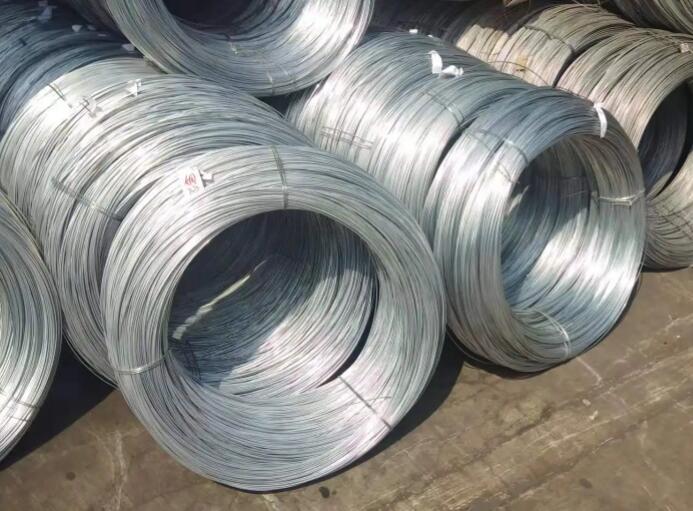
16 Gauge (1.27 mm diameter) non-galvanized steel wire, often referred to as ‘no gi’ wire within certain industrial applications, represents a fundamental material in a wide spectrum of manufacturing processes. While seemingly simple, its performance characteristics are critical in applications ranging from wire rope construction and fencing to specialized forming and binding operations. This guide provides a detailed technical overview of 16 no gi wire, encompassing its material science, manufacturing processes, performance attributes, potential failure modes, and relevant industry standards. Its position in the supply chain is as a semi-finished product, requiring further processing by downstream manufacturers. Core performance relies heavily on tensile strength, ductility, and surface consistency, directly impacting the reliability and longevity of finished goods. Unlike galvanized wire, the absence of a zinc coating necessitates careful consideration of corrosion protection strategies in applicable environments.
Material Science & Manufacturing
The primary raw material for 16 no gi wire is typically carbon steel, specifically low-carbon steel grades such as SAE 1008 or similar. These steels offer a balance of ductility and strength essential for wire drawing. The steel composition dictates key properties including tensile strength, yield strength, and elongation. Raw material selection must prioritize consistent chemical composition to minimize variations in the final product. Manufacturing commences with hot rolling of steel billets into wire rod. This is followed by a series of cold drawing operations through progressively smaller dies to achieve the final 1.27 mm diameter. Lubrication is critical during drawing to reduce friction, prevent galling, and maintain surface finish. Key parameters controlled during drawing include die angle, drawing speed, and reduction ratio. Annealing processes, typically involving controlled heating and cooling cycles, are interspersed between drawing stages to restore ductility and prevent work hardening. Post-drawing processes include straightening, cleaning (to remove residual lubricants), and coiling. Surface quality is frequently assessed using eddy current testing to detect defects like cracks or inclusions. The final material exhibits a primarily ferrite-pearlite microstructure, influenced by the carbon content and cold work. Hydrogen embrittlement can occur during acid pickling (a cleaning step), requiring careful control of acid concentration and post-pickling baking to mitigate the risk.
Performance & Engineering
The performance of 16 no gi wire is fundamentally governed by its mechanical properties. Tensile strength, typically ranging from 400-550 MPa, dictates its load-bearing capacity. Yield strength, generally around 275-400 MPa, defines the onset of permanent deformation. Elongation, often exceeding 15%, indicates ductility and the ability to withstand plastic deformation without fracturing. Force analysis in applications like wire rope construction necessitates accurate determination of these parameters. Environmental resistance, a critical consideration given the absence of galvanization, is largely dependent on the surrounding atmosphere and potential exposure to corrosive agents. The wire is susceptible to oxidation and corrosion, particularly in humid or saline environments. Coating options (e.g., epoxy, polyurethane) can be applied to enhance corrosion resistance. Compliance requirements often dictate specific mechanical property thresholds and material composition limits, particularly in safety-critical applications. For example, applications involving lifting or load securing may necessitate adherence to EN 10264-2 standards (for high-strength steel wire for ropes). The wire's formability is utilized in applications like forming wire shapes or creating intricate mesh structures. Springback – the tendency of the wire to return to its original shape after bending – must be accounted for in design considerations. Fatigue resistance is also vital; repeated cyclic loading can lead to crack initiation and propagation, eventually resulting in failure.
Technical Specifications
| Parameter | Typical Value (Metric) | Typical Value (Imperial) | Testing Standard |
|---|---|---|---|
| Diameter | 1.27 mm | 0.050 inches | ISO 286 |
| Tensile Strength | 450-550 MPa | 65-80 ksi | ASTM A854 |
| Yield Strength | 275-400 MPa | 40-58 ksi | ASTM A854 |
| Elongation (%) | >15% | >15% | ASTM A854 |
| Surface Finish | Clean, free from rust and defects | Clean, free from rust and defects | Visual Inspection |
| Chemical Composition (Carbon) | 0.08 - 0.15% | 0.08 - 0.15% | ASTM A789 |
Failure Mode & Maintenance
Failure modes of 16 no gi wire are varied and dependent on the application. Common modes include tensile overload (resulting in ductile fracture), fatigue cracking (induced by cyclic loading), corrosion-induced failure (particularly in exposed environments), and hydrogen embrittlement (leading to brittle fracture). Fatigue cracks typically initiate at surface defects or stress concentration points. Corrosion can lead to pitting, crevice corrosion, or uniform thinning of the wire cross-section. Hydrogen embrittlement, a concern during acid pickling or electroplating, causes internal cracking and reduces ductility. Maintenance practices primarily focus on preventing corrosion. Protective coatings (paints, epoxies, polymers) can significantly extend service life. Regular inspection for signs of corrosion, cracks, or deformation is crucial. In applications involving high stress levels, periodic non-destructive testing (NDT) such as magnetic particle inspection or ultrasonic testing can detect early-stage cracks. Proper storage is also essential; wire should be stored in a dry, clean environment to prevent rust formation. For applications where wire is subjected to bending or forming, periodic lubrication can reduce friction and wear. When replacing wire, it is critical to use material that meets or exceeds the original specifications.
Industry FAQ
Q: What is the primary difference between 16 no gi wire and 16 gauge galvanized wire in terms of corrosion resistance?
A: Galvanized wire possesses a zinc coating that provides sacrificial corrosion protection. The zinc corrodes preferentially, protecting the underlying steel. 16 no gi wire lacks this protective layer and is therefore more susceptible to corrosion, particularly in humid or saline environments. Corrosion protection for no gi wire relies on surface coatings or controlled environment storage.
Q: How does the cold drawing process affect the mechanical properties of the 16 no gi wire?
A: Cold drawing increases the tensile strength and yield strength of the wire due to work hardening. However, it simultaneously reduces ductility. This is why annealing processes are essential between drawing stages to restore ductility and prevent cracking. The final mechanical properties are a function of the degree of cold work and the annealing parameters.
Q: What are the key considerations when selecting a surface coating for 16 no gi wire intended for outdoor use?
A: The choice of coating depends on the specific environmental conditions. Epoxy coatings offer good general corrosion protection. Polyurethane coatings provide enhanced UV resistance and abrasion resistance. Consider the adhesion of the coating to the steel substrate, the coating’s flexibility, and its resistance to impact and chemical exposure.
Q: What is hydrogen embrittlement and how can it be prevented in 16 no gi wire?
A: Hydrogen embrittlement occurs when atomic hydrogen diffuses into the steel, reducing its ductility and increasing its susceptibility to brittle fracture. It is often caused by acid pickling during cleaning. Prevention involves carefully controlling the acid concentration, using inhibitors, and performing a post-pickling baking process to drive out the hydrogen.
Q: What is the typical tensile strength range for 16 no gi wire used in fencing applications?
A: For fencing applications, 16 no gi wire typically exhibits a tensile strength range of 450-500 MPa (approximately 65-73 ksi). This provides sufficient strength to withstand the loads imposed by wind, livestock, or security considerations.
Conclusion
16 no gi wire, while a seemingly basic material, represents a critical component in a diverse array of industrial applications. Its performance is intricately linked to its material composition, manufacturing processes, and the specific demands of the intended application. Understanding the interplay between tensile strength, ductility, corrosion resistance, and potential failure modes is paramount for ensuring the reliability and longevity of finished products. Careful control of manufacturing parameters, coupled with appropriate surface treatment and maintenance practices, can mitigate the risk of premature failure and maximize the service life of this versatile material.
Looking forward, advancements in steel alloying and coating technologies will continue to refine the performance characteristics of 16 no gi wire. Research into more environmentally friendly corrosion protection methods and improved hydrogen embrittlement mitigation techniques will be crucial. Furthermore, the adoption of advanced non-destructive testing methods will enable more proactive identification of potential defects, further enhancing the safety and reliability of applications employing this foundational material.