



Introduction
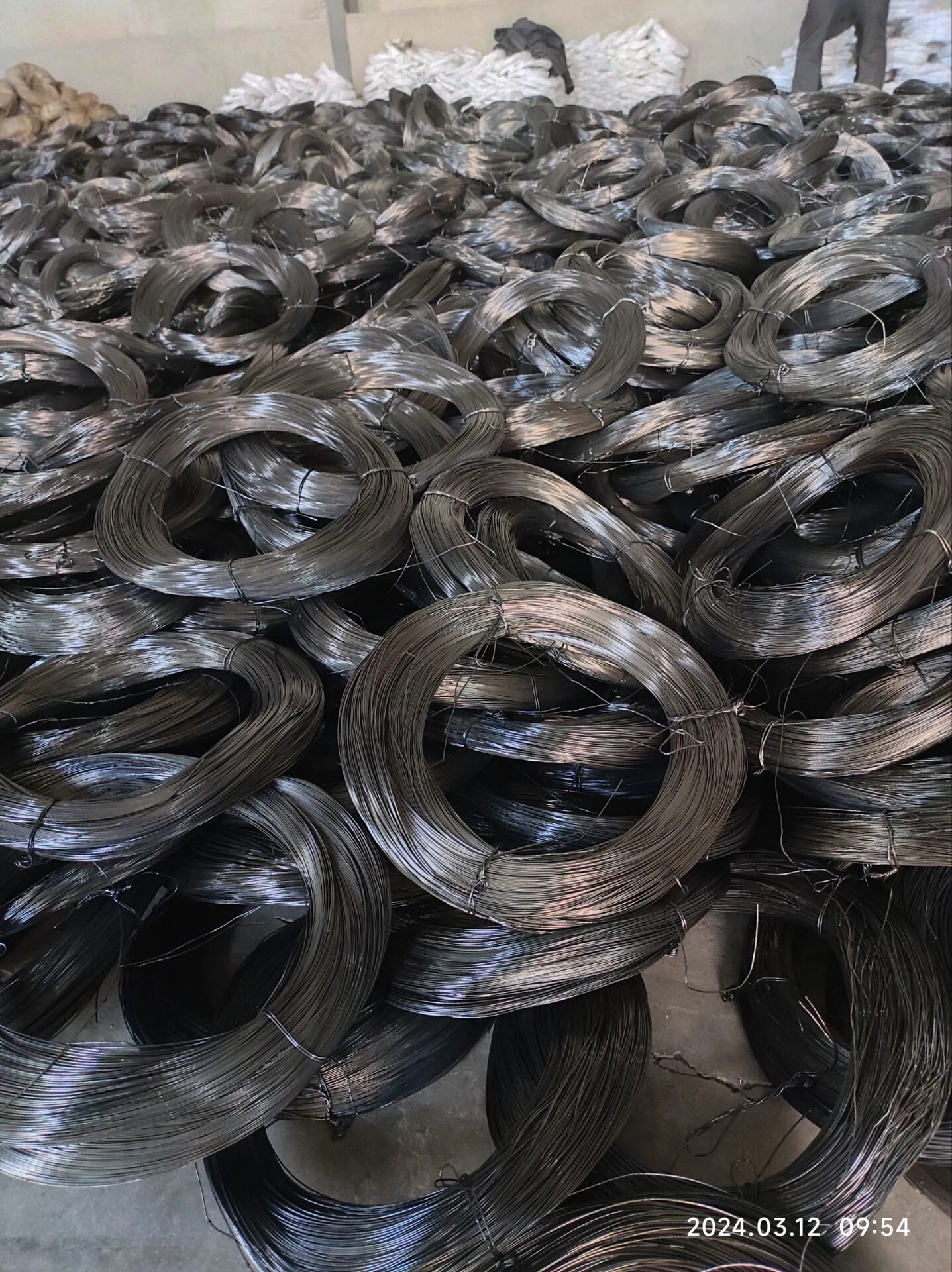
16ga black tie wire, typically constructed from annealed low-carbon steel, represents a fundamental fastening and construction material utilized across diverse industrial applications. Its primary function is to securely bind materials, providing structural support and maintaining alignment. Within the broader wire product category, 16ga black tie wire distinguishes itself through its gauge (16 American Wire Gauge), which dictates its tensile strength and suitability for medium-duty applications. It occupies a critical position in industries like fencing, agriculture, construction, and packaging, serving as a cost-effective alternative to more complex fastening systems. The ‘black’ designation refers to a light oil coating applied during manufacturing to inhibit rust formation, offering limited corrosion resistance in indoor environments. Core performance characteristics center around tensile strength, elongation, and resistance to deformation under load, all crucial parameters for ensuring structural integrity and preventing failure in service. Understanding these properties and the manufacturing processes behind this seemingly simple wire is essential for optimal utilization and preventative maintenance.
Material Science & Manufacturing
The foundational material for 16ga black tie wire is typically low-carbon steel, often AISI 1008 or similar grades. This steel composition exhibits a ferrite-pearlite microstructure, yielding a balance of ductility and strength. The raw material, sourced as steel rod, undergoes several crucial processing steps. Firstly, the rod is drawn through a series of progressively smaller dies, a process known as wire drawing. This cold-working process reduces the diameter to the desired 16ga (approximately 1.291mm) and increases tensile strength. During wire drawing, lubrication is critical to minimize friction and prevent die wear; specialized drawing compounds containing stearates and other additives are commonly employed. Following wire drawing, the wire is annealed – heated and slowly cooled – to restore ductility and relieve internal stresses induced by the drawing process. This annealing process is typically performed in a controlled atmosphere to prevent oxidation. The final stage involves applying a light oil coating, typically mineral oil, to provide temporary corrosion protection. Critical parameters during manufacturing include die profile, drawing speed, annealing temperature and dwell time, and oil viscosity. Variations in these parameters directly affect the wire's mechanical properties, including tensile strength, yield strength, and elongation. Chemical composition control of the steel is vital, with stringent limits on carbon, manganese, phosphorus, and sulfur to ensure consistent performance characteristics. The consistency of the oil coating is also monitored to guarantee adequate, yet not excessive, surface protection.
Performance & Engineering
The performance of 16ga black tie wire is fundamentally governed by its tensile strength and elongation. Tensile strength, typically ranging from 80,000 to 90,000 PSI (552 to 620 MPa), dictates the maximum load the wire can withstand before fracturing. Elongation, expressed as a percentage, reflects the wire’s ability to deform plastically before breakage; higher elongation generally indicates greater ductility and resistance to sudden failure. Force analysis in applications involves calculating the tensile stress imposed on the wire based on the load it supports and its cross-sectional area. Safety factors are crucial, with engineering designs typically incorporating a safety factor of 2 to 4 to account for unforeseen stresses, material variations, and environmental factors. Environmental resistance is a significant consideration. While the oil coating provides limited protection, prolonged exposure to moisture and corrosive environments (e.g., salt spray) will lead to rust formation and a reduction in tensile strength. Galvanized or vinyl-coated wire is often preferred in such applications. Compliance requirements depend on the specific industry. For fencing applications, standards may dictate minimum tensile strength and wire diameter. In packaging, food-grade oils may be required for the coating to ensure compatibility with packaged goods. The wire's performance under cyclic loading, or fatigue, is also important, particularly in applications where the wire is repeatedly bent or strained. Fatigue life can be significantly reduced by stress concentrations at bends or sharp edges.
Technical Specifications
| Parameter | Typical Value (Imperial) | Typical Value (Metric) | Test Standard |
|---|---|---|---|
| Wire Gauge | 16 ga | 1.291 mm | ASTM A610 |
| Tensile Strength | 80,000 - 90,000 PSI | 552 - 620 MPa | ASTM A610 |
| Elongation | 15-25% | 15-25% | ASTM A610 |
| Diameter Tolerance | ±0.002 in | ±0.051 mm | ASTM A610 |
| Coating Type | Light Oil | Mineral Oil | Internal Specification |
| Zinc Coating Weight (if applicable) | N/A | N/A | ASTM B6 |
Failure Mode & Maintenance
16ga black tie wire is susceptible to several failure modes. The most common is tensile fracture, occurring when the applied load exceeds the wire's tensile strength. This can be exacerbated by stress concentrations caused by sharp bends, kinks, or pre-existing defects. Corrosion is another significant failure mode, particularly in humid or corrosive environments. Rust formation weakens the wire, reducing its effective cross-sectional area and leading to premature failure. Fatigue cracking can occur under cyclic loading, even at stresses below the tensile strength. Microscopic cracks initiate at stress concentration points and propagate over time, eventually leading to catastrophic failure. Hydrogen embrittlement, though less common, can occur in certain environments, particularly those containing acids, reducing the wire’s ductility and accelerating fracture. Maintenance primarily involves visual inspection for signs of corrosion, deformation, or damage. Regularly cleaning the wire to remove dirt and debris can help mitigate corrosion. In corrosive environments, consider using galvanized or vinyl-coated wire as a preventative measure. If the wire is subjected to significant stress, periodic replacement is recommended, even if no visible damage is apparent. Lubrication of bending points can reduce friction and minimize stress concentration during use. Proper storage, shielded from moisture and corrosive elements, will extend the wire’s service life.
Industry FAQ
Q: What is the primary difference between 16ga and 14ga black tie wire in terms of application suitability?
A: 14ga wire, being thicker, possesses a higher tensile strength and is therefore better suited for applications requiring greater load-bearing capacity. 16ga is sufficient for lighter-duty applications, offering a cost advantage. The selection depends on the specific load requirements and the acceptable safety factor.
Q: How does the oil coating impact the wire's performance in outdoor environments?
A: The oil coating provides only temporary corrosion protection. In outdoor environments, particularly those exposed to rain, salt spray, or humidity, the oil will wash away, leading to rust formation and a reduction in tensile strength. Galvanized or vinyl-coated wire is recommended for outdoor use.
Q: What is the typical shelf life of 16ga black tie wire if stored correctly?
A: If stored in a dry, indoor environment, protected from moisture and corrosive agents, 16ga black tie wire can maintain its properties for several years. However, periodic inspection is recommended to check for any signs of rust or degradation.
Q: Can 16ga black tie wire be welded? If so, what considerations are important?
A: While technically possible, welding 16ga black tie wire is generally not recommended due to the low-carbon steel composition, which can lead to weld porosity and reduced weld strength. If welding is necessary, a low-heat process such as MIG welding with appropriate shielding gas is recommended, and post-weld heat treatment may be required.
Q: What standards govern the chemical composition of the steel used in 16ga black tie wire?
A: The chemical composition is typically governed by ASTM A610, which specifies limits for carbon, manganese, phosphorus, and sulfur to ensure consistent mechanical properties. Supplier certifications should verify compliance with this standard.
Conclusion
16ga black tie wire, despite its seemingly simple construction, is a critical component in a wide range of industrial applications. Its performance is intrinsically linked to the raw material composition, manufacturing processes, and environmental conditions it encounters. Understanding the interplay between tensile strength, elongation, and corrosion resistance is crucial for selecting the appropriate wire gauge and implementing preventative maintenance measures.
The continued reliance on 16ga black tie wire highlights its cost-effectiveness and versatility. Future developments may focus on enhancing corrosion resistance through improved coating technologies and exploring alternative steel alloys with increased strength and durability. Ultimately, careful consideration of the application requirements and adherence to industry standards are paramount to ensuring the reliable and safe use of this essential fastening material.