



Introduction
20 gauge galvanized iron (GI) wire is a widely utilized metallic conductor and structural component across diverse industrial applications, including construction, telecommunications, agriculture, and manufacturing. Defined by its 0.812 mm diameter, this wire comprises a ferrous metal core coated with a protective layer of zinc via hot-dip galvanization. This process imparts enhanced corrosion resistance, significantly extending the service life of the wire in harsh environments. Its technical position in the supply chain is fundamental, acting as a building block for fencing, cable armoring, binding, suspension, and various other fabricated products. Core performance characteristics center around its tensile strength, conductivity, formability, and, crucially, its ability to resist degradation from environmental factors. A primary industry pain point revolves around maintaining consistent zinc coating thickness and adherence to avoid premature corrosion failures, especially in applications exposed to chlorides or acidic conditions. Understanding the nuances of manufacturing, material properties, and potential failure mechanisms is therefore critical for effective specification and utilization of 20 gauge GI wire.
Material Science & Manufacturing
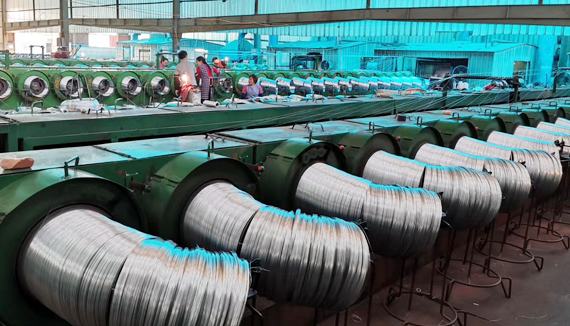
The foundational material for 20 gauge GI wire is low-carbon steel, typically containing between 0.05% and 0.15% carbon. The steel's inherent ductility is essential for the wire drawing process. Raw material selection is critical; impurities like sulfur and phosphorus can negatively impact weldability and formability. The galvanization process, generally hot-dip galvanizing, involves immersing the cleaned steel wire into a bath of molten zinc (typically 98% purity). The zinc metallurgically bonds with the steel surface forming a series of zinc-iron alloy layers, culminating in a final outer layer of pure zinc. Key parameters during manufacturing include precise control of the steel’s chemical composition, the reduction in diameter during wire drawing (affecting grain structure and tensile strength), and the temperature and immersion time during galvanization. Coating thickness is directly correlated to immersion time and zinc bath composition. Post-galvanization treatments, like passivation, are often applied to further enhance corrosion resistance by forming a protective chromate conversion coating. Maintaining a consistent and uniform coating thickness – typically ranging from 20-60 μm for 20 gauge wire – is the most significant manufacturing challenge. Insufficient coating leads to localized corrosion, while excessive coating can result in flaking or cracking.
Performance & Engineering
The mechanical performance of 20 gauge GI wire is dictated by its tensile strength, yield strength, and elongation. Typical tensile strength ranges from 330-400 MPa, and yield strength from 230-280 MPa. These values are heavily influenced by the degree of cold working during wire drawing. Environmental resistance is the defining performance characteristic. The zinc coating acts as a sacrificial anode, protecting the underlying steel from corrosion. However, this protection is compromised in the presence of chlorides (e.g., marine environments) which can penetrate the zinc layer and initiate localized corrosion (pitting). Engineering applications must consider these environmental factors. For example, in suspension applications, the wire’s load-bearing capacity needs to be calculated considering potential corrosion-induced weakening over the design life. Compliance requirements vary by region, with standards often specifying minimum zinc coating thickness, adhesion tests, and salt spray resistance. The design must account for galvanic corrosion if the wire is in contact with dissimilar metals; using appropriate isolation techniques is crucial. Furthermore, bending and forming operations must be carefully controlled to avoid damaging the zinc coating, as cracks or deformations expose the steel substrate to corrosion.
Technical Specifications
| Parameter | Typical Value | Test Method | Units |
|---|---|---|---|
| Diameter | 0.812 | Micrometer | mm |
| Tensile Strength | 350 | ASTM A610 | MPa |
| Yield Strength | 250 | ASTM A610 | MPa |
| Elongation | 12 | ASTM A610 | % |
| Zinc Coating Thickness | 20-60 | ASTM B693 / ISO 9000 | μm |
| Zinc Coating Adhesion | Pass (No separation) | ASTM A780 | Qualitative |
Failure Mode & Maintenance
The primary failure modes for 20 gauge GI wire are corrosion-related. Uniform corrosion occurs when the zinc coating is consumed at a consistent rate, leading to a gradual reduction in wire diameter and strength. However, localized corrosion, particularly pitting and crevice corrosion, is more common and more detrimental. Pitting initiates at defects in the zinc coating, creating small, concentrated corrosion sites. Crevice corrosion occurs in shielded areas where oxygen access is limited. Hydrogen embrittlement can also contribute to failure, especially in high-strength wires exposed to acidic environments. Mechanical failure modes include fatigue cracking due to cyclic loading, and tensile overload resulting in direct fracture. Maintenance strategies focus on preventative measures. Regularly inspecting the wire for signs of corrosion (rust spots, white rust – zinc corrosion products) is crucial. Applying a protective coating (e.g., paint, epoxy) over the galvanized surface can provide an additional barrier against corrosion. For applications in corrosive environments, sacrificial anodes (e.g., magnesium) can be installed to protect the wire. Damaged or corroded sections should be promptly replaced. Proper storage of the wire is essential; it should be protected from moisture and direct contact with corrosive substances. Avoid bending the wire excessively, as this can damage the zinc coating.
Industry FAQ
Q: What is the impact of varying zinc coating thicknesses on the long-term performance of 20 gauge GI wire?
A: Increased zinc coating thickness provides greater sacrificial protection, extending the lifespan of the wire, particularly in corrosive environments. However, very thick coatings can be prone to cracking during forming operations. The optimal thickness depends on the application and the severity of the environment. Following relevant standards (ASTM B693, ISO 9000) is essential.
Q: How does the presence of chlorides affect the corrosion resistance of galvanized wire?
A: Chlorides are highly detrimental to galvanized coatings. They penetrate the zinc layer, disrupting the passive film and initiating localized corrosion (pitting). This process is accelerated in warm, humid environments. Using chloride-resistant alloys or applying additional protective coatings is recommended in marine or coastal applications.
Q: What are the common methods for verifying the quality of the zinc coating?
A: Common methods include visual inspection for uniform coverage and defects, thickness measurement using magnetic gauges or microscopic cross-sections, adhesion tests (bend test, scratch test), and salt spray testing (ASTM B117) to assess corrosion resistance.
Q: What considerations are necessary when using 20 gauge GI wire in contact with aluminum?
A: Galvanic corrosion is a concern when GI wire is in direct contact with aluminum. Aluminum is less noble than zinc, leading to accelerated corrosion of the aluminum. Using an isolating material (e.g., plastic washers, sleeves) to prevent direct contact is crucial. Alternatively, applying a protective coating to both metals can mitigate the issue.
Q: Can 20 gauge GI wire be welded, and if so, what precautions should be taken?
A: Yes, GI wire can be welded, but it requires specific precautions. The zinc coating vaporizes during welding, releasing toxic fumes. Proper ventilation is essential. The zinc also lowers the weldability of the steel. Using a deoxidizing flux and controlling the welding parameters (low heat input) are recommended to minimize porosity and ensure a strong weld.
Conclusion
20 gauge galvanized iron wire stands as a critical component across numerous industries, valued for its balance of mechanical strength, cost-effectiveness, and corrosion resistance. Understanding the interplay between material science, manufacturing processes, and environmental factors is paramount to ensuring optimal performance and longevity. Maintaining consistent zinc coating quality, mitigating the effects of chlorides, and adhering to relevant industry standards are key considerations during specification and implementation.
Future advancements in coating technologies, such as the development of more corrosion-resistant zinc alloys and innovative passivation treatments, will continue to enhance the durability and reliability of GI wire. Furthermore, implementing advanced non-destructive testing methods for coating inspection will allow for more accurate quality control and proactive maintenance strategies, minimizing the risk of premature failures and extending the service life of critical infrastructure.