



Introduction
30d common nails represent a foundational fastening element within the construction and woodworking industries. The designation “30d” refers to a specific nail size, historically indicating approximately 30 nails per pound of weight, equating to a length of 3 inches (76.2mm). These nails are characterized by a smooth shank and a flat, broad head. They are primarily utilized for structural framing, general construction, and timber-to-timber connections where high withdrawal resistance is not paramount. Their relatively low cost and ease of installation contribute to their widespread adoption. This guide details the material science, manufacturing processes, performance characteristics, potential failure modes, and relevant industry standards governing 30d common nails. A core industry pain point is consistently achieving reliable joint performance under varying environmental conditions and load stresses, which hinges on understanding nail material properties and installation best practices.
Material Science & Manufacturing
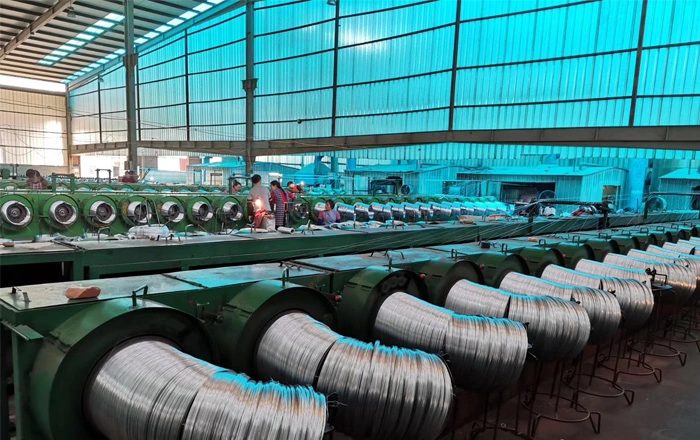
30d common nails are predominantly manufactured from carbon steel, specifically low-carbon steel such as SAE 1008 or similar grades. The steel composition typically includes iron (Fe) as the base element, with controlled additions of carbon (C, typically 0.08-0.15%), manganese (Mn, 0.30-0.60%), phosphorus (P, <0.04%), and sulfur (S, <0.05%). The carbon content dictates the steel’s hardness and ductility; lower carbon content ensures adequate ductility for forming the nail head and preventing brittle fracture. Manganese improves strength and hardenability. Phosphorus and sulfur are present as impurities and are kept low to avoid embrittlement. The manufacturing process begins with wire drawing, where steel rods are reduced in diameter to the required nail shank size. This process work-hardens the steel. Next, the wire is fed into a heading machine. This machine cuts the wire to length and then forms the head by impacting the end of the wire between dies. Precise control of the heading force and die geometry is crucial for consistent head size and shape. Following heading, nails often undergo a surface treatment process, commonly galvanization. Hot-dip galvanization involves immersing the nails in molten zinc, creating a protective zinc coating that prevents corrosion. Electrolytic galvanization offers a more uniform and controlled coating thickness. Quality control throughout the process includes dimensional checks, hardness testing (Rockwell hardness testing is common), and coating thickness measurements. Accurate control of wire diameter, heading parameters, and galvanization process significantly impacts nail performance and longevity.
Performance & Engineering
The performance of 30d common nails is governed by several engineering principles. Shear strength is critical, representing the nail's resistance to forces acting parallel to the shank axis. Tensile strength, while important, is less dominant due to the primary load path being shear in most applications. Withdrawal resistance, or pull-out strength, depends on the shank diameter, surface friction between the nail and wood, and the wood’s density. The nail’s bendability is also a factor; a nail that bends excessively under load may compromise the joint’s integrity. Environmental resistance is primarily addressed through galvanization. The zinc coating provides sacrificial protection, corroding preferentially to the steel substrate. The effectiveness of the galvanization is directly related to coating thickness and the presence of any defects. Compliance requirements vary by region and application. Building codes often specify nail size, spacing, and type based on structural load calculations. Proper nail installation is paramount. Driving nails perpendicular to the wood grain minimizes bending and maximizes holding power. Overdriving nails can crush the wood fibers, reducing holding strength. Underdriving leaves the nail vulnerable to bending and pull-out. The angle of drive also influences performance, with slight angles often preferred to improve resistance to lateral forces. Fatigue performance is a concern in structures subject to cyclical loading. Repeated stress can lead to crack initiation and propagation at the nail shank or head, eventually resulting in failure. Proper material selection and careful installation can mitigate fatigue-related failures.
Technical Specifications
| Parameter | Units | Typical Value | Testing Standard |
|---|---|---|---|
| Nail Length | inches (mm) | 3.0 (76.2) | ASTM F1572 |
| Shank Diameter | inches (mm) | 0.148 (3.76) | ASTM F1572 |
| Head Diameter | inches (mm) | 0.375 (9.53) | ASTM F1572 |
| Head Thickness | inches (mm) | 0.090 (2.29) | ASTM F1572 |
| Zinc Coating Thickness (Hot-Dip Galvanized) | µm | 50-70 | ASTM B695 |
| Tensile Strength | psi (MPa) | 60,000 - 80,000 (414 - 552) | ASTM F1667 |
Failure Mode & Maintenance
30d common nails are susceptible to several failure modes. Bending is a common failure, particularly when nails are driven into hard or knotty wood, or when subjected to lateral forces. Shear failure occurs when the shear stress exceeds the nail's shear strength. Withdrawal failure, or pull-out, happens when the nail loses its grip on the wood fibers. Corrosion is a significant long-term concern, especially in exposed environments. Rusting weakens the nail shank and reduces its cross-sectional area, decreasing both tensile and shear strength. Hydrogen embrittlement can occur in highly stressed nails exposed to corrosive environments, leading to brittle fracture. Fatigue failure manifests as cracks initiating at stress concentration points (e.g., nail head or shank) and propagating under cyclical loading. Maintenance primarily involves preventative measures. Regularly inspecting structures for signs of corrosion is critical. Applying protective coatings to exposed nails can slow down corrosion. Replacing corroded or bent nails is essential for maintaining structural integrity. Avoid using excessive force when driving nails, as this can damage the wood and weaken the connection. Ensure proper ventilation to minimize moisture buildup, which accelerates corrosion. Periodic assessment of nail condition in critical applications can prevent catastrophic failures.
Industry FAQ
Q: What is the difference between a common nail and a box nail, and which is preferable for framing?
A: Common nails have a thicker shank for greater shear strength, while box nails have a thinner shank for easier driving and reduced wood splitting. For framing, common nails are generally preferred due to the higher shear strength required for structural connections. Box nails are more suitable for applications where splitting is a major concern, such as attaching trim.
Q: How does the type of wood affect the holding power of 30d common nails?
A: Harder, denser woods like oak and maple provide significantly greater holding power than softer woods like pine or fir. The wood’s density directly influences the friction between the nail shank and the wood fibers. Nails driven into softer woods are more prone to withdrawal.
Q: What is the importance of proper galvanization, and what constitutes an acceptable coating thickness?
A: Proper galvanization is critical for preventing corrosion and extending the service life of the nails. An acceptable coating thickness, as defined by ASTM B695, typically ranges from 50 to 70 micrometers for hot-dip galvanized nails. A thicker coating provides greater sacrificial protection.
Q: Can 30d common nails be used for exterior applications without additional protection?
A: While galvanized nails offer improved corrosion resistance, relying solely on galvanization for long-term exterior applications isn’t always sufficient, especially in harsh environments. Applying a protective coating, such as paint or sealant, over the nail head can provide an additional barrier against moisture and corrosion.
Q: What are the implications of using nails that are significantly harder than the surrounding wood?
A: Using overly hard nails in softer wood can lead to splitting and reduced holding power. The wood fibers may not be able to adequately grip the nail shank. It's important to select nails with a hardness that is compatible with the wood being used.
Conclusion
30d common nails remain a vital fastener in construction, offering a balance of strength, cost-effectiveness, and ease of installation. However, achieving reliable performance necessitates a thorough understanding of their material properties, manufacturing processes, and potential failure modes. Proper selection of steel grade, galvanization quality, and installation techniques are paramount. The vulnerability to corrosion and fatigue underscores the importance of preventative maintenance and periodic inspections, especially in critical structural applications.
Future trends may involve the development of alternative corrosion-resistant coatings and advanced nail designs aimed at maximizing shear strength and withdrawal resistance. Furthermore, a greater emphasis on sustainable materials and manufacturing processes could lead to the adoption of recycled steel and more environmentally friendly galvanization methods. Maintaining a proactive approach to quality control and adherence to industry standards will continue to be essential for ensuring the long-term integrity of structures fastened with 30d common nails.