



Introduction
The 4" common nail represents a foundational fastening element in construction and woodworking. Positioned within the broader fastener industry chain, it serves as a primary means of joining wood components, offering a cost-effective and readily deployable solution. Its core performance characteristics—holding power, shear strength, and resistance to withdrawal—are determined by material composition, manufacturing tolerances, and applied installation techniques. Historically, common nails have evolved from hand-forged iron to mass-produced steel, with contemporary iterations often incorporating surface coatings for enhanced corrosion resistance. A key industry pain point revolves around ensuring consistent nail quality and minimizing defects that can compromise structural integrity, particularly in load-bearing applications. Furthermore, the environmental impact of nail production and disposal is gaining increased scrutiny, driving demand for more sustainable material options and manufacturing processes.
Material Science & Manufacturing
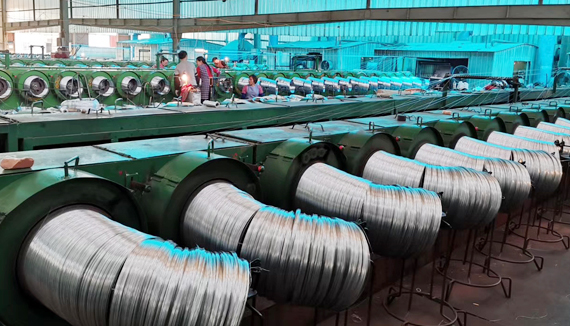
4" common nails are predominantly manufactured from carbon steel, specifically low-carbon steel grades (e.g., SAE 1008, 1010) due to their ductility and weldability. The steel's composition dictates its tensile strength, yield strength, and elongation properties. Raw material selection emphasizes consistency in chemical composition to ensure uniform mechanical performance. Manufacturing begins with wire drawing, reducing the diameter of steel rods to the desired nail gauge. This process induces work hardening, increasing the steel’s strength. Subsequent operations involve cutting the wire to the 4" length, followed by heading, where the nail point is formed. Critical parameters during heading include die geometry, impact force, and temperature control, as these directly influence point quality and minimize cracking. Finally, the nails undergo polishing to remove surface imperfections and may be coated with a protective layer, such as zinc galvanization, to prevent corrosion. Galvanization involves immersing the nails in molten zinc, creating a metallurgical bond that acts as a barrier against environmental degradation. Quality control throughout the manufacturing process includes dimensional checks, hardness testing (Rockwell or Brinell), and coating thickness verification. Impurities in the steel, such as sulfur and phosphorus, can significantly reduce ductility and increase the risk of brittle fracture. Careful control of these elements is therefore paramount.
Performance & Engineering
The performance of a 4" common nail is fundamentally governed by its ability to resist withdrawal, shear, and bending forces. Withdrawal resistance is primarily influenced by nail diameter, length, and the density of the wood being fastened. Shear strength, crucial for resisting forces parallel to the wood surface, is determined by the nail’s cross-sectional area and material strength. Engineering analysis often employs finite element analysis (FEA) to model stress distribution within the nail and surrounding wood, predicting failure points and optimizing nail geometry. Environmental resistance is a critical consideration, especially in exterior applications. Corrosion, particularly from exposure to moisture and chlorides, can lead to weakening and eventual failure. Coatings, such as galvanization or specialized polymeric coatings, mitigate corrosion. Compliance requirements vary depending on the application and geographic region. Building codes often specify minimum nail size, spacing, and penetration depth for structural connections. The angle of nail insertion also significantly impacts holding power; a slight angle enhances withdrawal resistance. Fatigue loading, caused by repeated stress cycles, can lead to incremental crack propagation and eventual failure. The nail’s ability to withstand fatigue is influenced by material properties, stress concentration at the point, and the amplitude of the applied loads.
Technical Specifications
| Nail Diameter (Gauge) | Nail Length (inches) | Head Diameter (inches) | Shank Finish |
|---|---|---|---|
| 6d (0.113 inches) | 4.00 | 0.375 | Bright (Uncoated) |
| 8d (0.131 inches) | 4.00 | 0.438 | Galvanized |
| 10d (0.148 inches) | 4.00 | 0.500 | Phosphated |
| 12d (0.162 inches) | 4.00 | 0.563 | Stainless Steel Coated |
| 6d (0.113 inches) | 4.00 | 0.375 | Hot-Dip Galvanized |
| 8d (0.131 inches) | 4.00 | 0.438 | Electro-Galvanized |
Failure Mode & Maintenance
Common nail failures typically manifest as bending, shear failure at the shank, head separation, or withdrawal. Bending occurs when the nail is subjected to excessive lateral loads exceeding its yield strength. Shear failure results from forces parallel to the nail shank, often due to inadequate nail size or wood density. Head separation, a brittle fracture at the head-shank interface, can occur due to manufacturing defects or impact loading. Withdrawal failures arise from insufficient nail length, wood splitting, or corrosion weakening the nail-wood interface. Fatigue cracking, particularly in applications involving vibration or cyclical loading, initiates at stress concentration points, typically the nail point or head. Corrosion is a pervasive failure mode, especially in exterior environments, leading to a reduction in nail cross-section and diminished holding power. Maintenance primarily focuses on preventative measures. Regular inspection of nailed connections, particularly in critical structural applications, can identify signs of corrosion or loosening. Applying protective coatings to exposed nail heads can extend their service life. In cases of minor corrosion, surface treatments can temporarily restore some holding power. However, severely corroded or damaged nails should be replaced to maintain structural integrity. Proper nailing techniques, ensuring adequate penetration and avoiding angled insertion that weakens the connection, are also crucial for minimizing failures.
Industry FAQ
Q: What is the impact of wood species on the holding power of a 4" common nail?
A: Wood species significantly affect holding power due to variations in density, grain structure, and moisture content. Hardwoods generally offer higher holding power than softwoods, as they provide greater resistance to nail withdrawal. The presence of knots or other defects can also reduce holding power. Moisture content plays a critical role; dry wood offers superior holding power compared to wet wood, as shrinkage can loosen the nail-wood interface.
Q: How does the galvanization process affect the long-term performance of common nails?
A: Galvanization provides a sacrificial layer of zinc that protects the steel nail from corrosion. The zinc corrodes preferentially, preventing the underlying steel from rusting. The thickness of the zinc coating directly correlates with the level of corrosion protection. Hot-dip galvanization typically provides a thicker, more durable coating than electro-galvanization. However, even galvanized nails will eventually corrode in harsh environments, particularly those exposed to chlorides.
Q: What are the key considerations when selecting the appropriate nail gauge for a specific application?
A: Nail gauge selection depends on the wood species, the anticipated load, and the application’s structural requirements. Higher gauges (smaller diameter) are suitable for softer woods and light-duty applications, while lower gauges (larger diameter) are necessary for hardwoods and load-bearing connections. Building codes often specify minimum nail gauge requirements based on the application. Consideration should also be given to the potential for wood splitting; excessively thick nails can cause splitting, reducing holding power.
Q: What are the common causes of nail bending during installation, and how can they be avoided?
A: Nail bending during installation is often caused by striking the nail head at an angle, using a hammer with excessive weight, or encountering resistance in the wood (e.g., knots, dense grain). To avoid bending, ensure the hammer strikes the nail head squarely and use a hammer appropriate for the nail size and wood species. Pre-drilling pilot holes can also reduce resistance and prevent bending, especially when working with hardwoods.
Q: How does the nail’s point angle affect its penetration and holding power?
A: The nail’s point angle influences both penetration and holding power. A steeper point angle (e.g., 30-34 degrees) facilitates easier penetration into the wood, particularly hardwoods. However, a very steep angle can increase the risk of splitting. A shallower point angle (e.g., 20-25 degrees) provides better holding power once the nail is fully seated, as it creates a larger bearing surface. The optimal point angle depends on the wood species and application.
Conclusion
The 4" common nail, while seemingly simple, represents a critical component in countless construction and woodworking applications. Its performance relies on a complex interplay of material science, manufacturing precision, and engineering principles. Understanding the factors influencing its holding power, shear strength, and resistance to corrosion is essential for ensuring structural integrity and longevity. Selecting the appropriate nail gauge, applying proper installation techniques, and considering environmental factors are all vital considerations.
Looking forward, advancements in material science may lead to the development of more durable and corrosion-resistant nail alloys. Sustainable manufacturing practices, focusing on recycled materials and reduced energy consumption, are also gaining prominence. The continued refinement of surface coatings will further enhance corrosion protection, extending the service life of nailed connections and minimizing maintenance requirements. Ultimately, the reliable performance of the 4" common nail remains fundamental to the safety and durability of built environments.