



Introduction
4mm galvanized wire is a carbon steel wire coated with a protective layer of zinc. This coating provides a crucial barrier against corrosion, making it a foundational material across diverse industries, including construction, agriculture, telecommunications, and manufacturing. Its 4mm diameter represents a common size balancing strength, flexibility, and cost-effectiveness. The galvanization process – typically hot-dip galvanizing – significantly extends the wire’s service life, particularly in harsh environmental conditions. Within the industry chain, it serves as a precursor to numerous finished products, from fencing and cable armoring to springs and mesh. Core performance characteristics include tensile strength, ductility, corrosion resistance, and uniform coating adhesion, all of which are critical for reliable performance in its varied applications. The increasing demand for durable and long-lasting infrastructure components drives continued reliance on galvanized wire.
Material Science & Manufacturing
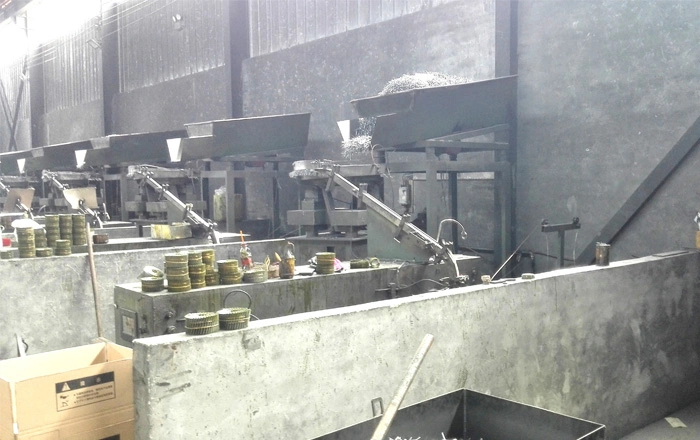
The base material for 4mm galvanized wire is typically carbon steel, ranging from low-carbon steels (e.g., SAE 1008) to medium-carbon steels (e.g., SAE 1045), chosen based on the required tensile strength and ductility. Low-carbon steels offer superior formability, while medium-carbon steels provide increased strength. The steel’s chemical composition is meticulously controlled to ensure consistent mechanical properties. The galvanization process typically employs hot-dip galvanizing, where the wire is immersed in a molten zinc bath (typically 98% pure zinc) at temperatures around 450-460°C. This process forms a metallurgical bond between the zinc and the steel substrate, creating a series of zinc-iron alloy layers followed by a pure zinc outer layer. Critical parameters during hot-dip galvanizing include steel surface preparation (acid pickling to remove rust and scale), fluxing (to promote zinc adhesion), immersion time, cooling rate, and post-treatment (e.g., passivation to enhance corrosion resistance). The resulting coating thickness significantly impacts corrosion protection; typical coating thicknesses range from 40 to 80 μm. Wire drawing processes are used to achieve the 4mm diameter, requiring precise control of die angles, lubrication, and drawing speed to prevent defects like scratches or wire breaks. Quality control measures involve eddy current testing to detect surface flaws, and coating thickness measurements using magnetic induction.
Performance & Engineering
The performance of 4mm galvanized wire is dictated by its mechanical properties and environmental resistance. Tensile strength, typically ranging from 350-500 MPa depending on the steel grade, determines its load-bearing capacity. Ductility, measured by elongation percentage, is crucial for applications requiring bending or forming. The zinc coating provides cathodic protection; zinc corrodes preferentially, protecting the underlying steel even if the coating is scratched or damaged. The effectiveness of this protection is influenced by the coating thickness and the environmental conditions. Corrosion resistance is evaluated using salt spray testing (ASTM B117) and cyclic corrosion testing. Engineering considerations include assessing the wire’s resistance to bending fatigue, especially in applications involving repeated flexing. Force analysis is critical for applications involving tensile loads, requiring accurate determination of breaking strength and working load limits. Compliance requirements often mandate specific coating thicknesses and material specifications based on industry standards (e.g., ASTM A641 for lock washers, ASTM A827 for fasteners). The wire’s behavior under varying temperatures – thermal expansion and contraction – must also be considered in certain applications.
Technical Specifications
| Parameter | Typical Value (Units) | Testing Standard | Typical Application Influence |
|---|---|---|---|
| Nominal Diameter | 4.0 mm | ISO 286 | Determines compatibility with connecting hardware. |
| Tensile Strength | 400-500 MPa | ASTM A641 | Load-bearing capacity and structural integrity. |
| Elongation at Break | 15-25 % | ASTM A641 | Ductility and resistance to brittle failure. |
| Zinc Coating Thickness | 40-80 μm | ASTM B117 | Corrosion protection and service life. |
| Zinc Coating Adhesion | ≥ 550 MPa | ASTM A780 | Resistance to coating delamination and corrosion initiation. |
| Hydrogen Embrittlement Risk | Low | ASTM F1624 | Long-term mechanical stability and prevention of delayed cracking. |
Failure Mode & Maintenance
Failure modes for 4mm galvanized wire commonly include corrosion-induced degradation, mechanical fatigue, and hydrogen embrittlement. Uniform corrosion occurs over the entire surface, reducing the wire's cross-sectional area and ultimately leading to failure. Localized corrosion, such as pitting corrosion, can initiate at defects in the coating or due to the presence of chlorides. Mechanical fatigue can occur in applications involving repeated bending or tensile loading, leading to crack initiation and propagation. Hydrogen embrittlement, a concern during the galvanizing process, can reduce ductility and promote premature failure, particularly in high-strength steels. Prevention strategies involve selecting appropriate steel grades, ensuring proper galvanization process control, and applying protective coatings (e.g., passivation). Maintenance involves regular visual inspections to identify signs of corrosion or damage. Damaged areas should be repaired with zinc-rich paint or re-galvanized. In applications exposed to harsh environments, periodic cleaning and application of corrosion inhibitors can extend service life. Avoid mechanical damage to the coating during handling and installation. Proper storage conditions – dry and protected from moisture – are essential to prevent pre-emptive corrosion.
Industry FAQ
Q: What is the impact of varying zinc coating thicknesses on the lifespan of 4mm galvanized wire?
A: Generally, increasing zinc coating thickness provides longer corrosion protection. However, the relationship isn’t linear. Beyond a certain point (around 80 μm), the incremental benefit diminishes. Thicker coatings also increase material cost and potentially affect the wire's flexibility. The optimal thickness depends on the severity of the exposure environment, as defined by standards like ASTM B117.
Q: How does the steel grade used in 4mm galvanized wire influence its performance?
A: The steel grade significantly impacts mechanical properties. Low-carbon steels (e.g., 1008) offer excellent ductility for forming applications but lower tensile strength. Medium-carbon steels (e.g., 1045) provide higher strength but reduced ductility. The choice depends on the application's specific load and deformation requirements.
Q: What are the common causes of premature failure in galvanized wire fences?
A: Common causes include mechanical damage during installation or use, localized corrosion due to soil contact or exposure to chlorides, and inadequate coating thickness. Stray electrical currents (e.g., from underground pipelines) can also accelerate corrosion. Proper grounding and regular inspections are crucial for maintaining fence integrity.
Q: Is passivation treatment necessary after galvanizing, and what benefits does it provide?
A: Passivation, typically involving a chromate conversion coating, is often applied post-galvanizing to enhance corrosion resistance, particularly in chloride-rich environments. It creates a protective layer that slows down the corrosion process and improves the coating's appearance. However, due to environmental concerns regarding hexavalent chromium, alternative passivation treatments are increasingly being used.
Q: What testing methods are used to verify the quality of 4mm galvanized wire before shipment?
A: Standard quality control tests include: visual inspection for coating defects, coating thickness measurement (magnetic induction), adhesion testing (ASTM A780), tensile strength testing (ASTM A641), elongation testing (ASTM A641), and hydrogen embrittlement testing (ASTM F1624). Spot checks for chemical composition of both the steel and the zinc coating are also common.
Conclusion
4mm galvanized wire represents a critical component in numerous industrial applications, offering a cost-effective and reliable solution for corrosion protection and structural support. The performance of this wire is fundamentally dependent on the interplay between material selection, manufacturing processes, and environmental factors. Careful consideration of these aspects – from steel grade and galvanization parameters to coating thickness and proper maintenance – is paramount for ensuring long-term durability and minimizing failure rates.
As demand for sustainable and resilient infrastructure continues to grow, advancements in galvanizing technologies and coating formulations will further enhance the performance and longevity of 4mm galvanized wire. Future developments may focus on environmentally friendly passivation treatments, improved corrosion inhibitors, and enhanced quality control measures to address evolving industry needs and regulatory requirements.