



Introduction
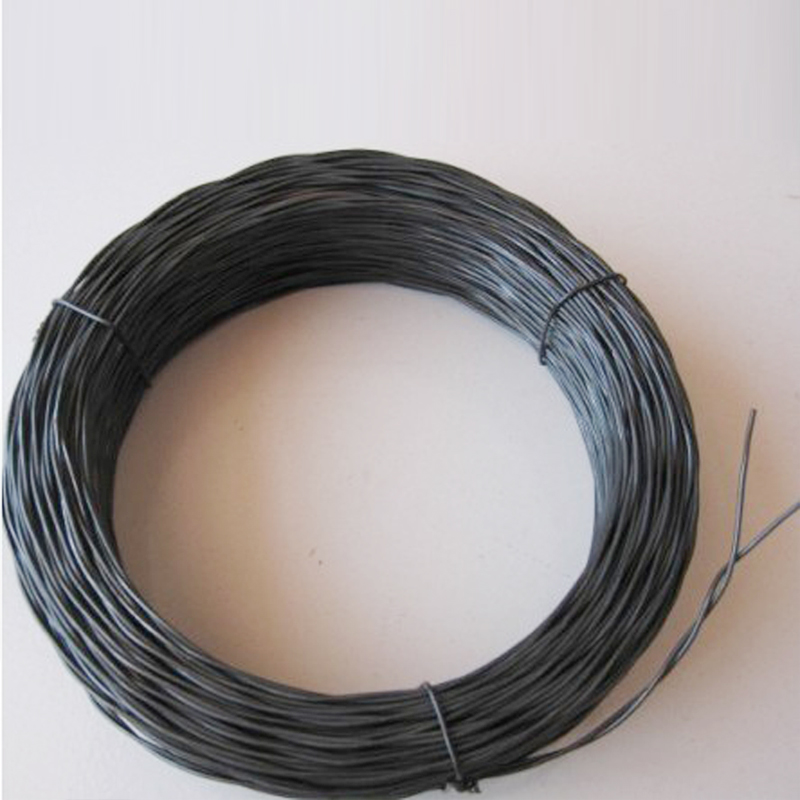
9 annealed wire, a ferrous alloy predominantly composed of carbon steel, occupies a critical position in numerous industrial applications, serving as a foundational component in manufacturing processes ranging from fastening and welding to mesh production and specialized spring fabrication. Annealing, a heat treatment process, imparts ductility and reduces hardness to the wire, enhancing its formability and weldability. Within the broader metallic materials landscape, 9 annealed wire represents a cost-effective solution where high tensile strength isn’t paramount, but malleability and ease of processing are key requirements. Core performance characteristics include consistent diameter, uniform surface finish, and predictable mechanical properties – all critical for automated manufacturing and consistent product quality. The principal industry pain points relate to achieving consistent annealing parameters to avoid inconsistencies in ductility and potential surface oxidation leading to corrosion issues. Maintaining dimensional accuracy throughout the production process and mitigating the risk of hydrogen embrittlement during annealing are also significant concerns.
Material Science & Manufacturing
The primary raw material for 9 annealed wire is low-carbon steel, typically containing between 0.05% and 0.25% carbon. Trace elements such as manganese, phosphorus, and sulfur are also present, influencing the steel's properties. Manganese enhances strength and hardenability, while phosphorus and sulfur can negatively impact ductility and weldability, necessitating careful control during steelmaking. The wire production process begins with hot rolling of steel billets into wire rod. This is followed by pickling to remove surface scale, and then drawing through a series of progressively smaller dies to achieve the desired diameter. The drawing process introduces work hardening, increasing the steel's tensile strength but reducing its ductility. Annealing is then performed, typically in a controlled atmosphere furnace, to reverse the effects of work hardening. The annealing temperature is crucial, generally between 593-677°C (1100-1250°F) for low-carbon steel. Cooling rates must be carefully controlled to prevent the formation of martensite, a brittle microstructure. Maintaining a consistent atmosphere – often utilizing nitrogen or argon – prevents oxidation and scaling during the heat treatment. Key parameter control focuses on maintaining precise temperature uniformity throughout the annealing cycle, accurate die sizing during drawing to ensure dimensional consistency, and monitoring the steel's chemical composition to optimize annealing parameters and prevent unwanted microstructural changes. Hydrogen embrittlement is a potential risk during annealing and is mitigated through controlled cooling rates and, sometimes, post-annealing baking.
Performance & Engineering
The performance of 9 annealed wire is primarily dictated by its tensile strength, ductility, and formability. Tensile strength, typically ranging from 345-550 MPa, dictates the wire’s ability to withstand pulling forces. Ductility, measured by percentage elongation, determines its ability to deform plastically without fracturing – a critical property for bending, twisting, and forming operations. Engineering considerations include force analysis during application. For example, in fencing applications, the wire must withstand wind loads and potential impacts. In binding applications, the wire’s bending radius and resistance to permanent deformation are important. Environmental resistance, specifically corrosion resistance, is a significant factor. While 9 annealed wire isn’t inherently corrosion-resistant, it can be galvanized or coated with other protective layers to enhance its durability in harsh environments. Compliance requirements often dictate specific performance criteria. For example, wire used in electrical applications must meet relevant electrical conductivity standards. Similarly, wire used in food packaging must adhere to food safety regulations regarding material composition and surface finish. The wire’s geometry – diameter, roundness, and surface texture – significantly impact its performance and must be tightly controlled during manufacturing. Stress corrosion cracking is a potential failure mode in corrosive environments and can be mitigated through appropriate material selection and protective coatings.
Technical Specifications
| Parameter | Units | Typical Value | Testing Standard |
|---|---|---|---|
| Tensile Strength | MPa | 400-500 | ASTM A854 |
| Elongation at Break | % | 15-25 | ASTM A854 |
| Diameter | mm | 0.8-4.0 | ISO 9352-1 |
| Yield Strength | MPa | 250-350 | ASTM A854 |
| Hardness (Brinell) | HB | 120-180 | ASTM E10 |
| Chemical Composition (Carbon Max) | % | 0.25 | ASTM A854 |
Failure Mode & Maintenance
9 annealed wire is susceptible to several failure modes in practical applications. Fatigue cracking can occur under cyclic loading, particularly at points of stress concentration such as bends or sharp edges. Corrosion, especially in humid or corrosive environments, can lead to pitting and eventual fracture. Hydrogen embrittlement, as mentioned previously, can reduce ductility and promote brittle failure. Oxidation at high temperatures can also degrade the wire’s mechanical properties. Delamination can occur if protective coatings are compromised, allowing corrosive agents to reach the underlying steel. Regular inspection for signs of corrosion, cracking, or coating damage is crucial. Maintenance solutions include applying protective coatings (galvanizing, epoxy coating), periodic cleaning to remove contaminants, and replacing damaged wire segments. For applications involving cyclic loading, stress relief techniques such as shot peening can improve fatigue resistance. Proper storage in a dry environment is essential to prevent corrosion. Preventative maintenance programs should incorporate regular visual inspections and, where appropriate, non-destructive testing methods such as ultrasonic testing to detect internal flaws. When welding 9 annealed wire, low heat input techniques should be employed to minimize the risk of hydrogen embrittlement and preserve ductility in the weld zone.
Industry FAQ
Q: What is the impact of varying carbon content within the 0.05%-0.25% range on the annealed wire’s properties?
A: Higher carbon content (within the specified range) increases tensile strength and hardness but reduces ductility and weldability. Lower carbon content provides greater ductility and formability, making it easier to process, but results in lower tensile strength. Annealing parameters must be adjusted to compensate for variations in carbon content to achieve consistent mechanical properties.
Q: How does the annealing process affect the corrosion resistance of 9 annealed wire?
A: The annealing process itself doesn't directly enhance corrosion resistance. In fact, if not performed in a controlled atmosphere, it can promote oxidation, worsening corrosion susceptibility. A protective coating, such as galvanization or epoxy, is typically required to provide adequate corrosion resistance.
Q: What are the critical quality control checks during the wire drawing process?
A: Critical checks include monitoring die wear, ensuring consistent die lubrication, measuring wire diameter at multiple points along the process line, and inspecting the wire surface for defects such as scratches or cracks. Dimensional accuracy and surface finish are paramount.
Q: Can 9 annealed wire be used in applications requiring high fatigue resistance? If so, what modifications are needed?
A: While not ideal for high-fatigue applications in its standard form, fatigue resistance can be improved through techniques such as shot peening, which introduces compressive stresses on the surface, delaying crack initiation. Selecting a wire with a smoother surface finish and avoiding sharp bends can also help.
Q: What are the advantages of using a controlled atmosphere during the annealing process?
A: A controlled atmosphere, typically nitrogen or argon, prevents oxidation and scaling of the wire surface during annealing, preserving its mechanical properties and preventing the formation of surface defects. This also minimizes decarburization, which can alter the wire's composition and reduce its strength.
Conclusion
9 annealed wire, through a meticulously controlled manufacturing process encompassing steel selection, drawing, and annealing, delivers a versatile material solution suitable for a broad spectrum of industrial applications. Its balance of ductility, formability, and moderate tensile strength makes it a cost-effective choice where extreme strength isn’t the primary requirement. However, a thorough understanding of its potential failure modes – particularly corrosion, fatigue, and hydrogen embrittlement – is crucial for ensuring long-term performance and reliability.
Future advancements may focus on developing improved annealing processes to further enhance ductility and corrosion resistance, as well as exploring novel coating technologies to provide superior protection in harsh environments. Continued research into non-destructive testing methods will also be critical for improving quality control and ensuring the integrity of 9 annealed wire in demanding applications.