



Introduction
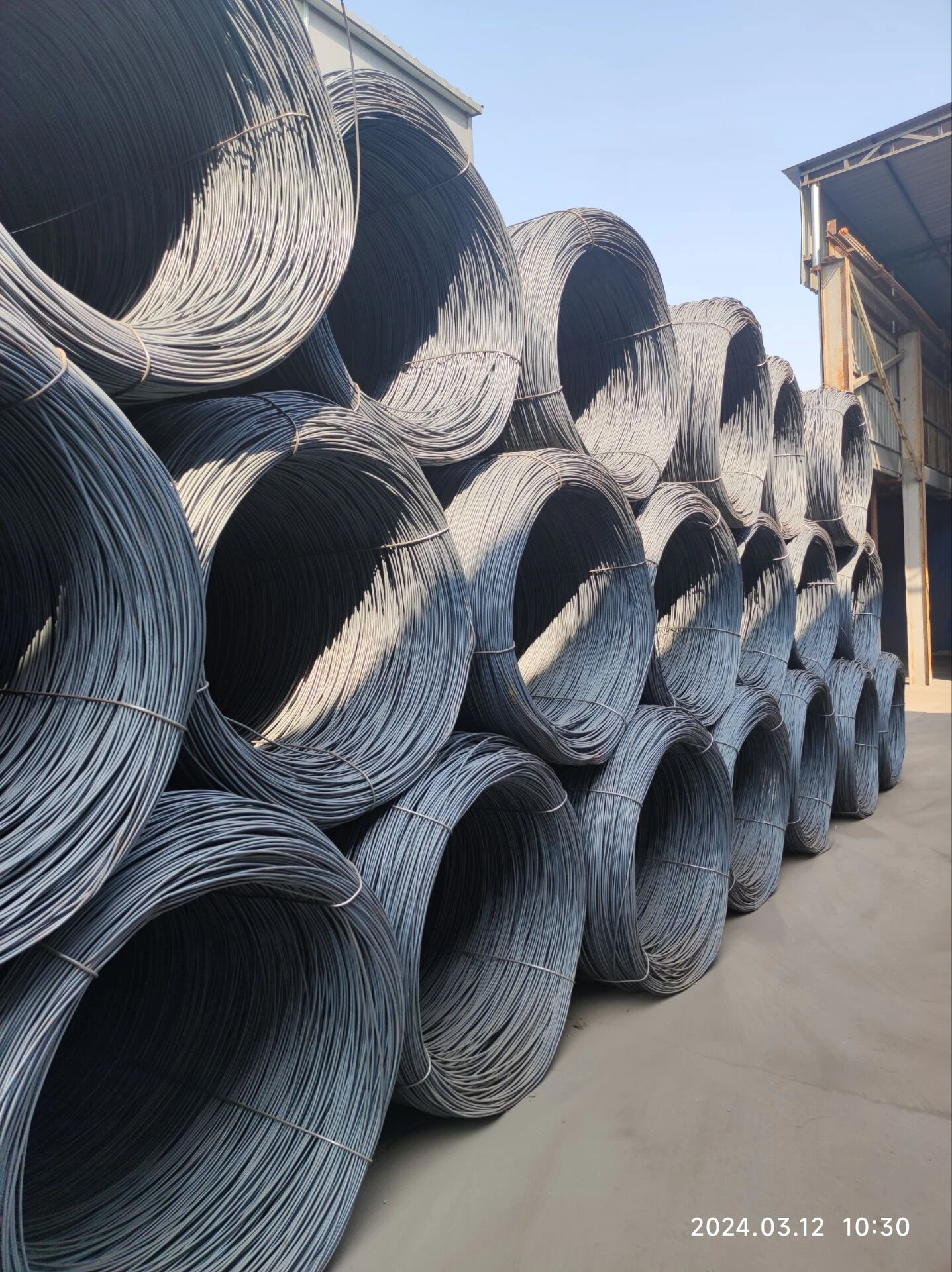
9 gauge annealed wire is a cold-finished steel wire, characterized by its diameter of 0.148 inches (3.76mm) as defined by the American Wire Gauge (AWG) standard. Annealing, a heat treatment process, imparts ductility and reduces the wire's hardness, facilitating forming and bending operations. Its primary position within the industrial chain lies as a foundational material for diverse applications, acting as a precursor to components in construction, automotive, agriculture, and various manufacturing processes. Core performance characteristics include tensile strength, elongation, and surface finish, all of which are critically controlled during the manufacturing process to meet specific application requirements. The wire’s malleability, combined with its sufficient strength, makes it ideal for applications requiring secure binding, shaping, and structural support. It differentiates itself from harder, work-hardened wires through its increased formability and reduced risk of fracture during manipulation. This guide provides a comprehensive technical overview of 9 gauge annealed wire, encompassing material science, manufacturing processes, performance parameters, failure modes, and industry standards.
Material Science & Manufacturing
The primary raw material for 9 gauge annealed wire is typically low-carbon steel (e.g., SAE 1008, 1010). The chemical composition generally consists of iron (Fe) as the dominant element, with small percentages of carbon (C, typically 0.08-0.10%), manganese (Mn, 0.30-0.60%), phosphorus (P, <0.04%), and sulfur (S, <0.05%). These trace elements influence the steel's mechanical properties, such as weldability and ductility. The manufacturing process begins with hot rolling of steel billets into wire rod. This is followed by a series of drawing operations, progressively reducing the wire's diameter. Each drawing pass work-hardens the steel, increasing its tensile strength but decreasing its ductility. Crucially, after each drawing or series of drawings, the wire undergoes annealing. This typically involves heating the wire to a temperature between 1100-1200°F (593-649°C) and holding it at that temperature for a controlled duration, followed by slow cooling. The annealing process relieves internal stresses, restores ductility, and refines the grain structure. Precise control of the annealing temperature and cooling rate is paramount. Too rapid cooling can re-introduce stresses and compromise ductility. Surface treatments, such as phosphating or galvanizing, may be applied to enhance corrosion resistance. Quality control throughout the process involves regular tensile testing, diameter measurements, and metallographic examination to ensure adherence to specifications. Hydrogen embrittlement is a potential concern during pickling (acid cleaning) preceding annealing, requiring careful control of acid concentration and processing time.
Performance & Engineering
The performance of 9 gauge annealed wire is fundamentally governed by its mechanical properties and environmental resistance. Tensile strength, typically ranging from 60,000 to 80,000 psi (414 to 552 MPa), dictates its load-bearing capacity. Elongation, generally between 15-25%, measures its ductility and ability to deform under stress before fracturing. Yield strength, around 30,000-40,000 psi (207-276 MPa), indicates the point at which permanent deformation begins. Force analysis in applications like binding or suspension necessitates understanding these properties to ensure the wire can withstand anticipated loads without failure. Environmental resistance is crucial, particularly in corrosive environments. While annealed steel is susceptible to rust, galvanizing or other coatings can significantly enhance its durability. The wire's bending radius is an important engineering consideration. Excessive bending beyond the recommended radius can induce stress concentrations and lead to premature failure. Compliance requirements vary depending on the application. For example, wire used in fencing may need to meet specific standards for tensile strength and coating thickness. Applications requiring electrical conductivity benefit from the steel’s inherent conductivity, but corrosion can reduce this property over time. Fatigue analysis is also critical in applications involving cyclic loading, as repeated stress can lead to fatigue cracking and eventual failure. The wire’s formability is vital for applications such as wire baskets, where complex shapes are created. The annealing process is designed specifically to maximize this formability.
Technical Specifications
| Property | Typical Value | Testing Standard | Units |
|---|---|---|---|
| Diameter | 0.148 | ASTM A641 | inches |
| Tensile Strength | 65,000 - 75,000 | ASTM A641 | psi |
| Yield Strength | 35,000 - 45,000 | ASTM A641 | psi |
| Elongation | 18-22 | ASTM A641 | % |
| Carbon Content (max) | 0.10 | ASTM A641 | % |
| Manganese Content | 0.40-0.60 | ASTM A641 | % |
Failure Mode & Maintenance
Common failure modes for 9 gauge annealed wire include tensile overload, fatigue cracking, corrosion, and bending failure. Tensile overload occurs when the applied load exceeds the wire's tensile strength, resulting in immediate fracture. Fatigue cracking initiates from stress concentrations (e.g., sharp bends, surface imperfections) and propagates over time under cyclic loading. Corrosion, particularly in humid or saline environments, weakens the wire and reduces its load-bearing capacity. Bending failure arises from exceeding the wire's bending radius, causing localized yielding and eventual fracture. Hydrogen embrittlement, as mentioned previously, can exacerbate cracking. Failure analysis often involves microscopic examination of the fracture surface to determine the root cause. Maintenance strategies focus on preventative measures. Regular inspection for signs of corrosion, bending, or fatigue is crucial. Protective coatings, such as galvanizing or epoxy coating, can significantly extend the wire's service life. Proper storage in a dry environment minimizes corrosion risk. For applications involving cyclic loading, reducing the load or increasing the wire’s diameter can mitigate fatigue cracking. If corrosion is detected, removal of the corroded portion and application of a protective coating can temporarily restore functionality, but replacement is generally recommended for critical applications. Lubrication of bending points can reduce stress concentrations and prevent bending failure.
Industry FAQ
Q: What is the impact of varying carbon content on the ductility of 9 gauge annealed wire?
A: Increasing carbon content generally increases tensile strength but reduces ductility. Higher carbon levels hinder the movement of dislocations within the steel's crystal structure, making it harder to deform. For 9 gauge annealed wire, maintaining a low carbon content (typically below 0.10%) is crucial to ensure sufficient ductility for forming and bending operations after the annealing process.
Q: How does the annealing process affect the grain structure of the wire?
A: The annealing process refines the grain structure of the wire, reducing grain size and promoting recrystallization. This results in a more uniform and isotropic material, enhancing ductility and toughness. Smaller grain size provides more grain boundary area, increasing resistance to crack propagation.
Q: What are the limitations of using 9 gauge annealed wire in highly corrosive environments?
A: While annealing imparts ductility, it doesn't inherently improve corrosion resistance. Uncoated 9 gauge annealed wire is susceptible to rust and degradation in highly corrosive environments (e.g., saltwater exposure). Galvanizing, epoxy coating, or using stainless steel alternatives are necessary to mitigate corrosion in such applications.
Q: What is the recommended bending radius for 9 gauge annealed wire to prevent failure?
A: The recommended bending radius is generally at least 6-8 times the wire diameter. Exceeding this radius induces excessive stress concentration at the bend, increasing the risk of yielding and fracture. The specific radius depends on the steel grade and application requirements.
Q: Can 9 gauge annealed wire be welded? What precautions should be taken?
A: Yes, 9 gauge annealed wire can be welded, but preheating and post-weld heat treatment are often necessary. The low carbon content facilitates weldability, but precautions must be taken to avoid hydrogen embrittlement. Using a low-hydrogen welding process and controlling the cooling rate are crucial to prevent cracking.
Conclusion
9 gauge annealed wire provides a versatile and cost-effective solution for a wide range of applications requiring a balance of strength and ductility. The carefully controlled manufacturing process, from hot rolling to annealing, dictates its final mechanical properties and performance characteristics. Understanding the material science principles, potential failure modes, and relevant industry standards is paramount for ensuring reliable and long-lasting performance.
Ongoing research focuses on developing advanced coatings and alloy compositions to enhance the corrosion resistance and mechanical properties of annealed wire, expanding its applicability in more demanding environments. Furthermore, optimizing the annealing process to minimize energy consumption and reduce environmental impact remains a critical area of development. Properly specifying, handling, and maintaining 9 gauge annealed wire are essential for maximizing its benefits and mitigating potential risks.