



Introduction
9 gauge tension wire, typically referring to steel wire with a diameter of 0.148 inches (3.76 mm), is a critical component in a diverse range of industrial applications. Its primary function revolves around providing tensile strength and maintaining structural integrity in systems requiring load-bearing capacity and resistance to deformation. Within the broader wire and cable industry, 9 gauge wire occupies a specific niche, bridging the gap between lighter gauge wires used for electrical applications and heavier gauges employed in high-stress mechanical systems. Its prevalence is particularly noted in agriculture (fencing, trellis systems), construction (guy wires, cable supports), and industrial machinery (control cables, spring applications). Core performance characteristics include tensile strength, elongation, yield strength, and corrosion resistance, all dictated by the material composition and manufacturing processes employed. Understanding these characteristics is paramount for engineers and procurement managers to ensure optimal performance and longevity of the end product.
Material Science & Manufacturing
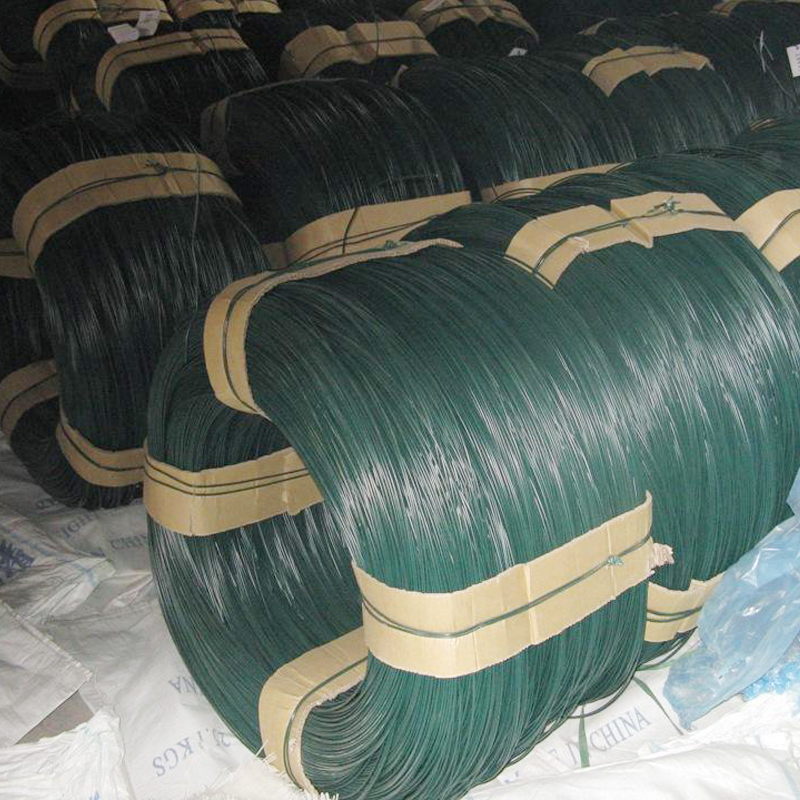
The most common material for 9 gauge tension wire is high-carbon steel, specifically grades like SAE 1008, 1010, or 1018. These steels offer a balance of strength, ductility, and cost-effectiveness. The steel's composition directly impacts its mechanical properties. Carbon content influences hardness and tensile strength; manganese enhances strength and hardenability; and phosphorus and sulfur, while present in small amounts, can affect ductility and weldability. Manufacturing typically begins with hot rolling of steel billets into wire rod. This is followed by several stages of cold drawing, where the wire is pulled through a series of progressively smaller dies. Each drawing pass reduces the diameter and increases the tensile strength of the wire. Annealing processes are interspersed between drawing stages to restore ductility and prevent work hardening. Key parameter control during manufacturing includes die lubrication (critical for reducing friction and die wear), drawing speed (influences strain rate and microstructure), and annealing temperature and time (dictates grain size and ductility). Surface treatments, such as galvanizing (zinc coating) or epoxy coating, are frequently applied to enhance corrosion resistance. Wire quality is assessed through rigorous testing, including tensile testing, elongation measurement, and microscopic examination of the wire’s microstructure.
Performance & Engineering
The performance of 9 gauge tension wire is fundamentally governed by its ability to withstand tensile forces without yielding or fracturing. Force analysis necessitates consideration of the wire’s cross-sectional area (calculated from its diameter), its ultimate tensile strength (the maximum stress it can withstand before breaking), and its yield strength (the stress at which it begins to deform permanently). In applications like fencing, the wire must resist both static loads (weight of the fence material) and dynamic loads (wind pressure, animal impact). Environmental resistance is crucial, particularly in outdoor applications. Corrosion, caused by exposure to moisture, chemicals, and atmospheric pollutants, can significantly reduce the wire’s strength and lifespan. Galvanization and polymeric coatings are employed to mitigate this. Compliance requirements vary depending on the end-use application. Agricultural fencing, for example, may need to comply with specific standards related to wire gauge, tensile strength, and coating thickness. For industrial control cables, compliance with relevant electrical safety standards (UL, CE) is essential. The springback characteristics of the wire are also important in applications requiring repeated flexing or bending. Finite element analysis (FEA) is frequently used to model the stress distribution within the wire and optimize its design for specific load conditions.
Technical Specifications
| Parameter | Typical Value (Steel – SAE 1010) | Unit | Testing Standard |
|---|---|---|---|
| Diameter | 3.76 | mm | ASTM E140 |
| Ultimate Tensile Strength | 690 - 827 | MPa | ASTM A371 |
| Yield Strength | 345 - 483 | MPa | ASTM A371 |
| Elongation (at Break) | 10-15 | % | ASTM E8 |
| Zinc Coating Thickness (Galvanized) | 50-70 | µm | ASTM B693 |
| Corrosion Resistance (Salt Spray Test) | >240 | Hours | ASTM B117 |
Failure Mode & Maintenance
9 gauge tension wire is susceptible to several failure modes. Fatigue cracking, caused by repeated cyclic loading, is a common issue, particularly in applications involving flexing or vibration. This often initiates at surface imperfections or stress concentrators. Corrosion is another significant failure mechanism, leading to a reduction in cross-sectional area and ultimately, fracture. Hydrogen embrittlement, a phenomenon where hydrogen atoms diffuse into the steel lattice, can also cause premature failure, especially in high-strength wires. Overloading, exceeding the wire’s yield strength, results in permanent deformation and can eventually lead to rupture. Abrasion, caused by contact with abrasive surfaces, can wear away the protective coating and expose the underlying steel to corrosion. Maintenance involves regular visual inspection for signs of corrosion, cracks, or deformation. Lubrication, particularly in applications involving moving parts, can reduce friction and wear. Periodic cleaning to remove dirt and debris can prevent corrosion. For galvanized wire, damaged coatings should be repaired to restore corrosion protection. In critical applications, non-destructive testing methods, such as ultrasonic testing or magnetic particle inspection, can be used to detect internal flaws before they lead to catastrophic failure. Replacement should occur when the wire exhibits significant corrosion, cracking, or permanent deformation.
Industry FAQ
Q: What is the impact of different steel alloys on the corrosion resistance of 9 gauge tension wire?
A: The steel alloy significantly affects corrosion resistance. Higher carbon content generally reduces corrosion resistance, while the addition of alloying elements like chromium, nickel, and molybdenum improves it. Stainless steel alloys (e.g., 304, 316) offer superior corrosion resistance but are considerably more expensive than carbon steels. Galvanizing provides a sacrificial barrier, protecting the steel from corrosion, but its effectiveness depends on the thickness and uniformity of the zinc coating.
Q: How does cold drawing affect the mechanical properties of the wire, and what are the limitations?
A: Cold drawing increases the tensile strength and yield strength of the wire but reduces its ductility. Each drawing pass introduces dislocations into the steel microstructure, increasing its resistance to deformation. However, excessive cold working can lead to work hardening, making the wire brittle and susceptible to cracking. Annealing between drawing passes is crucial to restore ductility and prevent this.
Q: What is the significance of the elongation percentage in tensile testing?
A: The elongation percentage indicates the ductility of the wire – its ability to deform plastically before fracturing. A higher elongation percentage signifies a more ductile wire, which is less prone to brittle failure. It’s a critical parameter for applications requiring flexibility or the ability to absorb energy during impact.
Q: What are the key considerations when selecting a coating for 9 gauge tension wire intended for marine applications?
A: Marine applications require coatings with exceptional corrosion resistance. While galvanizing offers some protection, it may not be sufficient in highly corrosive saltwater environments. Epoxy coatings, polyurethane coatings, or specialized marine-grade coatings are often preferred. Cathodic protection, using sacrificial anodes, can also be employed to further enhance corrosion resistance.
Q: How do variations in manufacturing tolerances (e.g., diameter) affect the performance of the wire in a tensioning system?
A: Variations in diameter directly impact the wire’s cross-sectional area and, consequently, its tensile strength. Even small deviations can affect the load-carrying capacity of the system. Precise diameter control during manufacturing is crucial, and statistical process control (SPC) should be implemented to monitor and minimize variations. In critical applications, individual wire measurements may be required.
Conclusion
9 gauge tension wire remains a foundational element across numerous industries due to its robust tensile properties and cost-effectiveness. A thorough understanding of the material science, manufacturing processes, and potential failure modes is essential for ensuring optimal performance and longevity. The selection of appropriate steel alloys, coupled with effective surface treatments like galvanization, is critical for mitigating corrosion and maximizing service life.
Future advancements in wire manufacturing may focus on developing new high-strength, corrosion-resistant alloys and refining cold drawing techniques to improve wire properties. Continued research into non-destructive testing methods will enable more reliable assessment of wire integrity and prevent premature failures. Ultimately, a proactive approach to material selection, quality control, and maintenance will ensure the continued reliability of 9 gauge tension wire in demanding applications.