



Introduction
Aluminum coil nails represent a specialized fastening solution within the broader construction and woodworking industries. They are characterized by a continuous strip of collated nails fed into a coil nailing system, enabling rapid and consistent application. Unlike traditional stick-built nailing, coil nails prioritize speed and efficiency, making them particularly suited for large-scale projects like roofing, siding, sheathing, and pallet manufacturing. These nails typically utilize aluminum alloy 5052 or 3003, selected for their corrosion resistance, ductility, and weight advantages compared to steel alternatives. Their technical positioning is crucial where lightweight fastening is required, minimizing material stress and facilitating easier handling. Core performance metrics include shear strength, tensile strength, bending resistance, and corrosion protection, directly influencing the structural integrity and longevity of the assembled component. The increasing demand for lightweight materials and automated construction processes drives the continued adoption of aluminum coil nails.
Material Science & Manufacturing
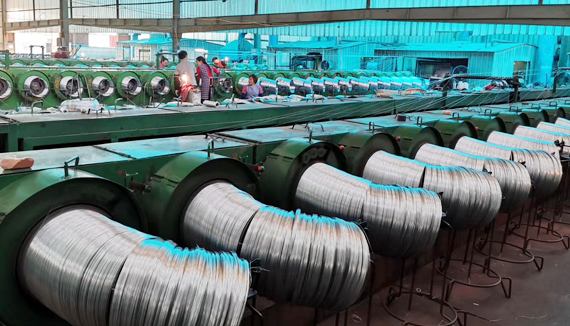
The core material for aluminum coil nails is typically aluminum alloy 5052 or 3003. Alloy 5052 exhibits higher magnesium content, enhancing its strength and weldability. Alloy 3003, while slightly less strong, provides superior corrosion resistance, especially in marine or high-humidity environments. The raw material undergoes a cold heading process where wire stock is fed into a heading die and formed into the nail shape. Key parameters during cold heading include die geometry, feed rate, and lubrication. Inadequate lubrication leads to galling and surface defects. Following heading, the nails are straightened and then collated into a continuous strip using adhesive bonding, plastic collators, or wire stitching. The collation process requires precise alignment to ensure smooth feeding into the nailing gun. Surface treatment, such as anodizing or coating with a polymer film, is often applied to further enhance corrosion resistance. Quality control throughout the manufacturing process includes dimensional checks, hardness testing (Rockwell B scale is common), and visual inspection for surface flaws. The chemical composition is verified using spectrometry, ensuring compliance with ASTM B211 standards. The manufacturing process is sensitive to variations in aluminum alloy composition; impurities like silicon and iron can affect ductility and weldability. Precise control of the work hardening rate during cold heading is essential to prevent cracking.
Performance & Engineering
The performance of aluminum coil nails is heavily influenced by their shear strength and tensile strength. Shear strength is critical for resisting lateral forces, especially in roofing and siding applications where wind loads are significant. Tensile strength determines the nail's ability to withstand pull-out forces. Force analysis necessitates consideration of the substrate material (e.g., plywood, OSB, softwood, hardwood). The nail’s shank diameter and length are key design parameters influencing both shear and tensile capacities. Environmental resistance is paramount, particularly concerning galvanic corrosion when aluminum nails are used with dissimilar metals like steel. Anodizing or polymer coatings mitigate this risk. Compliance requirements vary by region and application. Building codes (e.g., IBC in the US) dictate nail spacing and penetration depth based on structural load calculations. Proper nail placement is crucial for achieving the designed load-bearing capacity. Engineering considerations include optimizing the nail’s point geometry for efficient penetration and minimizing splitting of the substrate material. Fatigue performance is also a concern in applications subject to cyclical loading; repeated stresses can lead to crack initiation and propagation. Finite element analysis (FEA) is increasingly used to model nail behavior under various load conditions, optimizing nail design and ensuring structural integrity.
Technical Specifications
| Nail Diameter (inches) | Nail Length (inches) | Shank Type | Coil Capacity (nails/coil) |
|---|---|---|---|
| 0.092 | 1.25 | Smooth | 3000 |
| 0.099 | 1.50 | Ring Shank | 2500 |
| 0.113 | 2.00 | Screw Shank | 2000 |
| 0.120 | 2.50 | Smooth | 1800 |
| 0.131 | 3.00 | Ring Shank | 1500 |
| 0.148 | 3.50 | Screw Shank | 1200 |
Failure Mode & Maintenance
Aluminum coil nails are susceptible to several failure modes. Galvanic corrosion, as mentioned, is a primary concern when in contact with dissimilar metals, leading to localized pitting and eventual nail failure. Fatigue cracking can occur under cyclic loading, initiating at stress concentrations near the nail head or shank. Bending failure can arise from excessive lateral forces, particularly if the nail is not adequately supported by the substrate material. Shear failure occurs when the shear stress exceeds the nail’s shear strength. Hydrogen embrittlement, though less common, can occur in corrosive environments, weakening the aluminum alloy. Delamination of the coating (if applied) reduces corrosion protection. Maintenance is primarily preventative. Proper substrate preparation is crucial – wood must be dry and free of debris. Correct nail gun settings (pressure, depth) are essential to prevent overdriving or underdriving. Regular inspection of the nailer is needed to ensure proper functioning of the feed mechanism. In applications prone to corrosion, selecting nails with a robust coating or using a sacrificial anode can extend service life. For critical structural applications, periodic inspection for corrosion or cracking is recommended. Removing corroded or damaged nails and replacing them is the primary repair strategy. Avoid using steel brushes to clean aluminum nails, as this can introduce iron particles and accelerate corrosion.
Industry FAQ
Q: What is the impact of alloy composition on the long-term performance of aluminum coil nails?
A: The alloy composition significantly influences corrosion resistance and strength. 5052 alloy provides higher strength, but 3003 offers better corrosion resistance, especially in marine environments. Impurities within the alloy can negatively impact ductility and weldability, potentially leading to premature failure. Careful alloy selection based on the application’s environment is crucial.
Q: How does nail spacing affect the shear strength of a fastened assembly?
A: Nail spacing is a critical factor in determining shear strength. Closer spacing distributes the load over a larger area, increasing the overall shear capacity. Building codes specify minimum nail spacing requirements based on structural load calculations. Insufficient spacing can lead to localized stress concentrations and potential shear failure.
Q: What precautions should be taken to prevent galvanic corrosion when using aluminum coil nails with steel components?
A: Galvanic corrosion occurs when dissimilar metals are in contact in the presence of an electrolyte. To mitigate this, use a non-conductive barrier (e.g., coating, tape) between the aluminum nail and the steel component. Alternatively, select aluminum alloy nails with a protective coating (anodizing or polymer film). Ensuring proper ventilation to reduce moisture accumulation also helps.
Q: What are the key considerations for selecting the appropriate nail length for a specific application?
A: Nail length must provide sufficient penetration into the substrate material to achieve adequate holding power. The rule of thumb is to penetrate at least two-thirds of the thickness of the second member being fastened. Consider the substrate material’s density and the applied load when determining the appropriate nail length. Longer nails generally offer greater holding power but can increase the risk of splitting the substrate.
Q: How does the type of nail shank (smooth, ring, screw) affect its holding power and withdrawal resistance?
A: Smooth shank nails offer the least withdrawal resistance. Ring shank nails provide significantly improved holding power due to the rings creating friction as the nail is driven into the substrate. Screw shank nails offer the highest withdrawal resistance, acting like a miniature screw thread. The choice of shank type depends on the application’s specific requirements for holding power and resistance to pull-out forces.
Conclusion
Aluminum coil nails represent a significant advancement in fastening technology, offering speed, efficiency, and corrosion resistance for a wide range of construction and industrial applications. Their performance is inextricably linked to material science principles, manufacturing precision, and adherence to relevant engineering standards. Understanding the nuances of alloy selection, shank design, and environmental factors is critical for ensuring long-term structural integrity.
Future development will likely focus on enhancing coating technologies to further improve corrosion resistance and exploring new aluminum alloys with increased strength and ductility. The integration of smart sensors within the nails themselves – enabling real-time monitoring of stress levels and corrosion rates – represents a potential avenue for predictive maintenance and improved structural safety. Continued research into optimized nail geometries and fastening techniques will further solidify the role of aluminum coil nails in modern construction practices.