



Introduction
Black annealed binding wire, specifically the 1.6mm diameter variant, is a ferrous metal product primarily utilized for temporary fastening and bundling applications across diverse industries including agriculture, horticulture, construction, and packaging. Its primary function centers on providing compliant yet secure binding without damaging the materials it constrains. Unlike higher tensile steel wires, annealed wire undergoes a heat treatment process that significantly reduces its hardness and increases its ductility, making it easily formable and minimizing the risk of breakage during manipulation. This characteristic makes it ideal for applications requiring adjustability and repeated bending. Within the broader wire product landscape, black annealed binding wire occupies a critical niche due to its cost-effectiveness and suitability for applications where high strength is not a primary requirement. Industry pain points surrounding this product center on consistency of annealing, ensuring adequate ductility across the entire coil length, and managing surface oxidation that can hinder subsequent processing or aesthetic qualities. The performance is directly related to the carbon content and the efficacy of the annealing process.
Material Science & Manufacturing
The raw material for 1.6mm black annealed binding wire is typically low-carbon steel, commonly SAE 1008 or similar grades containing approximately 0.08% carbon. The steel’s composition impacts its inherent ductility and weldability. Other trace elements present may include manganese, phosphorus, and sulfur, influencing the annealing response and mechanical properties. Manufacturing commences with hot rolling of steel billets into wire rod. This initial stage establishes the wire’s diameter. Following hot rolling, the wire undergoes a drawing process, pulling it through a series of progressively smaller dies to achieve the final 1.6mm dimension and improve surface finish. The critical step is annealing. This involves heating the wire to a temperature between 550-650°C, held for a specified duration, and then slowly cooled. The cooling rate is paramount; controlled cooling is essential to achieve optimal ductility. Rapid quenching can lead to localized hardening and brittleness. Black annealing, as opposed to bright annealing, is performed in a protective atmosphere, often utilizing endothermic gas, or a coating (like lime) to prevent excessive oxidation. Parameter control during annealing, specifically temperature uniformity and cooling rate, directly affects the final wire's tensile strength, yield strength, and elongation. Quality control involves routine tensile testing and bend tests to verify the annealed wire meets predefined specifications. Surface treatment with a light oil coating is commonly applied post-annealing to inhibit rust formation during storage and handling.
Performance & Engineering
The engineering performance of 1.6mm black annealed binding wire is governed by its ductility and tensile strength. While not designed for high-load bearing applications, understanding its mechanical limits is crucial. The typical tensile strength ranges from 350-450 MPa, while the yield strength is approximately 200-300 MPa. The elongation at break, a critical indicator of ductility, generally exceeds 15%. Force analysis during binding operations reveals that the wire undergoes significant plastic deformation, particularly during bending and knotting. This deformation requires the wire to yield without fracturing. Environmental resistance is a key consideration. The black oxide surface provides limited corrosion protection. Prolonged exposure to humid environments or corrosive substances will result in oxidation, leading to a reddish-brown rust formation. This rust, while not immediately compromising the wire's functionality, can affect its appearance and potentially weaken it over time. Compliance requirements depend on the end-use application. For horticultural applications, the wire must not introduce harmful elements to the plants or soil. For packaging applications, it must comply with relevant food contact regulations if used to secure food products. Understanding the bending radius is also essential; exceeding the minimum bending radius can induce localized stress concentrations and lead to premature failure.
Technical Specifications
| Parameter | Units | Typical Value | Testing Standard |
|---|---|---|---|
| Diameter | mm | 1.6 ± 0.05 | ISO 9352 |
| Tensile Strength | MPa | 380-420 | ASTM A641 |
| Yield Strength | MPa | 220-280 | ASTM A641 |
| Elongation at Break | % | >18 | ASTM A641 |
| Hardness (Brinell) | HB | <150 | ASTM E10 |
| Coating | Type | Light Oil | Supplier Specification |
Failure Mode & Maintenance
The primary failure modes for 1.6mm black annealed binding wire revolve around exceeding its ductility limits. Fatigue cracking can occur under repeated bending, especially if the wire is subjected to sharp bends or abrasion. This initiates micro-cracks that propagate over time, eventually leading to complete fracture. Corrosion, as previously mentioned, is a long-term degradation mechanism. Rust weakens the wire’s cross-section, reducing its load-bearing capacity. Delamination, though less common, can occur if the surface oxide layer separates from the underlying metal. Oxidation accelerates in the presence of chlorides or other corrosive agents. Overstretching, attempting to form excessively tight knots or bundles, leads to immediate breakage due to exceeding the tensile strength. Maintenance, in the context of binding wire, is largely preventative. Proper storage is critical; coils should be stored in a dry, indoor environment to minimize corrosion. Avoiding exposure to harsh chemicals or saltwater is essential. Inspecting the wire for signs of rust or damage before use can prevent unexpected failures. While the wire doesn’t require lubrication, applying a thin coat of protective oil can further inhibit rust formation during long-term storage. Regularly replacing coils that show significant corrosion is a proactive maintenance strategy.
Industry FAQ
Q: What is the impact of varying carbon content on the wire’s ductility?
A: Higher carbon content generally increases tensile strength but reduces ductility. The 1.6mm black annealed wire utilizes low carbon steel (around 0.08%) specifically to prioritize ductility over ultimate strength, ensuring ease of forming and minimizing breakage during binding.
Q: How does the annealing process affect the wire’s corrosion resistance?
A: The annealing process itself doesn't directly improve corrosion resistance. However, a properly controlled annealing process, avoiding oxidation during heating and cooling, results in a more homogenous surface, leading to more even rust formation rather than localized pitting.
Q: What is the acceptable level of surface oxidation on the wire?
A: A light surface oxidation (black oxide) is considered normal and acceptable. Excessive rust, however, indicates potential degradation and should be evaluated based on the application's requirements. A visual inspection is typically used, with rejection criteria based on the percentage of surface area covered by rust.
Q: Can this wire be used in direct contact with aluminum?
A: While direct contact isn't immediately catastrophic, it's generally not recommended. The potential for galvanic corrosion exists, where the steel acts as a cathode and the aluminum as an anode, accelerating the corrosion of the aluminum. Using an isolating material between the two metals is advisable.
Q: What are the typical packaging options for this wire?
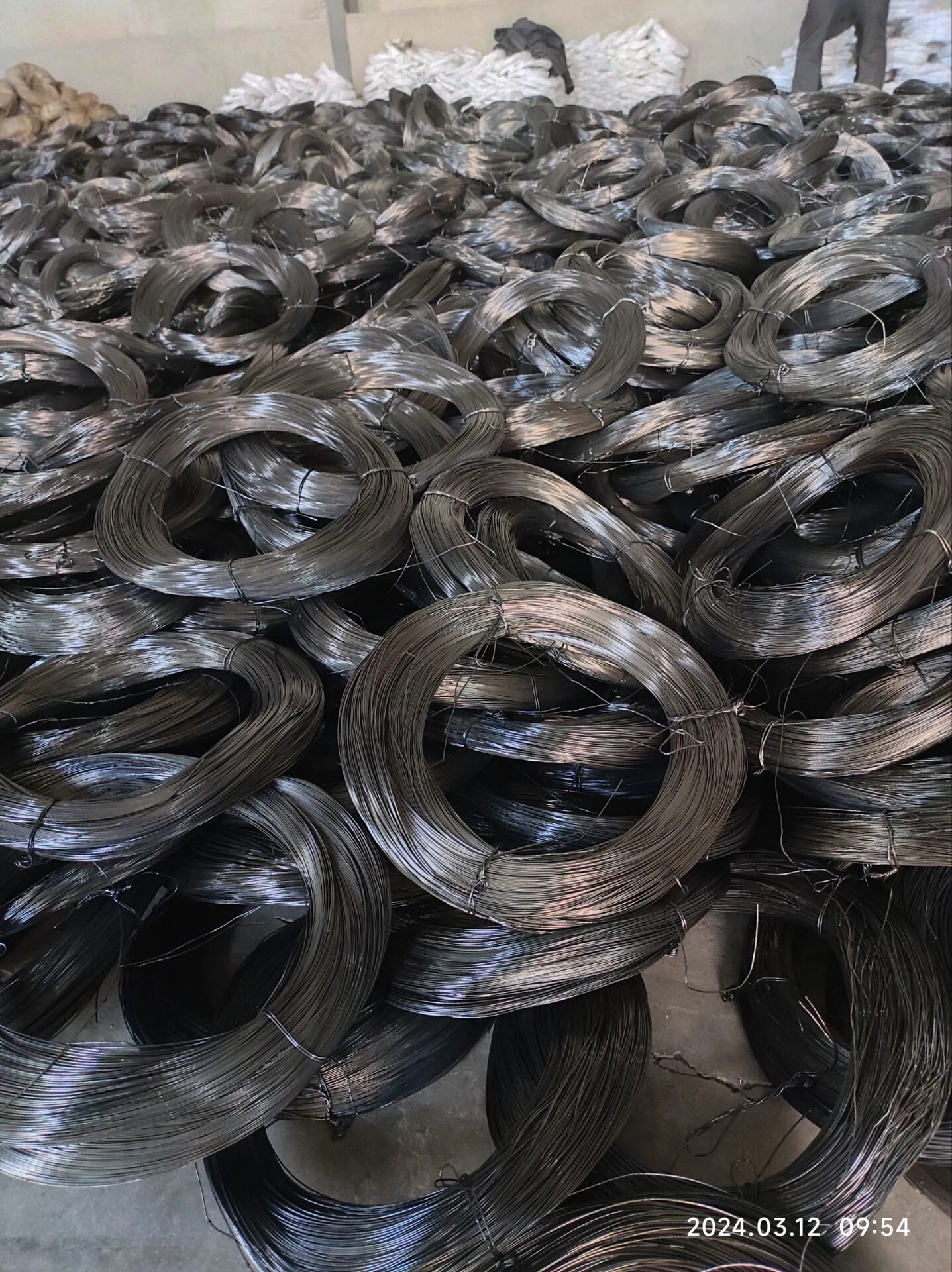
A: Typically, the wire is coiled and packaged in bundles, often weighing between 5kg to 25kg per bundle. Packaging materials vary but commonly include plastic film to provide moisture protection and cardboard or wooden pallets for ease of handling and transport. Some suppliers offer spools for automated binding equipment.
Conclusion
Black annealed binding wire 1.6mm remains a vital fastening solution across numerous industries, prized for its cost-effectiveness and malleability. Its performance hinges on the careful control of material composition, specifically low carbon content, and a precisely executed annealing process that maximizes ductility. Understanding its limitations regarding corrosion resistance and tensile strength is crucial for ensuring its suitability for specific applications.
Future developments may focus on enhanced surface treatments to improve corrosion resistance without compromising ductility. Alternative annealing atmospheres, beyond standard endothermic gas, could further refine the wire’s mechanical properties and surface finish. Continued refinement of quality control procedures, including non-destructive testing methods, will ensure consistent product performance and address industry pain points related to wire consistency and reliability.