



Introduction
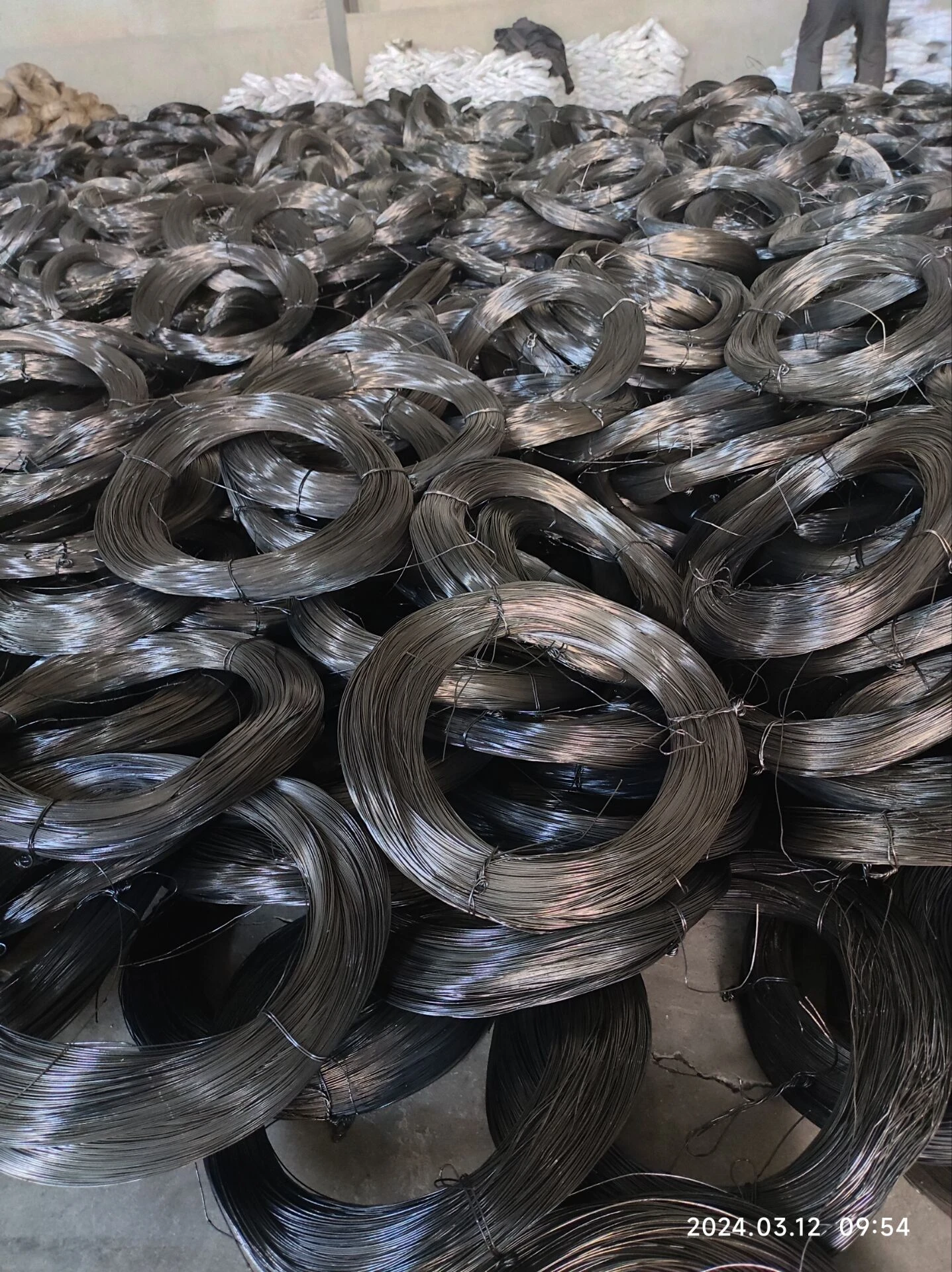
Black annealed wire is a low-carbon steel wire that has undergone a process of hot rolling and annealing. It occupies a foundational position within numerous industries, serving as a critical component in applications ranging from construction and agriculture to binding and crafting. Its primary characteristics – malleability, ductility, and relative ease of forming – stem directly from the annealing process, which relieves internal stresses introduced during cold working. This guide provides an in-depth technical overview of black annealed wire, covering material science, manufacturing processes, performance characteristics, failure modes, and relevant industry standards. A key industry pain point is maintaining consistent mechanical properties across large production runs, particularly concerning tensile strength and elongation, which directly impact downstream fabrication processes. Another critical concern is surface quality and the potential for rust formation, necessitating appropriate packaging and, in some cases, protective coatings.
Material Science & Manufacturing
The raw material for black annealed wire is typically low-carbon steel, containing between 0.05% and 0.25% carbon. The carbon content is critical; higher carbon content increases hardness but reduces ductility, while lower carbon content yields increased ductility but decreased strength. Other alloying elements present are typically limited to manganese (0.20-0.90%) and phosphorus (up to 0.040%), added to improve strength and weldability respectively. The manufacturing process begins with hot rolling, where steel billets are passed through a series of rollers to achieve the desired wire diameter. This process work-hardens the steel, increasing its tensile strength but decreasing its ductility. Annealing, the crucial subsequent step, involves heating the wire to a temperature between 550-650°C followed by controlled cooling. This process recrystallizes the steel’s grain structure, relieving internal stresses and restoring ductility. Cooling rate is a critical parameter; slower cooling yields greater ductility, while faster cooling retains some strength. The final product’s surface finish is typically a dark grey or black oxide scale, formed during the heating process, hence the name "black annealed wire." Precise control of the furnace atmosphere (typically maintaining a low oxygen environment) is crucial to prevent excessive oxidation and maintain surface quality. Regular monitoring of chemical composition via optical emission spectroscopy (OES) and mechanical properties via tensile testing ensures adherence to specifications.
Performance & Engineering
The performance of black annealed wire is primarily defined by its mechanical properties: tensile strength, yield strength, elongation, and hardness. Tensile strength, typically ranging from 300-500 MPa depending on wire diameter and annealing process, determines the wire’s resistance to breaking under tension. Yield strength, usually around 200-350 MPa, represents the stress at which permanent deformation begins. Elongation, expressed as a percentage, indicates the wire’s ductility – its ability to stretch before fracturing (typically 15-25%). Hardness, measured using Rockwell or Brinell methods, reflects the wire’s resistance to indentation. Environmental resistance is a key consideration. While the black oxide surface provides some initial protection, it is susceptible to corrosion, particularly in humid or saline environments. Therefore, applications requiring prolonged exposure often necessitate galvanizing, plastic coating, or other protective measures. Force analysis in applications like fencing or binding requires calculating the load-bearing capacity of the wire, considering factors like wire gauge, span length, and applied forces. Compliance requirements depend on the application. For example, agricultural applications may require wire conforming to specific standards for animal welfare, while construction applications must meet building codes regarding load capacity and safety.
Technical Specifications
| Parameter | Typical Value (BWG 8 - 3.1mm Diameter) | Tolerance | Testing Standard |
|---|---|---|---|
| Tensile Strength (MPa) | 350-450 | ± 30 | ASTM A854 |
| Yield Strength (MPa) | 250-350 | ± 20 | ASTM A854 |
| Elongation (%) | 18-22 | ± 2 | ASTM A854 |
| Hardness (Brinell) | 120-160 | ± 10 | ASTM E10 |
| Diameter (mm) | 3.1 | ± 0.05 | ISO 9339 |
| Surface Condition | Black Oxide Coating | Uniform Coverage | Visual Inspection |
Failure Mode & Maintenance
Black annealed wire is susceptible to several failure modes. Corrosion is a primary concern, leading to reduced cross-sectional area and eventual fracture, particularly in outdoor applications. Rust formation accelerates under humid or saline conditions. Fatigue cracking can occur under cyclic loading, especially in applications involving repeated bending or stretching. This is influenced by stress concentration points (e.g., sharp bends) and the wire’s surface finish. Hydrogen embrittlement, though less common, can occur during electroplating or in environments with high hydrogen sulfide concentrations, leading to brittle fracture. Delamination of the oxide layer, while not a complete failure, can reduce corrosion resistance. Maintenance primarily involves preventative measures. Regular inspection for signs of corrosion is crucial, especially in exposed environments. Protective coatings (galvanizing, plastic coating) significantly extend service life. In applications subject to high stress, avoiding sharp bends and ensuring proper load distribution minimizes the risk of fatigue cracking. Storage should be in a dry, covered area to prevent corrosion during prolonged periods of disuse. If corrosion is detected, the affected section should be removed and replaced.
Industry FAQ
Q: What is the impact of varying annealing temperatures on the final tensile strength of the wire?
A: Higher annealing temperatures generally lead to lower tensile strength due to increased grain growth and reduced work hardening. Conversely, lower annealing temperatures result in higher tensile strength but decreased ductility. The optimal temperature is a balance between these two factors, dictated by the intended application. Precise temperature control, typically within a ±5°C range, is critical for consistent results.
Q: How does the presence of sulfur impurities affect the weldability of black annealed wire?
A: Sulfur is a detrimental impurity, as it forms iron sulfide at grain boundaries, reducing ductility and weldability. High sulfur content can lead to hot cracking during welding. Specifications typically limit sulfur content to a maximum of 0.025% to ensure adequate weldability. The use of low-sulfur raw materials and careful process control are essential.
Q: Can black annealed wire be used in direct contact with seawater, and if not, what alternatives exist?
A: Black annealed wire is not recommended for prolonged direct contact with seawater due to its susceptibility to corrosion. Saltwater accelerates rust formation, leading to rapid degradation. Alternatives include galvanized wire (zinc coated), stainless steel wire (typically 304 or 316 grade), or plastic-coated wire, all of which offer superior corrosion resistance.
Q: What is the typical shelf life of black annealed wire if stored properly?
A: If stored properly in a dry, covered environment, black annealed wire has a virtually unlimited shelf life. However, exposure to humidity can lead to surface rust, potentially affecting its performance. Regular inspection is recommended, and surface rust can be removed with a wire brush if necessary, provided the underlying steel remains sound.
Q: How does wire diameter influence the bending radius achievable without causing fracture?
A: Larger diameter wire generally requires a larger bending radius to avoid fracture. The bending radius should be at least 6-8 times the wire diameter for annealed wire. Attempting to bend the wire beyond its plastic limit can lead to cracking or failure. The ductility of the wire, influenced by the annealing process, also plays a crucial role.
Conclusion
Black annealed wire remains a versatile and cost-effective material across a broad spectrum of industries. Its desirable properties – malleability, ductility, and formability – are direct consequences of controlled manufacturing processes focused on relieving internal stresses through annealing. Understanding the material science principles governing its behavior, including the influence of carbon content and annealing parameters, is essential for selecting the appropriate grade and specification for a given application. Maintaining consistent mechanical properties and preventing corrosion through appropriate storage and protective coatings are crucial for ensuring long-term performance.
Future trends in black annealed wire production may focus on developing more sustainable manufacturing processes, reducing energy consumption during annealing, and exploring innovative surface treatments to enhance corrosion resistance. The increasing demand for lighter-weight materials may also drive research into high-strength low-carbon steel alloys specifically tailored for wire production. Ultimately, a thorough understanding of the technical considerations outlined in this guide will empower engineers and procurement professionals to make informed decisions and optimize the use of black annealed wire in their respective applications.