



Introduction
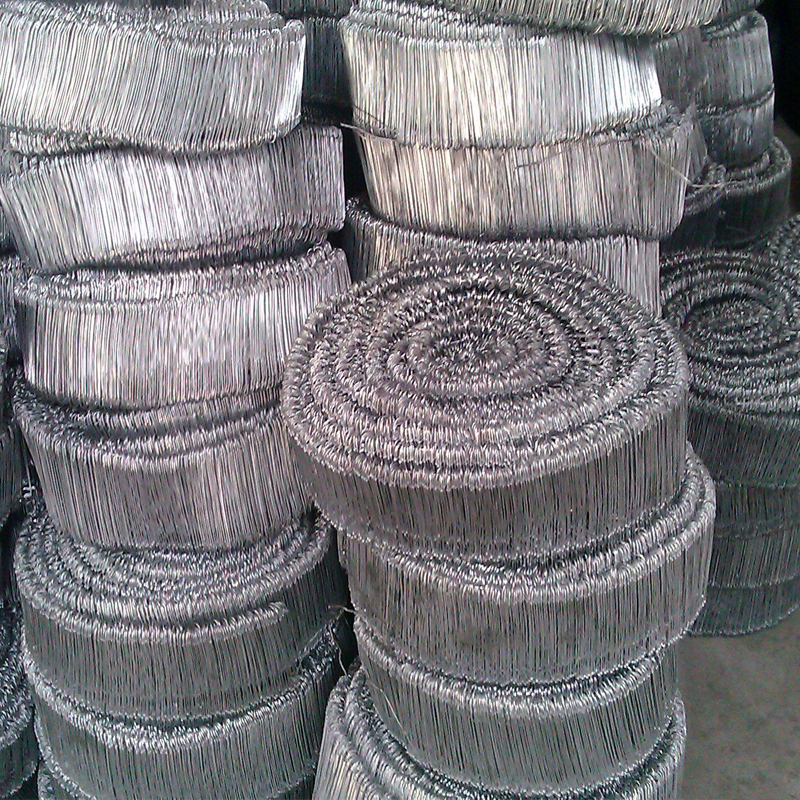
Dark annealed wire is a low-carbon steel wire subjected to a controlled annealing process, resulting in a dark, typically bluish-black oxide coating. Its position within the industrial chain is primarily as a foundational component in numerous downstream applications, including binding, baling, crafting, horticulture, and construction. Unlike bright annealed wire which undergoes pickling to remove the oxide scale, dark annealed wire retains this surface layer, offering enhanced corrosion resistance in certain environments, and a superior grip for tying applications. Core performance characteristics center on ductility, tensile strength (typically lower than bright annealed wire), and formability, allowing for easy manipulation and secure binding without compromising material integrity. The retained oxide layer, while affecting the aesthetic appearance, is a key differentiator contributing to its cost-effectiveness and specific functionalities.
Material Science & Manufacturing
The raw material for dark annealed wire is typically low-carbon steel, containing 0.08% to 0.15% carbon. This low carbon content ensures sufficient ductility for the subsequent annealing process. Key physical properties include a density of approximately 7.87 g/cm3 and a melting point around 1510°C. The manufacturing process begins with cold drawing of the steel rod to achieve the desired wire diameter. This cold working increases the steel's tensile strength but reduces its ductility. The critical step is the annealing process, conducted in a controlled atmosphere (often a reducing atmosphere) at temperatures between 550°C and 650°C. This process relieves internal stresses induced by cold working, restoring ductility and allowing the formation of a magnetite (Fe3O4) layer on the surface. Parameter control is paramount: temperature uniformity across the coil, precise annealing time (typically several hours), and controlled cooling rates are crucial to achieving the desired mechanical properties and oxide coating thickness. Excessive temperatures can lead to grain growth and reduced tensile strength, while insufficient temperatures result in incomplete stress relief. The final stage often involves winding the wire onto spools for ease of handling and transportation. Chemical compatibility is generally good with other ferrous materials, but prolonged contact with dissimilar metals in a humid environment can induce galvanic corrosion.
Performance & Engineering
The performance of dark annealed wire is largely dictated by its ductility and tensile strength. Force analysis for tying applications involves calculating the required tensile force to secure the bind without breaking the wire. This is dependent on the wire gauge (diameter) and the tightness of the twist. The yield strength, while lower than high-carbon steel wires, is sufficient for most binding and tying applications. Environmental resistance is enhanced by the magnetite coating, providing a degree of protection against atmospheric corrosion. However, the coating is not impervious and can be compromised by exposure to acidic environments or mechanical abrasion. Compliance requirements depend on the end-use application. For horticultural applications, compliance with plant quarantine regulations regarding metallic contaminants may be necessary. For construction applications, adherence to building codes regarding wire gauge and tensile strength is essential. The engineering considerations focus on optimizing wire gauge for specific load requirements. Thicker gauges offer higher tensile strength but are less flexible, while thinner gauges are easier to manipulate but have lower load capacity. The bending radius also plays a critical role; excessive bending can induce stress concentrations and lead to premature failure. The surface roughness provided by the oxide layer improves frictional grip, enhancing the holding power of the wire in tying applications.
Technical Specifications
| Gauge (AWG) | Diameter (mm) | Tensile Strength (MPa) | Elongation (%) |
|---|---|---|---|
| 16 | 1.27 | 380-450 | 15-20 |
| 14 | 1.63 | 450-550 | 18-25 |
| 12 | 2.05 | 550-650 | 20-30 |
| 10 | 2.59 | 650-750 | 22-35 |
| 8 | 3.26 | 750-850 | 25-40 |
| 6 | 4.12 | 850-950 | 28-45 |
Failure Mode & Maintenance
Common failure modes for dark annealed wire include fatigue cracking, particularly at bending points, and corrosion-induced weakening of the wire. Fatigue cracking is initiated by repeated stress cycles, often occurring during tying or baling operations. The surface oxide layer, while providing initial corrosion protection, can become compromised by abrasion or exposure to corrosive environments, leading to localized pitting corrosion. Hydrogen embrittlement can also occur in environments with high hydrogen sulfide concentrations, reducing ductility and increasing susceptibility to cracking. Delamination of the oxide layer is less common but can occur due to thermal shock or mechanical stress. Maintenance primarily consists of proper storage to prevent corrosion. Avoid prolonged exposure to humid environments or contact with corrosive substances. If the wire is to be stored outdoors, it should be covered to protect it from the elements. Regular inspection of the wire for signs of corrosion or damage is recommended. Discard any wire that shows evidence of significant corrosion, cracking, or fatigue. The application of a light oil coating can further enhance corrosion resistance during storage, but this may interfere with the gripping properties of the oxide layer in tying applications.
Industry FAQ
Q: What is the primary difference between dark annealed wire and bright annealed wire in terms of corrosion resistance?
A: Dark annealed wire's surface oxide layer (magnetite) provides a degree of inherent corrosion resistance, especially in mild environments. Bright annealed wire, having undergone pickling to remove this oxide layer, is more susceptible to initial corrosion unless coated with a protective finish. However, bright annealed wire provides a cleaner surface for coatings.
Q: How does wire gauge affect the load-bearing capacity of dark annealed wire?
A: Load-bearing capacity increases with increasing wire gauge (decreasing diameter). Thicker wire provides a larger cross-sectional area to withstand tensile forces. Selection of the appropriate gauge is critical for the application's specific load requirements.
Q: Is the oxide layer on dark annealed wire easily removed?
A: The oxide layer is relatively fragile and can be removed through abrasion, chemical cleaning (e.g., with hydrochloric acid – although this is generally avoided), or mechanical polishing. Removing the oxide layer will reduce the corrosion resistance and grip of the wire.
Q: What are the limitations of using dark annealed wire in highly corrosive environments?
A: While the oxide layer offers some protection, dark annealed wire is not recommended for prolonged exposure to harsh corrosive environments, such as those containing strong acids, chlorides, or sulfates. These conditions can rapidly degrade the oxide layer and lead to significant corrosion.
Q: Can dark annealed wire be welded?
A: Yes, dark annealed wire can be welded, but requires careful consideration. The oxide layer can hinder weld quality and requires thorough cleaning prior to welding. Low-carbon steel welding rods are typically used. Post-weld annealing may be necessary to restore ductility in the heat-affected zone.
Conclusion
Dark annealed wire remains a vital component in numerous industrial applications due to its balance of ductility, cost-effectiveness, and inherent corrosion resistance. The controlled annealing process, carefully managed to optimize the magnetite surface layer and mechanical properties, is central to its performance. Understanding the material science, manufacturing parameters, and potential failure modes is crucial for ensuring reliable performance and longevity.
Future developments may focus on enhancing the oxide layer’s protective properties through novel surface treatments or alloy modifications, expanding the range of applications for dark annealed wire in more demanding environments. Proper storage and inspection protocols remain essential for mitigating corrosion and maximizing the lifespan of this widely used industrial material.