



Introduction
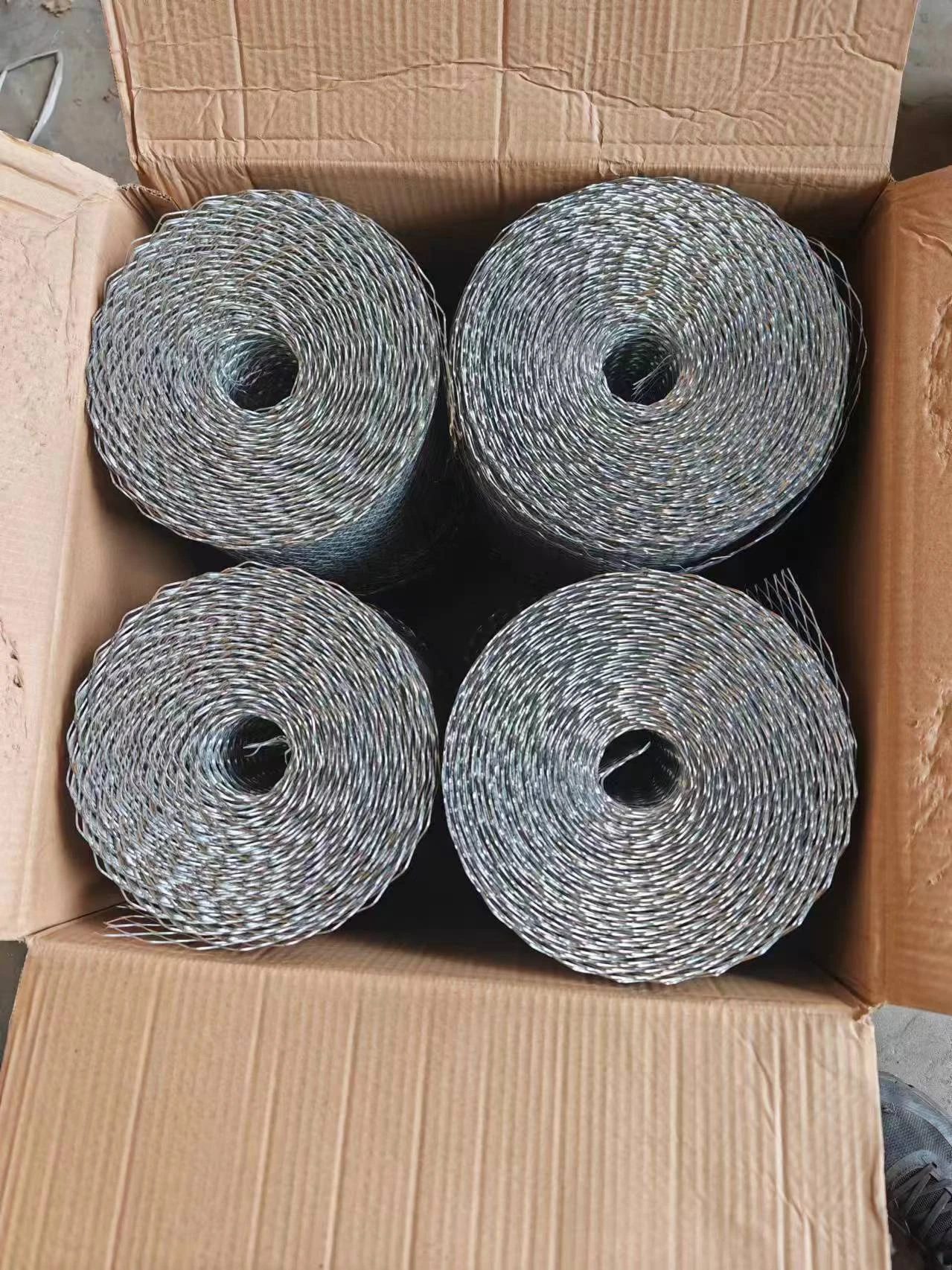
Galvanised coated garden wire is a ubiquitous fastening and support material employed extensively in horticulture, agriculture, and general domestic applications. This wire consists of a ferrous core – typically low-carbon steel – coated with a layer of zinc, often further protected by a polymeric coating. Its primary function is to provide tensile strength and formability for training plants, securing fencing, creating plant supports, and various other binding applications. The zinc coating provides crucial corrosion resistance, extending the service life of the steel wire, particularly in outdoor environments. While seemingly simple, the performance of galvanised garden wire is governed by precise metallurgical control, coating thickness, wire gauge, and the specific demands of the application, presenting significant engineering considerations for manufacturers and end-users alike. Its position within the supply chain extends from steel mills and zinc producers to wire drawing facilities and ultimately, agricultural and horticultural retailers. Understanding the inherent properties and potential failure modes of this seemingly commonplace material is critical for ensuring its effective and safe utilization.
Material Science & Manufacturing
The core material for galvanised garden wire is typically low-carbon steel, selected for its ductility and relative cost-effectiveness. Steel composition influences weldability, tensile strength, and susceptibility to corrosion. Common steel grades include SAE 1008 and 1010. The zinc coating is applied through a process known as galvanizing, predominantly utilising hot-dip galvanizing. This involves immersing the steel wire in a bath of molten zinc (typically 98% pure) at temperatures around 450-460°C (842-860°F). The zinc metallurgically bonds to the steel surface, forming a series of zinc-iron alloy layers interspersed with an outer layer of pure zinc. The thickness of this zinc coating is crucial, ranging typically from Z20 (20 g/m²) to Z60 (60 g/m²) depending on the intended application and corrosion resistance requirements. Following galvanizing, a polymeric coating – typically PVC or polyethylene – is often applied via extrusion. This provides an additional barrier against corrosion, enhances the wire's aesthetic appeal, and offers improved resistance to abrasion and UV degradation. Parameter control during wire drawing (reducing diameter) is vital to ensure consistent mechanical properties. Cooling rates, die lubrication, and reduction schedules all impact tensile strength, elongation, and surface finish. Improper control can lead to work hardening, embrittlement, and increased susceptibility to cracking. The quality of the steel feedstock, the purity of the zinc bath, and precise control of coating parameters are all fundamental to producing a high-performance product.
Performance & Engineering
The performance of galvanised coated garden wire is principally determined by its tensile strength, yield strength, elongation, and corrosion resistance. Tensile strength defines the maximum stress the wire can withstand before breaking, crucial for applications involving load-bearing support. Yield strength indicates the stress at which permanent deformation begins, impacting the wire’s ability to maintain its shape under load. Elongation measures the wire’s ductility – its ability to stretch before fracturing. Corrosion resistance is directly related to the zinc coating thickness and the integrity of the polymer layer (if present). Environmental resistance factors include exposure to humidity, chlorides (salt spray), industrial pollutants, and UV radiation. Galvanic corrosion – accelerated corrosion due to contact with dissimilar metals – must also be considered, particularly when using the wire in conjunction with aluminium or copper components. Force analysis often focuses on bending moments and shear stresses, particularly in applications where the wire is wrapped around posts or used to create sharp bends. Finite element analysis (FEA) can be employed to model stress distributions under various loading conditions. Compliance with industry standards, such as those relating to fencing and horticultural structures, is essential. The wire’s performance must be validated through rigorous testing, including tensile testing, salt spray testing (ASTM B117), and UV exposure testing (ASTM G154).
Technical Specifications
| Parameter | Typical Value (Light Gauge Wire) | Typical Value (Medium Gauge Wire) | Typical Value (Heavy Gauge Wire) |
|---|---|---|---|
| Wire Gauge (AWG) | 16 AWG (1.29 mm) | 12 AWG (2.05 mm) | 9 AWG (2.90 mm) |
| Tensile Strength (MPa) | 350 - 450 | 400 - 550 | 500 - 650 |
| Zinc Coating Thickness (µm) | 5 - 10 | 10 - 20 | 20 - 30 |
| Elongation (%) | 15 - 25 | 12 - 20 | 10 - 18 |
| Polymer Coating Thickness (µm) | 50 - 80 (PVC) | 80 - 120 (PVC) | 100 - 150 (PVC) |
| Corrosion Resistance (Salt Spray Hours) | 120 - 240 | 240 - 480 | 480 - 720 |
Failure Mode & Maintenance
Galvanised coated garden wire is susceptible to several failure modes. Corrosion is the most common, initiated by breaches in the zinc or polymer coating, allowing moisture and electrolytes to reach the steel core. This leads to rust formation and eventual loss of tensile strength. Hydrogen embrittlement can occur during the galvanizing process if excessive hydrogen diffuses into the steel, potentially leading to brittle fracture. Mechanical damage, such as abrasion, cutting, or repeated bending, can compromise the coating and expose the underlying steel. Fatigue cracking can occur under cyclical loading, particularly at points of stress concentration. UV degradation can cause the polymer coating to become brittle and crack, reducing its protective function. Delamination of the polymer coating can also occur due to poor adhesion or thermal cycling. Maintenance involves regular inspection for signs of corrosion, damage, or coating failure. Damaged areas should be treated with a zinc-rich paint or coating to prevent further corrosion. Avoid harsh chemicals or abrasive cleaners that can damage the coating. Proper storage in a dry environment is essential to prevent corrosion. For heavily loaded applications, periodic re-tensioning or replacement may be necessary to prevent fatigue failure. Regularly inspect areas where the wire contacts dissimilar metals to monitor for galvanic corrosion.
Industry FAQ
Q: What is the impact of wire gauge on the overall performance and cost-effectiveness of galvanised garden wire?
A: Wire gauge directly affects tensile strength and load-bearing capacity. Thicker gauges (lower AWG numbers) provide greater strength but also increase material cost and weight. Selecting the appropriate gauge requires careful consideration of the intended application and the expected loads. Higher gauge wires are suitable for demanding applications like fencing, while lighter gauges suffice for plant training and tying. Cost-effectiveness is a balance between performance requirements and budgetary constraints.
Q: How does the type of polymer coating (PVC vs. polyethylene) influence the wire’s durability and environmental resistance?
A: PVC generally offers superior UV resistance and abrasion resistance compared to polyethylene. However, polyethylene is more flexible and less prone to cracking in cold temperatures. The choice depends on the expected environmental conditions and the degree of flexibility required. For applications exposed to intense sunlight, PVC is preferred. For applications subject to frequent bending or freezing temperatures, polyethylene may be a better option.
Q: What is the significance of the zinc coating thickness, and how is it measured?
A: Zinc coating thickness directly correlates with corrosion resistance. A thicker coating provides a longer barrier against corrosive elements. Coating thickness is typically measured using non-destructive methods such as magnetic induction or eddy current testing. Standard specifications (e.g., ASTM B117) define minimum coating thickness requirements for various service environments.
Q: What are the common causes of hydrogen embrittlement in galvanised wire, and how can it be mitigated?
A: Hydrogen embrittlement occurs when hydrogen atoms diffuse into the steel during the hot-dip galvanizing process. This can lead to reduced ductility and increased susceptibility to brittle fracture. Mitigation strategies include using appropriate steel grades, controlling the zinc bath chemistry, and employing post-galvanizing treatments such as baking to drive out the absorbed hydrogen.
Q: How can I effectively prevent galvanic corrosion when using galvanised wire in contact with other metals?
A: To prevent galvanic corrosion, isolate the galvanised wire from dissimilar metals using non-conductive materials such as plastic or rubber. Alternatively, use a compatible coating on the dissimilar metal to minimize the potential difference. Applying a sacrificial anode (a more reactive metal) can also protect the galvanised wire by preferentially corroding instead.
Conclusion
Galvanised coated garden wire, while a seemingly simple product, represents a complex interplay of materials science, manufacturing processes, and engineering principles. Its performance is critically dependent on the quality of the steel core, the integrity of the zinc coating, and the characteristics of any applied polymer layer. Understanding the potential failure modes – corrosion, fatigue, and mechanical damage – is paramount to ensuring its long-term reliability and safety in diverse applications.
Continued advancements in coating technologies, such as the development of more durable and corrosion-resistant polymer formulations, promise to further enhance the lifespan and performance of this essential fastening material. Future research should focus on mitigating hydrogen embrittlement and developing more environmentally friendly galvanizing processes. Proper specification, installation, and maintenance practices remain crucial for maximizing the value and longevity of galvanised coated garden wire in both agricultural and domestic settings.