



Introduction
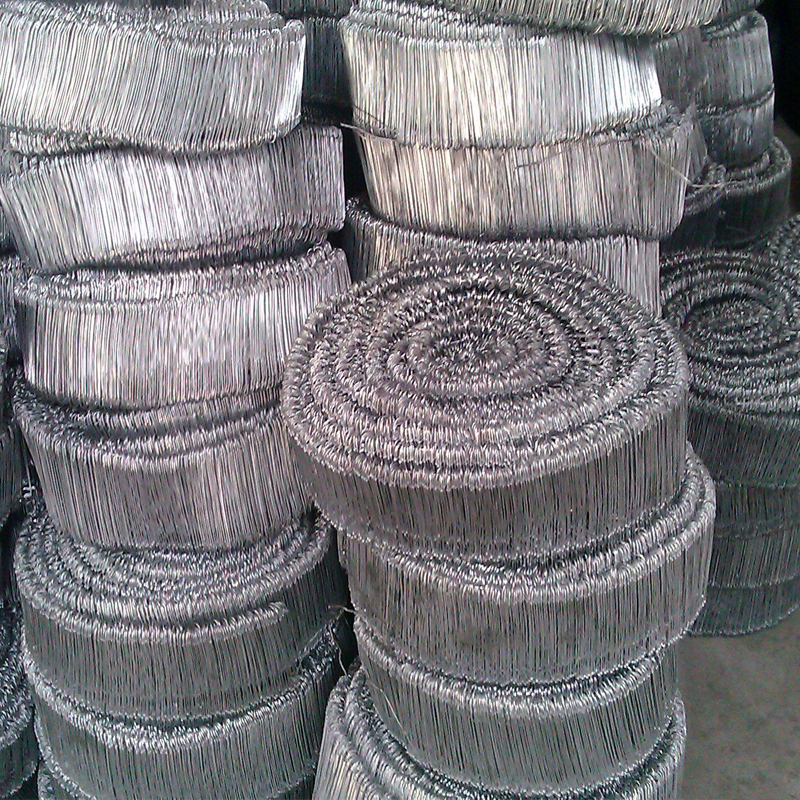
Gauge galvanized wire is a carbon steel wire coated with a layer of zinc through a hot-dip galvanization process. Its primary function is to provide corrosion resistance and tensile strength for binding, fastening, and supporting applications across diverse industries including construction, agriculture, manufacturing, and telecommunications. Within the industry chain, it represents a critical component bridging raw material processing (steel production) and finished product assembly. Core performance characteristics revolve around its formability, knot-holding capability, resistance to environmental degradation, and consistent mechanical properties. Gauge, referring to wire diameter, is a key specification influencing load-bearing capacity and application suitability. The wire's zinc coating thickness directly correlates to its long-term corrosion protection. Understanding these characteristics is paramount for ensuring structural integrity and longevity in end-use applications.
Material Science & Manufacturing
The base material for gauge galvanized wire is typically low-carbon steel, specifically SAE 1008 or similar grades, chosen for its ductility and weldability. The steel composition contains primarily iron, with small additions of carbon (0.08%), manganese (0.6-0.9%), phosphorus (less than 0.04%), and sulfur (less than 0.05%). These elements influence the steel’s strength, toughness, and machinability. The galvanization process involves immersing the cleaned steel wire in a molten zinc bath (typically 98% pure zinc with additives like aluminum to refine grain structure and improve coating adhesion) at a temperature of approximately 450-460°C. This creates a metallurgical bond between the zinc and steel, forming layers of zinc-iron alloy (Zeta, Delta, Gamma, and Alpha phases) and a final outer layer of pure zinc. Key parameters during manufacturing include wire drawing speed, annealing temperature (to achieve desired ductility), pickling solution concentration (to remove surface oxides), flux application (to promote zinc adhesion), and cooling rate post-galvanization. Controlling these parameters is essential for achieving consistent coating thickness, uniformity, and adherence. Variations in steel composition can impact the rate of zinc diffusion and the formation of alloy layers. Post-galvanization, the wire may undergo treatments like passivation to enhance corrosion resistance and minimize “white rust” formation.

Performance & Engineering
The performance of gauge galvanized wire is critically determined by its tensile strength, yield strength, elongation, and corrosion resistance. Tensile strength, measured in MPa, dictates the wire’s ability to withstand pulling forces before fracturing. Yield strength indicates the point at which permanent deformation occurs. Elongation, expressed as a percentage, reflects the wire's ductility. Corrosion resistance is directly related to the zinc coating thickness, measured in g/m². Engineering considerations involve calculating the load-bearing capacity of the wire based on its gauge and application-specific safety factors. For instance, in agricultural applications like vineyard trellising, wire sag and wind loading must be accounted for. In construction, wire tie applications require adequate knot strength to prevent loosening under stress. Environmental resistance considerations include exposure to saltwater, acidic environments, and varying temperatures. The zinc coating acts as a sacrificial anode, corroding preferentially to the steel and providing cathodic protection. However, the effectiveness of this protection diminishes over time, particularly in harsh environments. Compliance with industry standards (see Section 7) ensures consistent performance and safety. Finite Element Analysis (FEA) can be employed to model stress distribution within the wire under different loading conditions and optimize wire gauge selection for specific applications.
Technical Specifications
| Gauge (AWG) | Diameter (mm) | Tensile Strength (MPa) | Zinc Coating Thickness (g/m²) |
|---|---|---|---|
| 14 | 1.628 | 483 | 60-80 |
| 16 | 1.291 | 552 | 50-70 |
| 18 | 1.024 | 620 | 40-60 |
| 20 | 0.812 | 690 | 30-50 |
| 22 | 0.644 | 760 | 25-40 |
| 24 | 0.511 | 830 | 20-30 |
Failure Mode & Maintenance
Gauge galvanized wire can fail through several mechanisms. Hydrogen embrittlement, induced during the pickling process if not properly controlled, can reduce ductility and promote cracking. Corrosion, despite the zinc coating, can occur over time, particularly in marine or industrial environments, leading to section loss and eventual failure. Fatigue cracking can result from repeated bending or flexing, especially in applications involving dynamic loads. Galvanic corrosion can occur when the galvanized wire is in contact with dissimilar metals in a conductive environment. Mechanical damage, such as cuts or abrasions to the zinc coating, exposes the underlying steel to corrosion. Maintenance primarily focuses on inspection for signs of corrosion, damage, or fatigue. Regular cleaning to remove dirt and debris can help prevent premature corrosion. Applying a protective coating, such as a zinc-rich paint or sealant, to damaged areas can extend service life. For critical applications, periodic replacement of the wire based on estimated service life is recommended. Failure analysis should include metallographic examination to identify the root cause of failure (e.g., hydrogen embrittlement, corrosion pitting, fatigue striations).
Industry FAQ
Q: What is the typical service life of gauge galvanized wire in a coastal environment?
A: In a highly corrosive coastal environment, the service life of gauge galvanized wire can range from 5 to 10 years, depending on the zinc coating thickness and exposure conditions. Higher zinc coating weights (e.g., 80 g/m²) provide longer protection. Regular inspection and application of protective coatings can extend this lifespan.
Q: How does the annealing process affect the wire’s performance?
A: The annealing process is critical for achieving the desired ductility and formability. Insufficient annealing can result in brittle wire prone to cracking during bending or knot tying. Over-annealing can reduce tensile strength. Careful control of annealing temperature and cooling rate is essential.
Q: What are the advantages of using aluminum-zinc alloy coated wire compared to pure zinc?
A: Aluminum-zinc alloys (e.g., Galfan) offer superior corrosion resistance compared to pure zinc due to the formation of a more complex protective layer. Aluminum promotes the formation of a tightly adhering oxide layer that inhibits corrosion. These alloys also exhibit better high-temperature resistance.
Q: What safety factors should be considered when using galvanized wire for load-bearing applications?
A: A safety factor of 3:1 to 5:1 is typically recommended for load-bearing applications, depending on the criticality of the application and the level of uncertainty in the load estimation. This ensures that the wire can withstand unexpected loads or stresses without failure.
Q: How does the diameter of the wire affect its corrosion resistance?
A: While the coating thickness is the primary determinant of corrosion resistance, a thicker wire diameter generally provides longer service life. A larger diameter wire has a greater mass of zinc per unit length, offering more sacrificial protection to the steel core. However, increased diameter also increases material cost.
Conclusion
Gauge galvanized wire remains a cornerstone material for a vast range of industrial applications due to its cost-effectiveness, ease of use, and reliable corrosion protection. Its performance is intricately linked to material composition, manufacturing process control, and environmental exposure conditions. A thorough understanding of these factors is crucial for selecting the appropriate wire gauge and coating thickness for specific applications.
Future developments in wire manufacturing may focus on enhanced coating technologies, such as utilizing nano-coatings to improve corrosion resistance and reduce zinc consumption. Improved steel alloys with increased strength and ductility are also anticipated. Continued adherence to established industry standards and rigorous quality control procedures will remain paramount for ensuring the long-term performance and safety of gauge galvanized wire in demanding environments.