



Introduction
Galvanized (GI) coated wire represents a critical component across diverse industrial sectors, primarily serving as a cost-effective corrosion-resistant material for applications ranging from fencing and cable armor to construction reinforcement and spring manufacturing. The technical position of GI coated wire within the broader metallic materials chain lies between carbon steel wire, offering basic tensile strength, and higher-alloy materials like stainless steel, providing superior but more expensive corrosion protection. Core performance characteristics center around the zinc coating’s ability to provide sacrificial protection to the underlying steel, preventing rust and extending service life. Critical performance parameters include coating thickness, zinc distribution uniformity, mechanical properties of the core steel wire (tensile strength, elongation, yield strength), hydrogen embrittlement susceptibility, and adherence of the coating. A key industry pain point revolves around ensuring consistent coating quality to meet stringent performance requirements and prevent premature failure, particularly in harsh environments. The economic viability of GI wire is often balanced against its susceptibility to corrosion in certain conditions, requiring careful consideration of application-specific environmental factors.
Material Science & Manufacturing
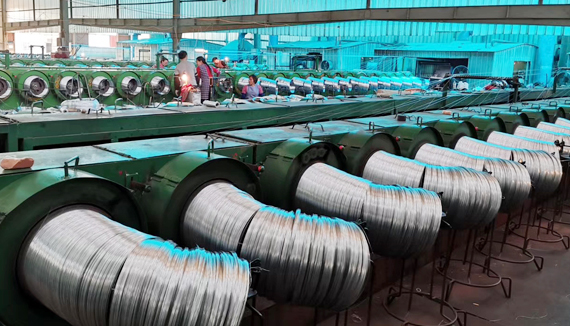
The primary raw material for GI coated wire is carbon steel wire rod, typically ranging in carbon content from low carbon (0.05% - 0.25%) to medium carbon (0.25% - 0.60%) depending on the desired tensile strength and ductility. The steel composition will also include manganese, phosphorus, and sulfur as impurity elements. The zinc used for coating is generally of 99.995% purity, meeting standards like Special High Grade (SHG) zinc. The manufacturing process primarily involves either hot-dip galvanizing or electrogalvanizing. Hot-dip galvanizing, the more common method, involves cleaning the steel wire, fluxing it with a zinc ammonium chloride solution, and immersing it in a bath of molten zinc (typically 98% zinc, 1.5% aluminum, 0.5% silicon) maintained at approximately 450°C. The wire is then cooled, often using air or water quenching. Key parameters controlled during hot-dip galvanizing include bath temperature, immersion time, withdrawal speed, and cooling rate. Electrogalvanizing utilizes an electrolytic cell where the steel wire acts as the cathode, and zinc anodes are dissolved in a zinc sulfate solution. Current density, electrolyte composition, and temperature are critical process control parameters for electrogalvanizing. A post-treatment process, often including passivation with chromate conversion coatings, is frequently applied to enhance corrosion resistance. Hydrogen embrittlement is a significant concern during the galvanizing process, particularly with high-strength steel wires, requiring post-galvanizing baking treatments to diffuse hydrogen out of the steel.
Performance & Engineering
The performance of GI coated wire is dictated by its ability to resist corrosion through sacrificial protection. The zinc coating corrodes preferentially to the steel, forming a protective layer of zinc oxides and carbonates. Force analysis focuses on the tensile strength of the composite material – the steel core providing the primary strength and the zinc coating contributing minimal structural support. However, the coating’s integrity is critical to preventing corrosion-induced stress concentration and subsequent failure. Environmental resistance is paramount; GI wire performs well in atmospheric conditions, but its corrosion rate increases significantly in saline environments, acidic conditions, or in contact with dissimilar metals creating galvanic corrosion cells. Compliance requirements vary depending on the application. For construction applications, standards like ASTM A641 (Zinc-Coated Steel Wire) are often specified. For fencing applications, regional standards relating to coating thickness and zinc quality are prevalent. Functional implementation requires careful consideration of the wire’s end-use. In applications involving forming or bending, the ductility of both the steel core and the zinc coating must be adequate to prevent cracking or spalling of the coating. The coating thickness directly impacts corrosion resistance; thicker coatings provide longer protection but can also increase brittleness and cost. Adherence testing (bend test, salt spray test) is crucial to ensure the coating remains bonded to the steel substrate under stress.
Technical Specifications
| Parameter | Unit | Typical Value (Standard Grade) | Typical Value (High Corrosion Resistance Grade) |
|---|---|---|---|
| Tensile Strength (Steel Core) | MPa | 400-550 | 550-700 |
| Elongation (Steel Core) | % | 12-18 | 10-15 |
| Zinc Coating Thickness | µm | 55-75 | 80-150 |
| Zinc Coating Weight | g/m² | 150-200 | 220-400 |
| Hydrogen Embrittlement Risk | - | Moderate | Low (Post-baking applied) |
| Adhesion (Bend Test) | Pass/Fail | Pass | Pass |
Failure Mode & Maintenance
Common failure modes for GI coated wire include uniform corrosion (leading to gradual coating depletion), localized corrosion (such as pitting corrosion in chloride-rich environments), galvanic corrosion (when in contact with dissimilar metals), and mechanical damage (coating cracking or spalling due to bending, abrasion, or impact). Hydrogen embrittlement, as mentioned previously, can lead to brittle failure, especially in high-strength wire. Oxidation of the zinc coating occurs over time, leading to the formation of white rust (zinc oxide), which reduces corrosion protection. Delamination of the zinc coating from the steel substrate can occur due to poor adhesion, inadequate surface preparation, or excessive stress. Maintenance strategies depend on the application. For fencing, periodic inspection for corrosion and application of a zinc-rich paint or coating to damaged areas can extend service life. For cable armor, regular inspection for coating integrity and replacement of corroded sections are crucial. Preventive measures include proper surface preparation before galvanizing, controlling the galvanizing process parameters to minimize hydrogen embrittlement, and applying passivation treatments to enhance corrosion resistance. Avoiding contact with dissimilar metals and providing adequate drainage to prevent water accumulation can also mitigate corrosion risk. For critical applications, sacrificial anodes can be added to accelerate zinc consumption before the steel corrodes.
Industry FAQ
Q: What is the impact of steel core hardness on the galvanizing process and the resulting coating quality?
A: Higher hardness steel cores, often achieved through cold drawing, can increase the risk of hydrogen embrittlement during galvanizing. This is because the higher tensile stresses within the steel facilitate hydrogen absorption. Post-galvanizing baking becomes particularly critical for high-strength wire to remove this absorbed hydrogen. Furthermore, harder steel can be more susceptible to cracking during the forming processes involved in wire fabrication, potentially compromising coating adhesion.
Q: How does the presence of aluminum in the galvanizing bath affect the coating's corrosion resistance?
A: The addition of aluminum (typically around 1.5%) to the zinc galvanizing bath creates a zinc-aluminum alloy coating. This alloy coating offers enhanced corrosion resistance compared to pure zinc coatings, especially in marine or industrial environments. The aluminum forms a passive oxide layer that further protects the underlying zinc and steel. However, the alloy coating can be more brittle and may be more prone to cracking under severe forming operations.
Q: What are the key differences between hot-dip galvanizing and electrogalvanizing in terms of coating characteristics and cost?
A: Hot-dip galvanizing generally results in a thicker, more robust coating with better adhesion, making it suitable for harsh environments. It’s typically more cost-effective for larger production volumes. Electrogalvanizing provides a thinner, more uniform coating with better control over coating thickness and surface finish. It's better suited for applications requiring precise coating dimensions or intricate geometries, but it’s generally more expensive than hot-dip galvanizing.
Q: How is the adhesion of the zinc coating assessed, and what are the common failure criteria?
A: Adhesion is commonly assessed using bend tests (bending the wire around a specified diameter without cracking or flaking the coating), salt spray tests (measuring the time to corrosion initiation), and adhesion pull-off tests (quantifying the force required to separate the coating from the steel). Common failure criteria include visible cracking or flaking of the coating during bending, corrosion initiation within a specified time frame during salt spray exposure, and pull-off values below a defined threshold.
Q: What role does passivation play in enhancing the corrosion resistance of GI coated wire?
A: Passivation, typically involving chromate conversion coatings or more environmentally friendly alternatives, creates a thin, protective layer on the zinc surface. This layer inhibits the formation of white rust and enhances the overall corrosion resistance of the coating. Chromate passivation, while effective, is increasingly regulated due to environmental concerns, leading to the development of non-chromate passivation treatments.
Conclusion
GI coated wire remains a foundational material in numerous industrial applications due to its cost-effectiveness and reliable corrosion protection. The manufacturing process, particularly hot-dip galvanizing, requires precise control of parameters to ensure consistent coating quality and mitigate risks like hydrogen embrittlement. Understanding the material science principles governing the zinc-steel interaction, and the various failure modes, is crucial for selecting the appropriate grade of GI wire for specific applications and implementing effective maintenance strategies.
Future advancements in GI wire technology focus on developing more environmentally friendly passivation treatments, optimizing alloy compositions for enhanced corrosion resistance, and implementing advanced monitoring techniques to assess coating integrity in real-time. The continued balance between cost, performance, and sustainability will drive innovation in this essential material.