



Introduction
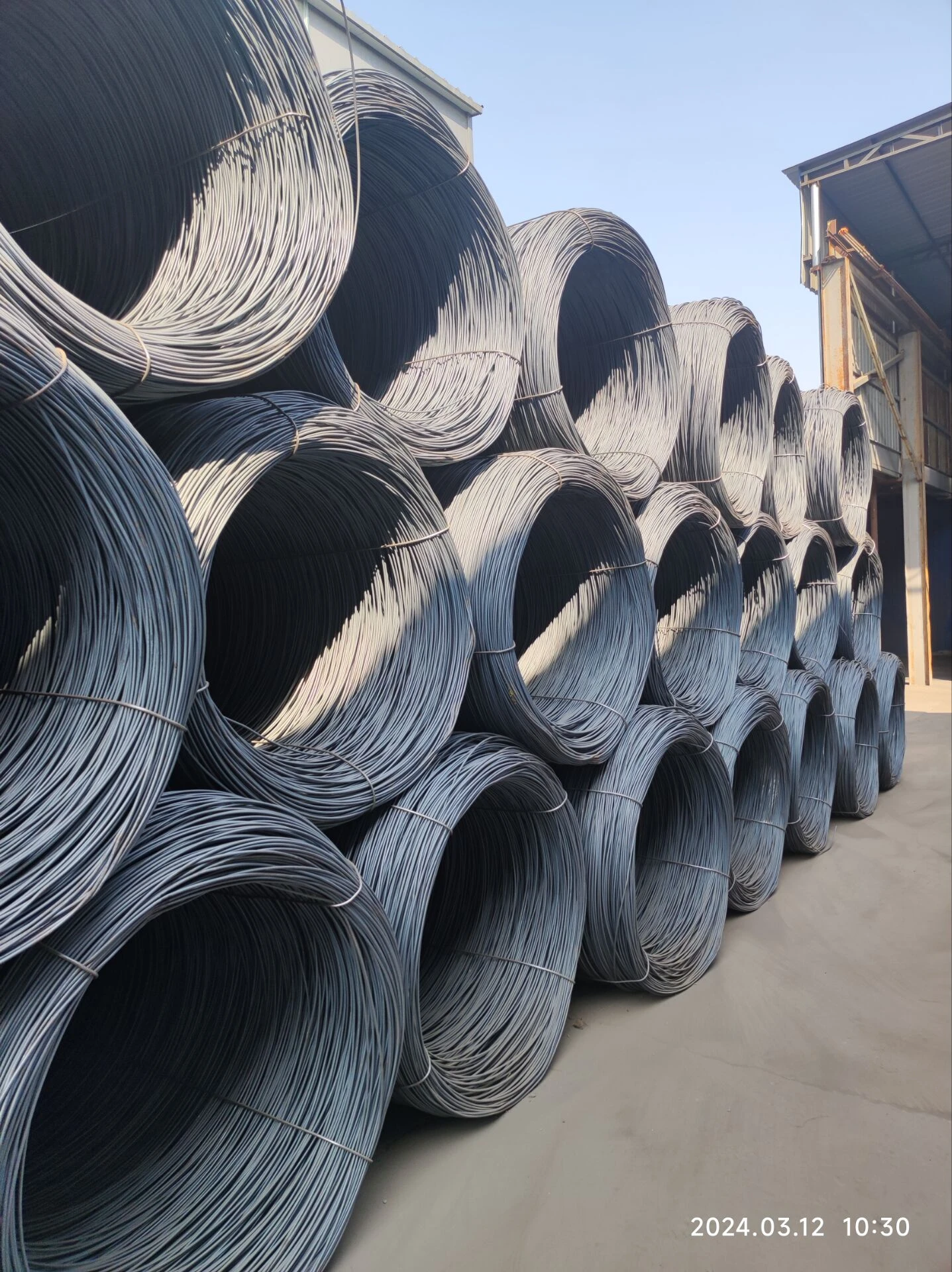
Galvanized (GI) wire for agricultural applications constitutes a crucial component in diverse farming practices, ranging from vineyard trellising and orchard support to poultry netting and fencing. Technically, GI wire is carbon steel wire coated with a layer of zinc through hot-dip galvanization. This coating imparts corrosion resistance, essential for withstanding outdoor environmental exposure and extending the service life of the wire in agricultural settings. Its primary position in the supply chain is as a semi-finished product, requiring further fabrication (twisting, knotting, weaving) by agricultural supply manufacturers. Core performance characteristics include tensile strength, elongation, zinc coating thickness, and resistance to environmental degradation. The industry faces ongoing challenges related to optimizing zinc coating durability, minimizing hydrogen embrittlement during the galvanization process, and achieving consistent mechanical properties across large production volumes. Selection hinges on balancing cost-effectiveness with longevity and the specific demands of the intended application.
Material Science & Manufacturing
The core material for GI wire is typically low-carbon steel, with a carbon content ranging from 0.08% to 0.15% to ensure sufficient ductility for drawing and forming. Other alloying elements, such as manganese (0.3-0.6%), may be added to improve strength and hardenability. The zinc used for galvanization is generally of 99.995% purity (Special High Grade Zinc – SHG Zinc) to minimize impurities that could affect coating adhesion and corrosion protection. Manufacturing commences with the drawing of steel rod into wire of the desired gauge. This process induces work hardening, necessitating intermediate annealing to restore ductility. Following annealing, the wire undergoes pickling with hydrochloric acid to remove mill scale and surface contaminants. The hot-dip galvanization process involves immersing the cleaned wire into a molten zinc bath (typically maintained at 450-460°C). The steel-zinc metallurgical reaction forms a series of zinc-iron alloy layers, providing a robust barrier against corrosion. Critical parameters include bath temperature, immersion time, cooling rate, and zinc bath composition (aluminum content is carefully controlled to refine the zinc coating microstructure). Post-galvanization, the wire is often treated with a passivation layer (chromate conversion coating, though increasingly replaced with environmentally friendly alternatives) to further enhance corrosion resistance and improve coating adhesion. Precise control of the cooling process minimizes the risk of hydrogen embrittlement, a critical failure mechanism.
Performance & Engineering
The performance of GI wire in agricultural applications is fundamentally governed by its mechanical strength and corrosion resistance. Tensile strength, typically ranging from 350-500 MPa depending on wire diameter and steel grade, dictates the wire’s ability to withstand static and dynamic loads – supporting plant weight, resisting wind forces, or containing livestock. Elongation at break (typically 12-20%) indicates ductility and its ability to deform plastically before fracture. The zinc coating thickness (measured in g/m2) directly correlates with corrosion protection; thicker coatings offer prolonged lifespan. Environmental resistance involves assessing performance under UV exposure, humidity, salinity (in coastal regions), and exposure to agricultural chemicals (fertilizers, pesticides). Force analysis in applications like vineyard trellising requires calculating tensile stresses due to vine weight and wind loads. Compliance requirements vary by region. In the EU, REACH regulations govern the use of chemicals in the manufacturing process. ASTM standards (detailed in the Technical Specifications section) dictate acceptable levels of zinc coating uniformity and mechanical properties. Understanding creep behavior – the tendency of wire to deform slowly under sustained load – is crucial for long-term applications. Galvanic corrosion, occurring when GI wire is in contact with dissimilar metals, must be mitigated through careful material selection and the use of insulating materials.
Technical Specifications
| Parameter | Unit | Typical Value (Low Carbon Steel) | Test Method |
|---|---|---|---|
| Tensile Strength | MPa | 400-500 | ASTM A641 |
| Elongation at Break | % | 15-20 | ASTM A641 |
| Zinc Coating Thickness | g/m2 | 60-275 | ASTM B693 |
| Zinc Coating Uniformity | % | >95 | ASTM B693 |
| Hydrogen Embrittlement Resistance | Pass/Fail | Pass | ASTM F1624 |
| Wire Diameter | mm | 0.8 – 4.0 | Micrometer |
Failure Mode & Maintenance
Common failure modes in agricultural GI wire include corrosion (leading to section loss and eventual fracture), fatigue cracking (due to repeated loading from wind or plant movement), and hydrogen embrittlement (causing premature failure, particularly in high-strength wires). Corrosion manifests as rust formation, initiating at scratches or defects in the zinc coating. Fatigue cracking typically originates at stress concentration points, such as bends or knots. Hydrogen embrittlement occurs when atomic hydrogen, generated during the galvanization process, diffuses into the steel lattice, reducing ductility and increasing susceptibility to cracking. Oxidation of the zinc coating over extended periods, particularly in high-humidity environments, reduces its protective effectiveness. Maintenance strategies include periodic visual inspection for corrosion and damage, re-tightening of wire connections to prevent fatigue, and application of protective coatings (e.g., zinc-rich paint) to damaged areas. In severe cases, replacement of the wire is necessary. Proper storage of GI wire prior to use – keeping it dry and protected from direct sunlight – minimizes pre-installation corrosion. Routine application of corrosion inhibitors can extend service life, especially in harsh environments. For poultry netting, regular cleaning to remove accumulated manure and debris reduces the rate of corrosion.
Industry FAQ
Q: What is the difference between Class 1, Class 2, and Class 3 galvanized wire, and which is best for vineyard trellising?
A: The classification refers to the zinc coating weight (g/m2). Class 1 has the lowest coating, Class 2 a moderate coating, and Class 3 the highest. For vineyard trellising, exposed to significant UV and potential for mechanical damage, Class 3 is generally recommended due to its superior corrosion resistance, despite the higher initial cost. The longer lifespan typically justifies the investment.
Q: How does the diameter of the GI wire affect its suitability for fencing livestock?
A: Larger diameter wire offers higher tensile strength and greater resistance to breaking or bending from animal impact. Smaller diameters are more economical but require more frequent maintenance and are less suitable for containing larger, stronger livestock. The specific diameter required depends on the animal type (cattle, sheep, goats) and fence height.
Q: Is hydrogen embrittlement a significant concern with GI wire, and how can it be mitigated?
A: Yes, hydrogen embrittlement is a critical concern, particularly with high-strength GI wire. It’s caused by hydrogen diffusion into the steel during galvanization. Mitigation strategies include proper annealing after drawing, controlling the zinc bath chemistry (low aluminum content), and implementing a post-galvanization de-embrittlement process (baking).
Q: What are the environmental implications of chromate conversion coatings used on GI wire, and are there alternatives?
A: Chromate conversion coatings contain hexavalent chromium, a known carcinogen, posing environmental and health risks. Alternatives include phosphate conversion coatings, polymeric coatings, and proprietary organic passivation treatments. These alternatives offer varying levels of corrosion protection and may impact cost.
Q: How does salt spray testing correlate to actual field performance of GI wire in coastal agricultural environments?
A: Salt spray testing (ASTM B117) provides a standardized accelerated corrosion test, but it doesn’t perfectly replicate real-world conditions. While useful for comparative analysis, field performance can be affected by factors like UV exposure, temperature fluctuations, and the presence of agricultural chemicals, which aren’t fully represented in salt spray testing. Correlation factors must be applied when extrapolating results.
Conclusion
Galvanized wire remains an indispensable material in agriculture, offering a cost-effective and relatively durable solution for a wide range of applications. The performance and longevity of GI wire are critically dependent on a complex interplay of material science factors – steel composition, zinc coating thickness and uniformity, and manufacturing process control. Understanding the potential failure modes, such as corrosion, fatigue, and hydrogen embrittlement, is paramount for selecting the appropriate wire gauge and coating class for the intended application and implementing preventative maintenance strategies.
Future developments in GI wire technology are likely to focus on enhancing corrosion resistance through novel coating materials (e.g., zinc-aluminum alloys), optimizing the galvanization process to minimize hydrogen embrittlement, and developing more environmentally friendly passivation treatments. Continued adherence to rigorous industry standards and ongoing research into material behavior will ensure the sustained reliability of GI wire in supporting the evolving needs of the agricultural sector.