



Introduction
Iron nails, ubiquitous fasteners in construction, woodworking, and various industrial applications, represent a seemingly simple product with a complex interplay of material science, manufacturing processes, and performance characteristics influencing their price. This guide provides an in-depth technical analysis of iron nail pricing, extending beyond simple material costs to encompass production techniques, quality control measures, metallurgical considerations, and the impact of prevailing market dynamics. The cost of an iron nail is dictated not merely by the weight of iron, but also by the energy consumed in its creation, the precision of its forming, and the protective coatings applied to mitigate corrosion. Understanding these nuances is critical for procurement managers, engineers, and industry professionals seeking to optimize material costs and ensure structural integrity. The guide will analyze the factors that contribute to price fluctuations, covering variations in iron ore pricing, manufacturing efficiency, surface treatment methodologies, and compliance with relevant industry standards.
Material Science & Manufacturing
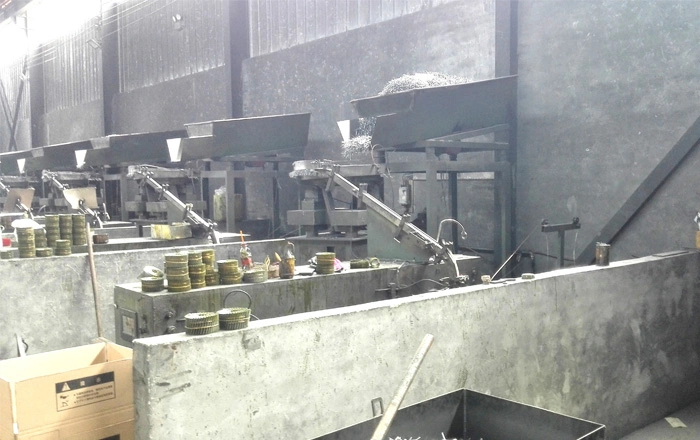
The primary material for iron nails is typically low-carbon steel, chosen for its balance of ductility, tensile strength, and cost-effectiveness. The specific grade of steel impacts nail price significantly. Common grades include SAE 1008, 1010, and 1018. These designations refer to the carbon content; higher carbon content increases hardness and strength but reduces ductility, potentially leading to brittleness and failure under stress. The raw material – iron ore – undergoes a series of processes including blast furnace reduction, basic oxygen steelmaking, or electric arc furnace refining to produce the steel billets used in nail manufacturing. Manufacturing commonly employs cold heading, a process where steel wire is fed into a machine and formed into the nail shape using dies. This process work-hardens the metal, increasing its tensile strength. Key parameters in cold heading include die angle, feed rate, and lubrication. Improper lubrication leads to increased friction, die wear, and potential surface defects. Alternative manufacturing methods include cut wire nails, created by cutting wire to length and then heading the point. These generally have a slightly lower price point but may exhibit lower shear strength. Surface treatments, such as galvanization (zinc coating) or phosphate coating, significantly impact price. Galvanization provides superior corrosion resistance, vital for exterior applications, but increases cost due to the zinc consumption and processing stages. Phosphate coating creates a protective layer and enhances paint adhesion, offering a lower-cost corrosion resistance solution. Quality control at each stage – from raw material analysis to final product inspection – is critical, impacting price through the cost of testing equipment and skilled personnel.
Performance & Engineering
The performance of an iron nail is characterized by several key engineering properties, primarily shear strength, tensile strength, bending strength, and corrosion resistance. Shear strength is particularly crucial, as nails primarily resist forces acting parallel to the wood grain. Tensile strength determines the nail’s ability to resist pulling forces. Finite element analysis (FEA) is often employed to model the stress distribution within a nail during loading, optimizing nail geometry to maximize load-bearing capacity. The nail’s shank diameter, length, and point geometry (e.g., diamond point, blunt point) directly influence these properties. Environmental resistance is a critical consideration. Iron is susceptible to corrosion, particularly in humid or chemically aggressive environments. Galvanization, as mentioned previously, provides a sacrificial coating that protects the underlying steel. The thickness of the zinc coating (measured in microns) directly correlates to the level of corrosion protection and, consequently, the price. Compliance with industry standards, such as those established by ASTM (American Society for Testing and Materials), is paramount. These standards specify minimum requirements for material composition, dimensions, mechanical properties, and coating thickness. For instance, ASTM F166 defines standards for steel nails used in structural applications. Incorrectly engineered nails can lead to structural failures, compromising safety and incurring significant costs related to repairs and potential liabilities.
Technical Specifications
| Nail Diameter (Gauge) | Nail Length (inches) | Material Grade (SAE) | Coating Type |
|---|---|---|---|
| 6d (0.113 inch) | 2.0 inches | 1008 | Bright (Uncoated) |
| 8d (0.131 inch) | 2.5 inches | 1010 | Galvanized (60g/m²) |
| 10d (0.148 inch) | 3.0 inches | 1018 | Phosphate Coated |
| 12d (0.165 inch) | 3.5 inches | 1008 | Galvanized (80g/m²) |
| 16d (0.196 inch) | 4.0 inches | 1010 | Bright (Uncoated) |
| 20d (0.230 inch) | 5.0 inches | 1018 | Galvanized (100g/m²) |
Failure Mode & Maintenance
Iron nails are susceptible to several failure modes. Corrosion is a primary concern, particularly in exterior applications. Red rust formation weakens the nail, reducing its shear and tensile strength. Galvanized nails delay corrosion but eventually the zinc coating will be consumed. Brittle fracture can occur under impact or excessive bending, especially with higher carbon steel nails. Fatigue cracking can develop under cyclic loading, particularly in structures subject to vibrations or wind loads. This is influenced by nail geometry and the presence of stress concentrators (e.g., sharp bends). Shear failure occurs when the force acting parallel to the wood grain exceeds the nail's shear strength. Withdrawal failure happens when the nail is pulled out of the wood due to insufficient holding power. Maintenance typically involves periodic inspection for signs of corrosion or damage. Replacing corroded or damaged nails is crucial to maintain structural integrity. Applying protective coatings to exposed nail heads can extend their lifespan. For critical structural applications, employing corrosion-resistant fasteners (e.g., stainless steel nails) is recommended. Understanding the specific environmental conditions and load requirements is essential for selecting the appropriate nail type and implementing effective maintenance strategies.
Industry FAQ
Q: What is the impact of steel scrap prices on the price of iron nails?
A: Steel scrap is a significant input in the production of new steel, including the steel used for iron nails. Fluctuations in steel scrap prices directly correlate with the cost of raw materials, influencing nail prices. Increased demand for steel scrap, driven by global construction activity or limitations in iron ore supply, will typically lead to higher nail prices.
Q: How does the thickness of the galvanization coating affect nail longevity and price?
A: Thicker galvanization coatings provide greater corrosion protection, extending nail lifespan significantly. However, increasing the zinc coating thickness also increases the cost of production due to higher zinc consumption and processing time. There's a diminishing return; beyond a certain thickness, the incremental benefit in corrosion resistance may not justify the increased cost.
Q: Are there differences in pricing between cold-headed nails and cut wire nails?
A: Generally, cut wire nails tend to be less expensive than cold-headed nails. Cold heading involves a more complex manufacturing process that requires specialized machinery and precise control, adding to production costs. Cold-headed nails, however, typically exhibit higher shear strength and are preferred for structural applications justifying the price difference.
Q: What role do import tariffs and trade regulations play in iron nail pricing?
A: Import tariffs and trade regulations can significantly influence nail prices, especially in regions that rely heavily on imported nails. Tariffs increase the cost of imported nails, making domestically produced nails more competitive. Changes in trade agreements or the imposition of new trade barriers can create price volatility.
Q: How does the demand for specific nail sizes and types influence their price?
A: Nails with high demand, such as common sizes used in general construction, often benefit from economies of scale, leading to lower per-unit prices. Specialized nails, with lower production volumes, typically command a premium price due to higher manufacturing costs and limited supply.
Conclusion
The pricing of iron nails is a complex issue driven by a multitude of interconnected factors. From the fluctuating cost of raw materials and the intricacies of manufacturing processes to the critical importance of corrosion resistance and adherence to rigorous industry standards, each element contributes to the final price point. A thorough understanding of these factors is vital for informed procurement decisions and effective cost management.
Future trends indicate that demand for environmentally friendly coatings and sustainable manufacturing practices will influence nail pricing. Increased adoption of alternative corrosion protection methods and the use of recycled steel will likely become more prevalent, impacting both cost and environmental footprint. Continuous advancements in material science and manufacturing technologies will further optimize nail performance and drive down production costs over time, ultimately affecting the price of this essential fastener.