



Introduction
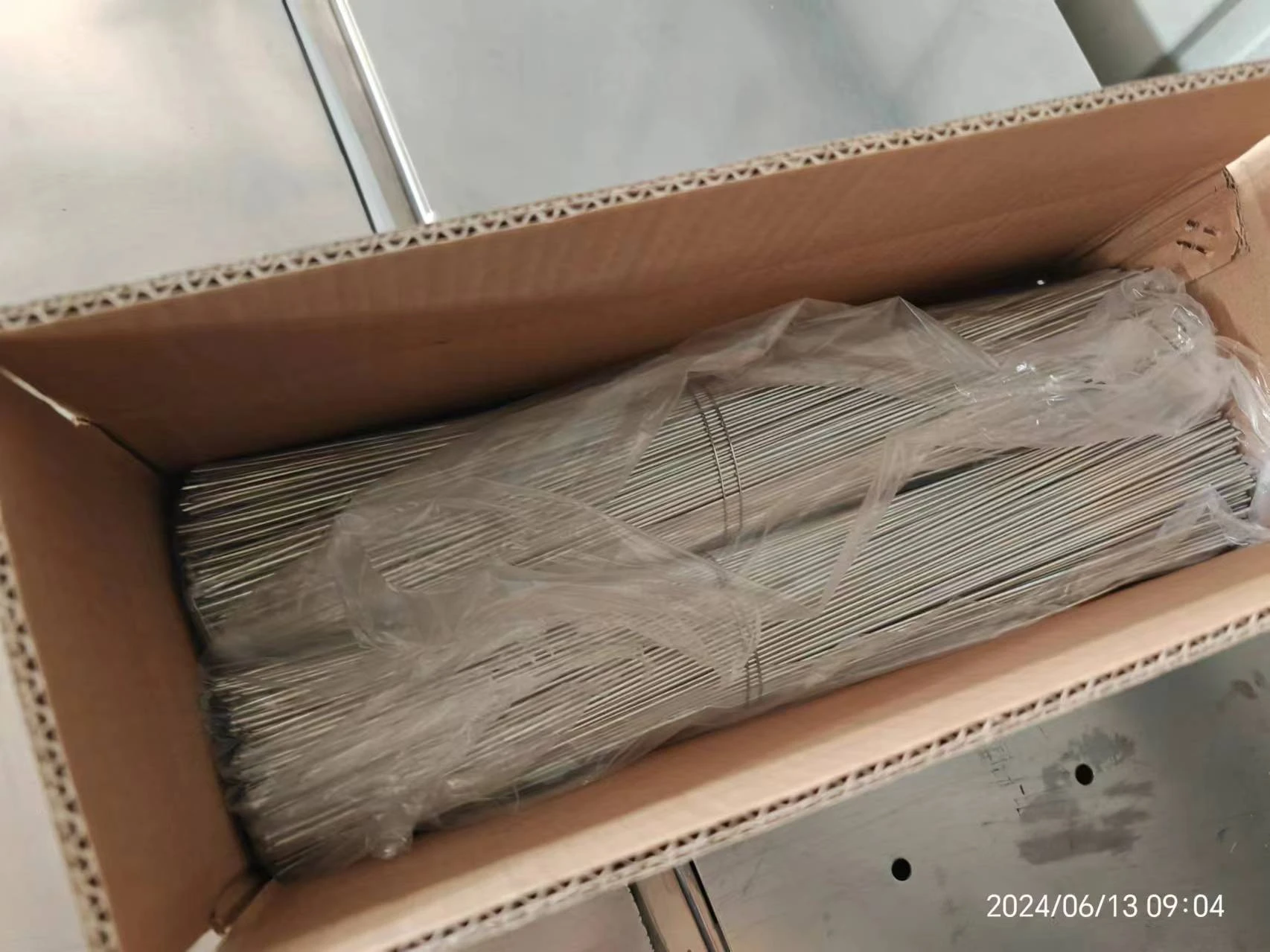
Iron nail wire, typically defined as low-carbon steel wire used in the manufacture of common nails, represents a foundational material in construction, woodworking, and various industrial applications. Its technical position within the industry chain lies upstream of finished nail products, serving as the primary raw material. Core performance characteristics center around tensile strength, ductility, formability, and resistance to shear forces. Unlike specialized wire utilized in high-stress applications, nail wire prioritizes cost-effectiveness and consistent bending properties to facilitate efficient nail formation. A key pain point in the industry is maintaining consistent wire diameter and surface quality to minimize nail defects and ensure reliable fastening. Further complexities arise from managing variations in steel composition to balance strength and brittleness, impacting nail driving performance and susceptibility to bending or breakage. The selection of appropriate coating materials to prevent corrosion is also a critical concern for durability in diverse environments.
Material Science & Manufacturing
The predominant material for iron nail wire is low-carbon steel, typically SAE 1008 or similar grades, containing approximately 0.08% carbon. The low carbon content imparts excellent ductility and weldability, crucial for the wire drawing and forming processes. Other elements present in trace amounts include manganese (0.60-0.90%) which enhances strength and hardness, phosphorus (≤0.040%) and sulfur (≤0.05%) controlled for improved formability. Raw material often begins as hot-rolled steel coils. The manufacturing process begins with pickling to remove mill scale, a layer of iron oxide formed during hot rolling. This is followed by wire drawing, a cold-working process where the steel coil is pulled through a series of progressively smaller dies, reducing the diameter and increasing tensile strength. Each draw pass work-hardens the wire, necessitating intermediate annealing cycles to restore ductility. Annealing involves heating the wire to a specific temperature (typically 600-700°C) and slowly cooling it. Lubrication during wire drawing is critical, employing formulations containing lime, stearates, or polymers to reduce friction and die wear. Precise control of drawing speed, die angle, and lubricant viscosity are paramount for achieving consistent diameter and surface finish. Post-drawing, the wire may undergo galvanization (zinc coating) or other coating processes for corrosion protection. Galvanization involves immersing the wire in molten zinc, creating a metallurgical bond. Alternative coatings include phosphating, polymer coatings, or electrolytic coatings. Key parameter control focuses on maintaining precise chemical composition, achieving desired mechanical properties through controlled cold working and annealing, and ensuring uniform coating thickness.

Performance & Engineering
The performance of iron nail wire is dictated by its mechanical properties, specifically tensile strength, yield strength, elongation, and shear strength. Tensile strength, typically ranging from 400-600 MPa depending on the cold work applied, determines the wire's resistance to breaking under tension during nail driving. Yield strength, approximately 250-400 MPa, governs its resistance to permanent deformation. Elongation, usually between 10-20%, reflects its ductility and ability to bend without fracturing. Shear strength, vital for resisting forces perpendicular to the wire's axis during nail penetration, is typically around 300-500 MPa. Environmental resistance is primarily addressed through coatings. Galvanization provides sacrificial corrosion protection, whereby the zinc corrodes preferentially to the steel. The thickness of the zinc coating is a critical parameter, with heavier coatings offering longer service life. Compliance requirements relate to material composition (limiting harmful elements like lead and cadmium), coating specifications (zinc thickness, uniformity, and adhesion), and nail performance standards (holding power, bending resistance). Functional implementation requires careful consideration of wire diameter in relation to nail gauge and length. Thicker wires generally produce stronger nails but may require more force to drive. Force analysis during nail driving involves calculating the stress concentration at the nail point and shank, and ensuring the wire can withstand these stresses without failure. Finite element analysis (FEA) can be used to optimize nail geometry and wire properties for specific applications.
Technical Specifications
| Parameter | Unit | SAE 1008 (Typical) | Galvanized SAE 1008 (Typical) |
|---|---|---|---|
| Tensile Strength | MPa | 450-550 | 400-500 |
| Yield Strength | MPa | 280-350 | 250-320 |
| Elongation | % | 12-18 | 10-15 |
| Diameter Tolerance | µm | ±25 | ±30 |
| Zinc Coating Thickness | µm | N/A | 40-80 |
| Carbon Content | % | 0.08 max | 0.08 max |
Failure Mode & Maintenance
Common failure modes for iron nail wire include tensile fracture during nail driving, bending or shear failure at the nail point, and corrosion-induced degradation. Tensile fracture results from exceeding the wire's ultimate tensile strength, often caused by driving nails into excessively hard wood or attempting to drive nails at an angle. Bending or shear failure occurs when the wire lacks sufficient ductility or the nail point is subjected to excessive lateral forces. Corrosion, particularly in outdoor or marine environments, weakens the wire over time, reducing its load-bearing capacity and leading to premature nail failure. Fatigue cracking can also occur under repeated stress cycles. Failure analysis involves examining the fracture surface to determine the root cause. Brittle fractures typically exhibit a granular appearance, while ductile fractures show significant plastic deformation. Maintenance primarily focuses on preventing corrosion. Regularly inspecting nails for signs of rust or pitting is crucial. Applying corrosion-inhibiting coatings to the finished nails extends their service life. Proper storage of nail wire in a dry environment prevents rust formation before use. For galvanized wire, ensuring the zinc coating remains intact is essential. Avoid mechanical damage to the coating during handling and installation. When storing bulk coils of wire, preventing compression and avoiding exposure to moisture are critical.
Industry FAQ
Q: What is the impact of sulfur content on the formability of iron nail wire?
A: Sulfur, while present in small amounts, significantly influences formability. Increased sulfur content generally enhances machinability but reduces ductility. Controlled levels of sulfur, often in conjunction with manganese, create manganese sulfide inclusions that act as internal lubricants during wire drawing, improving formability and reducing die wear. However, excessive sulfur can lead to hot shortness – a susceptibility to cracking at elevated temperatures during processing.
Q: How does the annealing process affect the mechanical properties of the wire?
A: Annealing is crucial for restoring ductility after cold working. It relieves internal stresses induced during wire drawing, allowing the steel to deform more easily. The annealing temperature and cooling rate directly impact the resulting mechanical properties. Higher annealing temperatures and slower cooling rates result in softer, more ductile wire with lower tensile strength. Conversely, lower annealing temperatures and faster cooling rates yield stronger but less ductile wire.
Q: What are the key differences between hot-dip galvanization and electrogalvanization for nail wire?
A: Hot-dip galvanization provides a thicker, more durable zinc coating with superior corrosion resistance due to the metallurgical bond formed. However, it can result in a less uniform coating thickness and a rougher surface finish. Electrogalvanization produces a thinner, more uniform coating with a smoother surface finish but offers less corrosion protection. Electrogalvanization is often preferred for applications requiring precise coating control.
Q: What quality control measures are essential during wire drawing?
A: Essential quality control measures include continuous diameter monitoring using laser micrometers, surface inspection for defects like scratches or inclusions, periodic tensile testing to verify mechanical properties, and chemical analysis to confirm material composition. Monitoring lubricant quality and die wear are also crucial for maintaining consistent wire quality.
Q: How does the steel's microstructure influence nail performance?
A: The microstructure, particularly grain size and shape, plays a significant role. Fine-grained steel generally exhibits higher strength and toughness. The presence of pearlite or ferrite-pearlite mixtures influences ductility and formability. Controlling the cooling rate during heat treatment allows manipulation of the microstructure to optimize nail performance for specific applications. Inconsistent microstructure leads to inconsistent nail performance.
Conclusion
Iron nail wire, despite being a seemingly simple material, demands meticulous attention to material science, manufacturing process control, and coating technology to ensure reliable performance. Maintaining consistent chemical composition, controlling mechanical properties through optimized cold working and annealing cycles, and implementing robust corrosion protection are paramount. The industry’s continued focus on balancing strength, ductility, and cost-effectiveness will drive advancements in wire manufacturing techniques and coating materials.
Future developments may center on exploring alternative coating materials with enhanced corrosion resistance and environmental compatibility, as well as optimizing wire drawing processes for increased efficiency and reduced material waste. A comprehensive understanding of failure modes and the implementation of rigorous quality control measures remain critical for ensuring the long-term durability and performance of iron nail wire in its diverse applications.