



Introduction
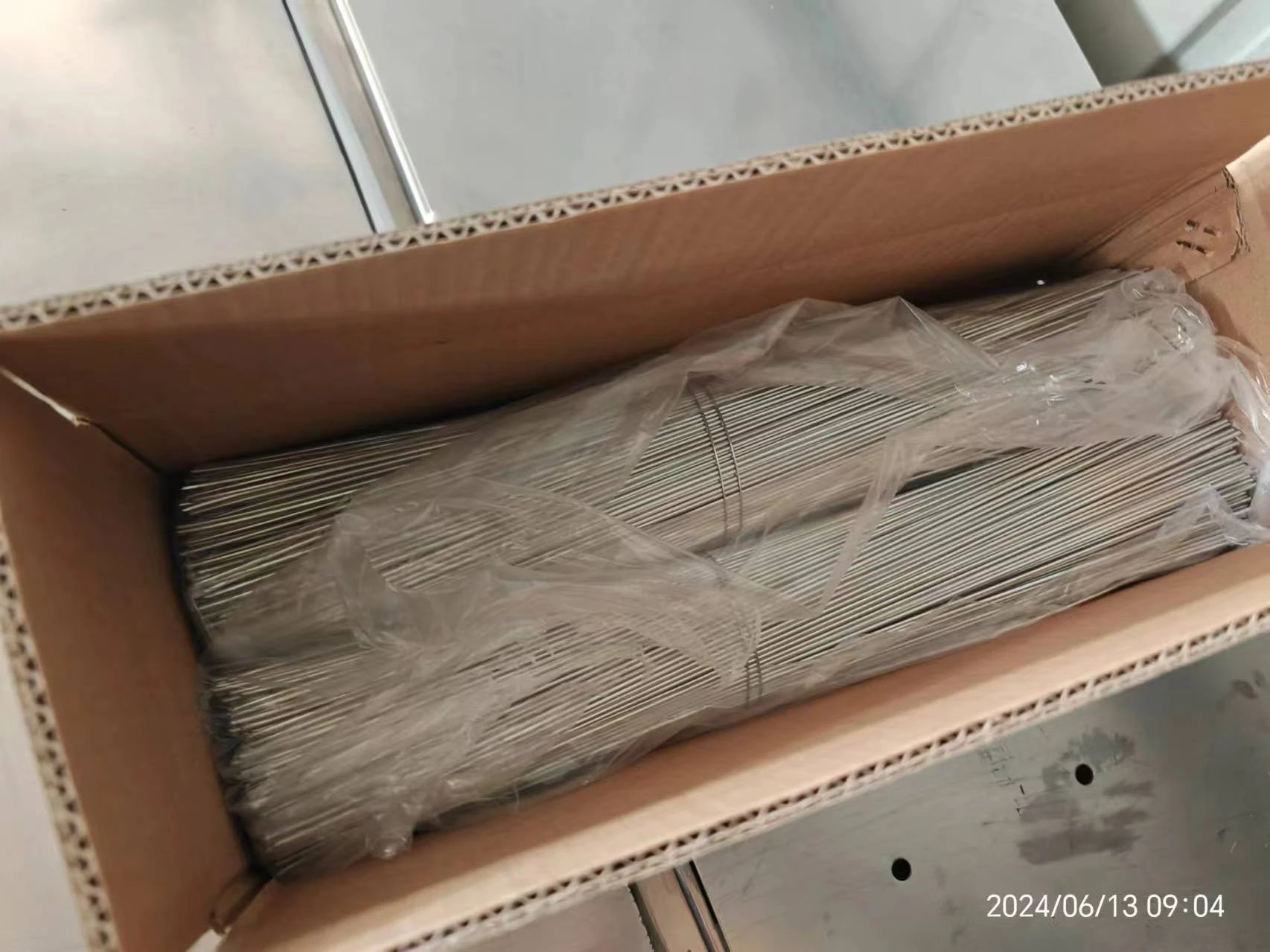
Straight cut wire, also known as cut stock wire or straightened and cut wire, represents a foundational component across diverse industrial applications. Positioned within the materials supply chain as a semi-finished product, it is derived from coiled wire stock through processes of straightening, cutting to precise lengths, and often, secondary finishing operations. Its core performance characteristics – tensile strength, dimensional accuracy, surface finish, and material composition – dictate its suitability for downstream fabrication processes. Unlike continuously drawn wire, straight cut wire offers advantages in automated assembly, reduced material waste in specific applications, and tailored lengths for efficient component manufacturing. The increasing demand for precision and automation across industries like automotive, electronics, construction, and medical devices has fueled the growth and refinement of straight cut wire production techniques. Core industry pain points involve achieving consistent cut lengths, maintaining material integrity during straightening to avoid work hardening or micro-cracking, and managing variations in raw material quality from wire coil suppliers.
Material Science & Manufacturing
The most common raw materials for straight cut wire include low-carbon steel (AISI 1008, 1010), medium-carbon steel (AISI 1045), stainless steel (304, 316), aluminum alloys (6061, 5052), copper alloys (brass, bronze), and specialized alloys like nickel-chromium. Steel wires rely on controlled carbon content for ductility and weldability, while stainless steel provides corrosion resistance via chromium content. Aluminum offers a high strength-to-weight ratio. Manufacturing begins with unwinding the wire coil. Straightening is typically achieved through a multi-roller straightening machine, where the wire passes through a series of rollers oriented at varying angles to induce plastic deformation and eliminate curvature. Critical parameters include roller angle, wire feed speed, and roller material (typically hardened tool steel). Cutting is performed using abrasive cutting wheels, rotary shears, or precision blade systems. Abrasive cutting is cost-effective but generates burrs and heat-affected zones. Rotary shears provide cleaner cuts but are slower. Secondary processes often include end conditioning (deburring, chamfering, forming), cleaning (degreasing, pickling), coating (zinc plating, passivation), and packaging. Chemical compatibility between the wire material and any applied coatings is crucial to prevent corrosion or adhesion failure. Material properties are rigorously tested throughout the process, including tensile strength (ASTM E8), yield strength, elongation, hardness (Rockwell, Vickers), and chemical composition (ASTM E3).

Performance & Engineering
The performance of straight cut wire is fundamentally linked to its mechanical properties and the engineering requirements of the final application. Force analysis is crucial in determining the wire’s load-bearing capacity, considering tensile, compressive, shear, and torsional stresses. For example, in applications like springs or fasteners, fatigue life is a critical parameter, dictated by the wire’s resistance to cyclic loading. Environmental resistance factors significantly into material selection. Carbon steel wires require protective coatings to prevent corrosion in humid or corrosive environments. Stainless steel offers inherent corrosion resistance but may still be susceptible to pitting or crevice corrosion in specific conditions. Compliance requirements vary widely by industry. Automotive applications demand adherence to IATF 16949 standards for quality management and material traceability. Medical device applications require compliance with FDA regulations and biocompatibility standards (ISO 10993). Wire dimensional accuracy is paramount in automated assembly processes. Tolerance stack-up analysis is used to ensure that variations in wire length and diameter do not compromise the functionality of the assembled product. Wire surface finish impacts friction coefficients in sliding contact applications and adhesion properties for coatings. Detailed engineering drawings specifying material, dimensions, tolerances, and surface finish are essential for consistent performance.
Technical Specifications
| Material Grade | Diameter (mm) | Tensile Strength (MPa) | Elongation (%) |
|---|---|---|---|
| AISI 1008 Steel | 2.0 | 440 | 25 |
| AISI 304 Stainless Steel | 3.0 | 520 | 30 |
| Aluminum 6061-T6 | 2.5 | 310 | 15 |
| Brass C36000 | 1.5 | 400 | 35 |
| AISI 1045 Steel | 4.0 | 620 | 20 |
| AISI 316 Stainless Steel | 5.0 | 580 | 28 |
Failure Mode & Maintenance
Common failure modes for straight cut wire include fatigue cracking, especially under cyclic loading. This initiates at stress concentration points, such as cut ends or surface imperfections. Work hardening during straightening can reduce ductility and increase susceptibility to cracking. Corrosion is a significant failure mechanism for carbon steel wires, leading to section loss and eventual fracture. Hydrogen embrittlement can occur in high-strength steels exposed to corrosive environments. Delamination can occur in coated wires due to poor adhesion or corrosion beneath the coating. Oxidation at elevated temperatures can degrade the wire’s mechanical properties. Maintenance and preventative measures focus on proper material selection for the application environment, ensuring adequate coating thickness and integrity, controlling straightening parameters to minimize work hardening, and implementing regular inspection programs to detect early signs of corrosion or cracking. Non-destructive testing methods like ultrasonic testing or eddy current testing can be used to identify internal flaws. Proper storage conditions, protecting the wire from moisture and corrosive substances, are essential to prevent premature failure. Failure analysis should include microscopic examination of the fracture surface to determine the root cause of failure and inform corrective actions.
Industry FAQ
Q: What is the impact of wire diameter variation on automated assembly processes?
A: Significant diameter variations can cause jamming in feeding systems, inconsistent forming pressures, and dimensional inaccuracies in the finished product. Automated systems typically have narrow tolerances for wire diameter. Statistical process control (SPC) is crucial during manufacturing to monitor and minimize diameter variations.
Q: How does the straightening process affect the mechanical properties of the wire?
A: Excessive straightening can induce work hardening, increasing tensile strength but reducing ductility and impact resistance. Controlled straightening parameters and stress relief annealing can mitigate these effects. Careful selection of roller materials and lubrication also minimizes surface damage.
Q: What corrosion protection methods are most effective for carbon steel straight cut wire?
A: Zinc plating, phosphate coating, and epoxy coatings are commonly used for corrosion protection. Zinc plating provides sacrificial protection, while phosphate coatings create a barrier layer and improve paint adhesion. Epoxy coatings offer excellent resistance to chemicals and moisture. The choice depends on the specific environment and performance requirements.
Q: What is the significance of chemical composition certification for critical applications?
A: Chemical composition certification (e.g., a material test report – MTR) verifies that the wire meets the specified material standards. This is crucial for ensuring consistent mechanical properties, corrosion resistance, and weldability in critical applications where failure could have serious consequences.
Q: How are burrs addressed after the cutting process, and what is their potential impact?
A: Burrs are typically removed through deburring processes, such as tumbling, abrasive brushing, or electrochemical deburring. Unremoved burrs can cause injury, interfere with assembly, and create stress concentration points that lead to premature failure. Consistent deburring is essential for quality control.
Conclusion
Straight cut wire, despite its seemingly simple form, represents a complex interplay of material science, manufacturing precision, and engineering considerations. The optimal selection and processing of this material are fundamental to the performance and reliability of countless industrial products. Achieving consistent quality requires rigorous control over raw material properties, straightening and cutting parameters, and finishing operations.
Future trends will likely focus on advanced straightening technologies capable of handling increasingly complex wire geometries and materials, as well as the integration of Industry 4.0 principles for real-time process monitoring and adaptive control. Further development of environmentally friendly coatings and corrosion protection methods will also be critical to meeting evolving sustainability standards and extending the service life of components utilizing straight cut wire.