Introduction
A 1-ton folding shop crane is a specialized material handling device commonly employed in manufacturing, warehousing, and maintenance facilities. Distinguished by its compact design and foldable boom, this crane provides lifting capabilities within a constrained workspace. Unlike overhead cranes or large mobile gantry cranes, the folding shop crane prioritizes maneuverability and ease of storage. Its technical position in the supply chain involves integration of steel fabrication, hydraulic systems, and control mechanisms. Core performance characteristics revolve around load capacity (1 metric ton, or 2204.62 lbs), lifting height, boom reach, and the precision of load positioning, all crucial factors for efficient and safe material movement. The prevalent pain point in the industry is balancing lifting capacity with the limited space available in modern workshops, and this crane addresses that directly. Furthermore, operators often struggle with ergonomics during frequent lifting tasks, and the folding shop crane, when properly utilized, minimizes manual handling and strain.
Material Science & Manufacturing
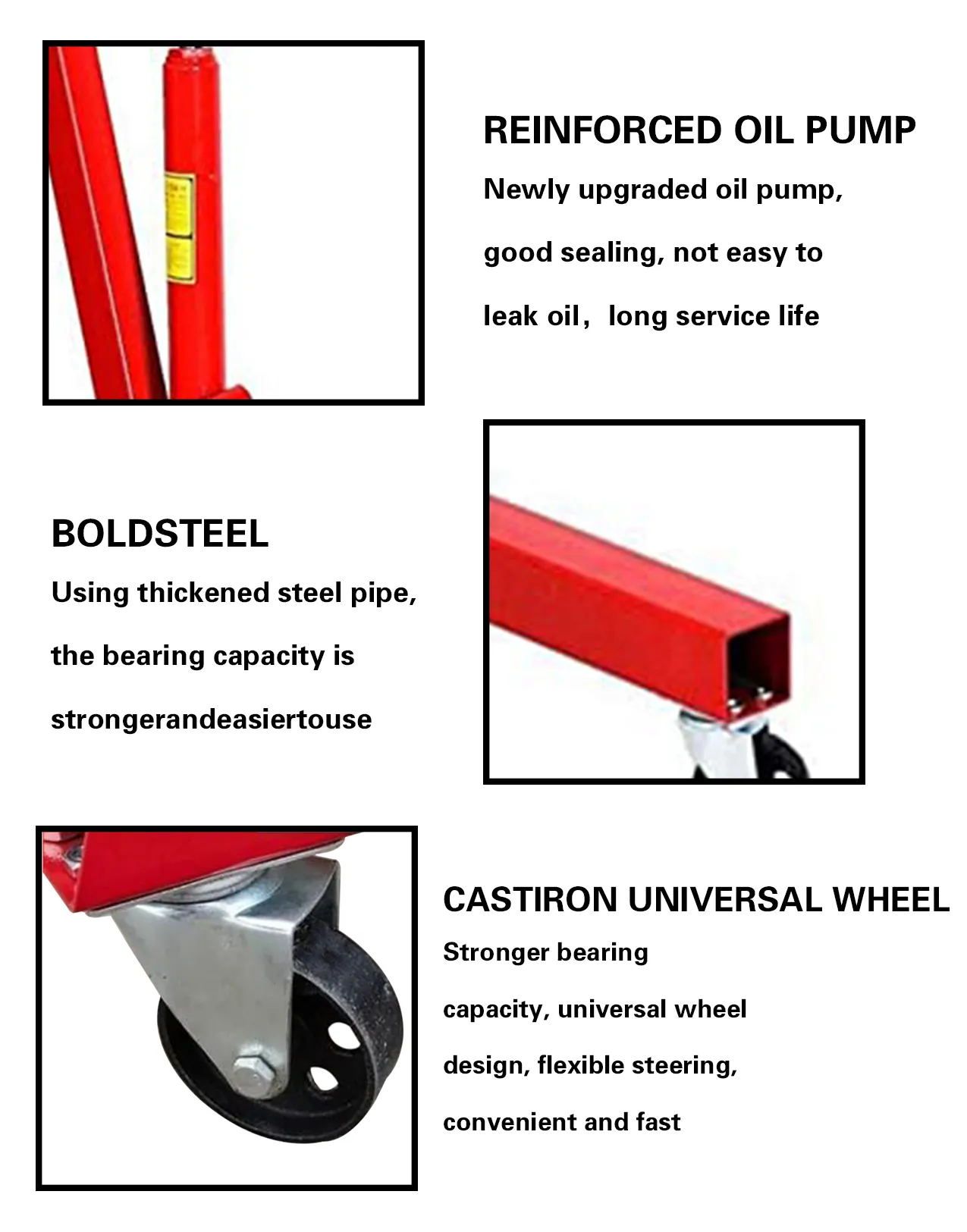
The construction of a 1-ton folding shop crane relies heavily on high-strength steel alloys. The boom, typically fabricated from structural steel such as ASTM A36 or equivalent, requires a yield strength of at least 36,000 psi to withstand bending moments during lifting operations. Welding processes – typically Shielded Metal Arc Welding (SMAW) or Gas Metal Arc Welding (GMAW) – are critical for joining boom sections and mounting points. Welding parameters (current, voltage, travel speed) must be meticulously controlled to ensure full penetration and minimize defects like porosity or slag inclusions, following AWS D1.1 standards. The hydraulic cylinders, responsible for boom extension and lifting, utilize high-tensile strength alloy steel for the piston rod and cylinder body, often coated with hard chrome plating for corrosion resistance. The hydraulic fluid, commonly a mineral oil-based fluid conforming to ISO 32 standards, must exhibit low compressibility and maintain viscosity across a wide temperature range. The base and support structure utilize rolled steel sections, engineered to distribute the load evenly and prevent tipping. Manufacturing involves precise machining of pivot points and hydraulic fittings to guarantee smooth operation and prevent premature wear. Quality control includes Non-Destructive Testing (NDT) methods like Ultrasonic Testing (UT) and Magnetic Particle Inspection (MPI) to identify internal flaws in welds and critical components.
Performance & Engineering
Performance analysis of a 1-ton folding shop crane centers around structural integrity and stability. Force analysis, utilizing finite element analysis (FEA) software, determines stress distribution within the boom and base under maximum load conditions. Key considerations include bending stress, shear stress, and torsional stress. Environmental resistance is paramount; the crane must operate reliably in temperature ranges from -20°C to +40°C without significant performance degradation. Protective coatings, such as powder coating conforming to ASTM B117 for salt spray resistance, prevent corrosion. Compliance requirements vary by region, but generally adhere to ASME B30.11 standards for slings and ASME B30.20 for below-the-hook lifting devices. The hydraulic system’s performance is governed by Pascal’s Law, dictating the force multiplication achieved through the cylinder’s area ratio. Safety features, including overload protection devices and emergency stop mechanisms, are critical for preventing accidents. Engineering focuses on minimizing deflection in the boom under load, optimizing the hydraulic system for smooth and precise movements, and ensuring the stability of the base during lifting and traversing. The angle of the boom relative to the horizontal directly impacts lifting capacity; shallower angles require derating of the maximum load.
Technical Specifications
| Parameter | Specification | Tolerance | Testing Standard |
|---|---|---|---|
| Load Capacity | 1000 kg (2204.62 lbs) | ±5% | ISO 6892-1 |
| Lifting Height | 2.5 m (8.2 ft) | ±0.1 m | Manufacturer's Specification |
| Boom Reach | 1.5 m (4.9 ft) | ±0.05 m | Manufacturer's Specification |
| Base Dimensions (L x W) | 1.2 m x 1.0 m (3.9 ft x 3.3 ft) | ±0.02 m | Manufacturer’s Drawing |
| Hydraulic Fluid Type | ISO 32 Hydraulic Oil | Viscosity per ISO VG32 | ISO 3448 |
| Operating Temperature Range | -20°C to +40°C (-4°F to 104°F) | ±5°C | IEC 60068-2-1 |
Failure Mode & Maintenance
Common failure modes in 1-ton folding shop cranes include hydraulic leaks, structural fatigue cracking, and component wear. Hydraulic leaks typically originate from worn seals within the cylinders or pump, leading to reduced lifting capacity and erratic movements. Structural fatigue cracking often initiates at weld points on the boom, exacerbated by cyclic loading and stress concentrations. Regular visual inspection for cracks, particularly after heavy use, is crucial. Component wear affects pivot points, leading to backlash and imprecise positioning. The hydraulic pump can fail due to contamination of the hydraulic fluid or internal wear. Oxidation of the hydraulic fluid degrades its lubricating properties and can cause corrosion within the system. Maintenance procedures involve periodic lubrication of pivot points, inspection of hydraulic hoses and fittings for leaks, fluid level checks, and filter replacement. Annual NDT inspections (MPI or UT) of the boom and critical welds are recommended. Preventative maintenance should include replacing hydraulic fluid every 6-12 months, depending on usage intensity, to maintain optimal performance and prevent corrosion. Proper storage, protecting the crane from harsh environmental conditions, also extends its lifespan. Replacing worn seals promptly is crucial to preventing major hydraulic failures.
Industry FAQ
Q: What is the recommended frequency for load chain inspection?
A: While this crane uses a hydraulic system, similar principles apply to the boom and hydraulic components. We recommend a thorough visual inspection every 6 months, focusing on signs of wear, corrosion, or damage. For high-usage applications, quarterly inspections are advisable. Recordkeeping of inspection findings is also crucial for tracking trends and identifying potential issues before they escalate.
Q: How does ambient temperature affect the crane's lifting capacity?
A: Extreme temperatures can impact the viscosity of the hydraulic fluid. Lower temperatures increase viscosity, potentially slowing down operation and increasing hydraulic pressure. Higher temperatures reduce viscosity, potentially leading to internal leakage. The crane's specifications outline the operating temperature range. Operation outside this range may require fluid adjustments or derating of the lifting capacity.
Q: What type of hydraulic fluid is compatible with this crane?
A: The crane is designed to operate with ISO 32 hydraulic oil. Using fluids with different viscosities or chemical compositions can damage the hydraulic pump and seals. Always refer to the manufacturer’s documentation for specific fluid recommendations.
Q: What are the key safety precautions to observe during operation?
A: Ensure the crane is placed on a level and stable surface. Never exceed the rated load capacity. Avoid swinging loads over personnel. Inspect the crane before each use for any signs of damage. Operators should be properly trained in crane operation and safety procedures. Maintain a clear area around the crane during lifting operations.
Q: What is the expected lifespan of the hydraulic pump?
A: The lifespan of the hydraulic pump depends on usage intensity, maintenance practices, and operating conditions. With regular maintenance (fluid changes, filter replacements), a well-maintained pump can last 5-7 years. Poor maintenance or operation in harsh environments can significantly reduce its lifespan.
Conclusion
The 1-ton folding shop crane represents a practical solution for material handling in environments where space is limited and maneuverability is essential. Its design, leveraging high-strength steel alloys and a robust hydraulic system, provides a reliable and efficient lifting solution. Understanding the material science behind its construction, the engineering principles governing its performance, and the potential failure modes is critical for ensuring safe and effective operation.
Proper maintenance, including regular inspections, hydraulic fluid management, and structural integrity checks, is paramount for extending the crane’s service life and minimizing downtime. Adhering to relevant industry standards (ASME, ISO) and prioritizing operator training are essential for maximizing safety and optimizing performance. As manufacturing facilities continue to prioritize efficiency and ergonomics, the role of specialized cranes like the 1-ton folding shop crane will only become more prominent.
