Introduction
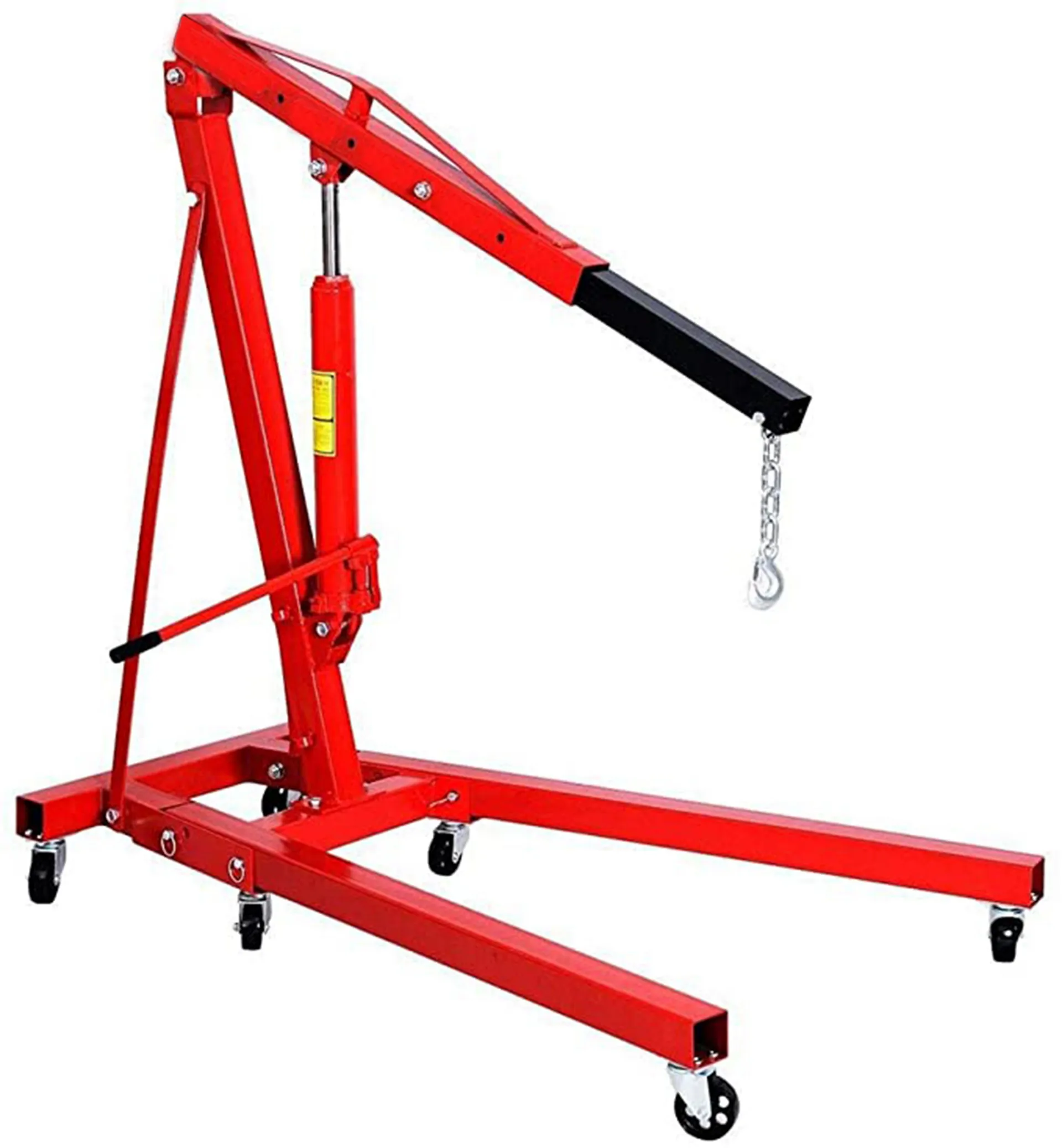
A 1 tonne (1000 kg or 2200 lbs) engine hoist, also known as an engine crane or cherry picker, is a critical piece of equipment within the automotive repair, heavy machinery maintenance, and manufacturing sectors. Its primary function is the safe and controlled lifting and positioning of heavy components, most notably internal combustion engines, transmissions, and large assemblies. Technically, it operates on the principle of leverage, utilizing a hydraulic system to amplify force and allow relatively easy lifting of substantial weight. Within the industrial chain, it bridges the gap between component removal and subsequent repair or replacement, streamlining maintenance procedures and reducing worker strain. Core performance characteristics are defined by lifting capacity, boom reach (horizontal and vertical), and the precision of the lowering mechanism. The market is shifting towards lighter-weight, foldable designs with improved hydraulic efficiency and integrated safety features.
Material Science & Manufacturing
The construction of a 1 tonne engine hoist relies on a combination of high-strength steel alloys and robust hydraulic components. The primary structural elements – the boom, upright, and base – are typically manufactured from carbon steel (AISI 1045 or equivalent), chosen for its weldability, tensile strength (typically exceeding 570 MPa), and cost-effectiveness. Higher-stress areas, such as the lifting hook and chain attachment points, often utilize alloy steels (e.g., 4140 chromium molybdenum steel) to increase fatigue resistance and yield strength. The hydraulic cylinder utilizes a honed cylinder tube, typically constructed from high-grade steel with a hardened and chromed surface to minimize friction and prevent corrosion. Piston rods are similarly constructed from alloy steel, often with a chrome plating. Manufacturing processes involve precision cutting, welding (SMAW, GMAW, or SAW depending on the component), and machining. Critical parameter control focuses on weld integrity – radiographic testing and ultrasonic inspection are standard to detect defects. Heat treatment processes (quenching and tempering) are employed to achieve desired material hardness and ductility. Hydraulic fluid quality (viscosity, cleanliness, and water content) is rigorously monitored during assembly and throughout the hoist's operational life to prevent component failure. Chain construction utilizes Grade 80 or Grade 100 alloy steel chains, known for their high tensile strength and resistance to abrasion. These chains undergo rigorous proof testing to ensure they meet safety standards.
Performance & Engineering
The performance of a 1 tonne engine hoist is governed by fundamental principles of statics and mechanics. Force analysis dictates that the lifting capacity must account for the weight of the load, the hoist’s own weight, and dynamic forces generated during lifting and maneuvering. The boom angle significantly impacts lifting capacity – as the boom angle increases, the lifting capacity decreases due to increased stress on the structural components. Environmental resistance is a key engineering consideration. Corrosion protection (painting, powder coating, or galvanization) is essential, particularly for hoists used in humid or corrosive environments. The hydraulic system must maintain consistent performance across a wide temperature range, typically -20°C to +50°C. Compliance requirements, such as ASME B30.9 (Slings, Alloy Chain, and Synthetic Slings) and relevant local safety regulations, mandate regular inspections and load testing. Functional implementation relies on a hydraulic pump (manual or electric) providing the necessary pressure to extend the lifting cylinder. The load is secured using a lifting chain or sling, which must be properly rated for the load weight and inspected for wear or damage. Stability is enhanced by a wide base and the careful distribution of weight. Load moment indicators (LMIs) are increasingly common, providing real-time feedback on load weight and boom angle, preventing overloading and potential tipping.
Technical Specifications
| Parameter | Specification | Testing Standard | Tolerance |
|---|---|---|---|
| Lifting Capacity | 1000 kg (2200 lbs) | ISO 6015 | ±5% |
| Boom Length (Minimum) | 1.5 m (4.9 ft) | N/A | ±0.05 m |
| Boom Length (Maximum) | 2.5 m (8.2 ft) | N/A | ±0.05 m |
| Lifting Height (Minimum) | 0.3 m (1 ft) | N/A | ±0.03 m |
| Lifting Height (Maximum) | 2.0 m (6.6 ft) | N/A | ±0.03 m |
| Hydraulic Pressure | 70 bar (1015 psi) | DIN 35206 | ±2 bar |
Failure Mode & Maintenance
Failure modes in 1 tonne engine hoists are typically linked to mechanical fatigue, hydraulic system degradation, and improper usage. Fatigue cracking can occur in the boom, upright, or lifting hook, particularly under repeated stress cycles and exceeding load limits. Delamination of welded joints is another common failure mode, often caused by poor weld quality or insufficient penetration. Hydraulic cylinder failure can stem from seal degradation (leading to fluid leakage and pressure loss), corrosion of the cylinder bore, or piston rod bending. Chain failure can occur due to wear, corrosion, or overloading. Oxidation of hydraulic fluid leads to viscosity changes and component corrosion. Preventive maintenance is critical. Regular inspections should include visual checks for cracks, deformation, and corrosion on structural components. Hydraulic fluid levels should be monitored and fluid replaced according to manufacturer recommendations (typically every 6-12 months). Chain and sling inspections should be conducted before each use, looking for broken links, wear, and distortion. Lubrication of moving parts (e.g., pivot points, cylinder rods) reduces friction and wear. Load testing (proof loading) should be performed annually to verify the hoist's lifting capacity and structural integrity. In the event of a failure, thorough failure analysis (fractographic examination of fractured components) is essential to determine the root cause and prevent recurrence.
Industry FAQ
Q: What is the safe working load (SWL) for this hoist, and how is it determined?
A: The safe working load (SWL) for this 1 tonne engine hoist is 1000 kg (2200 lbs). It’s determined by a safety factor applied to the hoist’s rated capacity. Typically, a safety factor of 4:1 or 5:1 is used, meaning the hoist is structurally capable of lifting 4 or 5 times the SWL before failure. However, the SWL must always be adhered to, and factors like boom angle and sling type affect the actual usable capacity.
Q: What type of hydraulic fluid is recommended, and what are the consequences of using the incorrect fluid?
A: We recommend a hydraulic fluid conforming to ISO VG 32 or VG 46 specifications – a mineral-based hydraulic oil with anti-wear additives. Using the incorrect fluid can lead to several problems: reduced lubrication, increased wear on hydraulic components, seal degradation, corrosion, and decreased system efficiency. Avoid using brake fluid or automotive transmission fluid, as they are incompatible with the hoist's hydraulic system.
Q: How often should the lifting chain be inspected and replaced?
A: The lifting chain should be visually inspected before each use for any signs of damage, such as broken links, corrosion, wear, or distortion. A thorough inspection, including measuring chain stretch, should be performed at least annually, or more frequently if the hoist is heavily used. Replacement is necessary if any defects are found or if the chain has exceeded its service life as defined by the manufacturer and relevant standards (e.g., ASME B30.9).
Q: What is the impact of boom angle on lifting capacity, and how can operators account for it?
A: As the boom angle increases, the lifting capacity decreases. This is because a greater proportion of the lifting force is directed upwards, reducing the horizontal component that supports the load. Hoists are typically equipped with a load chart that specifies the lifting capacity at various boom angles and radii. Operators must consult this chart and ensure they do not exceed the rated capacity for the specific boom configuration.
Q: What are the key maintenance procedures to prevent hydraulic leaks?
A: Preventing hydraulic leaks involves several key maintenance procedures: regular visual inspections of hoses, fittings, and cylinders for any signs of leaks or damage; ensuring all connections are tight; regularly checking and maintaining the proper fluid level; replacing worn or damaged seals promptly; and protecting hydraulic components from contamination by using a sealed reservoir and appropriate filtration.
Conclusion
The 1 tonne engine hoist remains a fundamental tool in various industries, providing a safe and efficient method for lifting and positioning heavy components. Its performance and longevity are directly linked to the quality of materials used in its construction, the precision of manufacturing processes, and the implementation of a robust maintenance program. Understanding the principles of force analysis, hydraulic system operation, and relevant safety standards is paramount for ensuring safe and reliable operation.
Future development trends will likely focus on increasing lifting capacity while reducing overall weight, integrating smart technologies (e.g., load monitoring systems, remote control operation), and enhancing operator safety through improved ergonomic designs and automated safety features. Adhering to established standards and conducting thorough preventative maintenance are essential for maximizing the service life and minimizing the risk of failure associated with these critical pieces of industrial equipment.
