Introduction
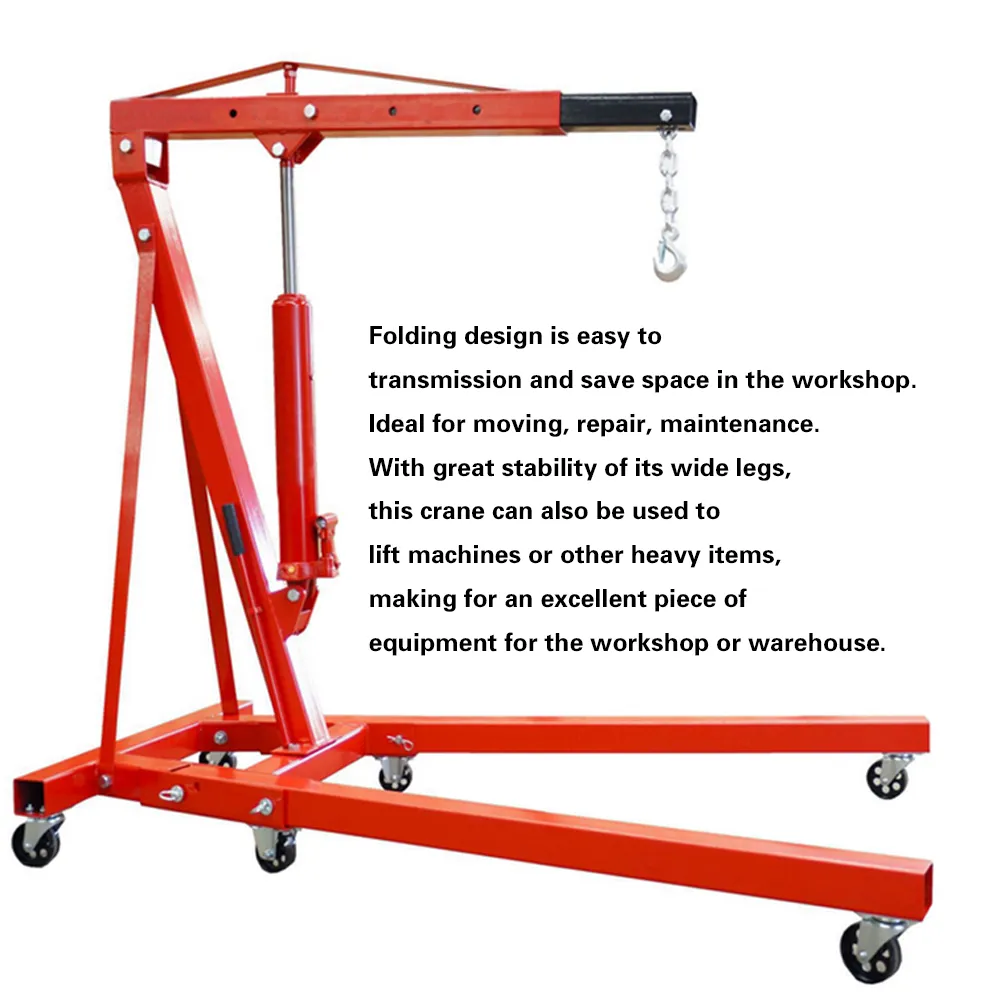
The 2-ton hydraulic engine hoist, a critical piece of equipment in automotive repair, heavy machinery maintenance, and industrial settings, utilizes Pascal's Principle to lift and position substantial weights with controlled precision. Positioned within the material handling equipment chain, it bridges the gap between stationary components and the dynamic needs of engine removal, installation, and general lifting tasks. Its core performance characteristics revolve around safe working load (SWL), lifting height, hydraulic system efficiency, and overall structural integrity. The prevalent challenges for end-users center on ensuring long-term reliability, mitigating risks associated with overloading or improper use, and compliance with stringent safety regulations. Modern designs increasingly incorporate features like quick-release mechanisms, multiple pivot points for versatile positioning, and robust hydraulic systems capable of withstanding repetitive cycles in demanding environments.
Material Science & Manufacturing
The construction of a 2-ton hydraulic engine hoist relies heavily on high-strength steel alloys. The primary structural components – the frame, lifting arm, and support base – typically utilize ASTM A572 Grade 50 steel, offering a minimum yield strength of 50 ksi (345 MPa). This steel composition balances weldability, ductility, and tensile strength, crucial for withstanding lifting forces and preventing catastrophic failure. The hydraulic cylinder body is often manufactured from AISI 1045 carbon steel, chosen for its wear resistance and ability to be hardened through heat treatment. The piston rod typically employs 4140 alloy steel, surface hardened via induction hardening to provide exceptional resistance to corrosion and abrasion. Manufacturing processes involve precision cutting, welding (typically shielded metal arc welding - SMAW or gas metal arc welding - GMAW), and machining. Welding procedures must adhere to AWS D1.1 standards to ensure weld integrity and penetration. Hydraulic hoses are constructed from multi-layered reinforced rubber compounds, conforming to SAE J517 standards, to withstand high pressures and prevent leakage. The hydraulic fluid itself is typically a mineral oil-based formulation, specifically designed for hydraulic systems, possessing properties like high viscosity index, anti-wear additives, and corrosion inhibitors. Critical parameter control during manufacturing includes dimensional accuracy of components, weld quality inspection (using non-destructive testing like ultrasonic testing and radiographic testing), and hydraulic system pressure testing to verify leak-proof operation.
Performance & Engineering
The 2-ton hydraulic engine hoist’s performance is governed by fundamental principles of fluid mechanics and structural mechanics. Force analysis centers around calculating the stresses induced in the lifting arm and frame under maximum load. These stresses must remain below the yield strength of the steel to prevent permanent deformation. The hydraulic system’s efficiency dictates the force multiplication achievable. The hydraulic ratio (cylinder area ratio) directly impacts the lifting capacity. Environmental resistance is critical; components are often coated with corrosion-resistant paints or powder coatings (meeting ASTM B117 salt spray testing standards) to protect against rust and degradation. The hoist must comply with ASME B30.9 standards for slings and associated equipment, encompassing requirements for proof testing, inspection criteria, and safe operating procedures. A crucial engineering detail is the inclusion of a safety valve within the hydraulic system. This valve is designed to bypass fluid back to the reservoir if the pressure exceeds the rated working pressure, preventing overloading and potential structural failure. The geometry of the lifting arm and the placement of pivot points are engineered to maximize lifting leverage and minimize stress concentrations. Furthermore, the stability of the hoist's base is paramount, requiring a sufficient footprint and a low center of gravity to prevent tipping during operation. Considerations regarding wind loading and uneven terrain also influence design and operational safety.
Technical Specifications
| Capacity (tons) | Lifting Height (inches) | Minimum Lifting Height (inches) | Hydraulic Pressure (PSI) |
|---|---|---|---|
| 2 | 78.74 | 29.53 | 3000 |
| Hydraulic Fluid Type | Frame Material | Cylinder Rod Diameter (inches) | Net Weight (lbs) |
| ISO VG 32 Hydraulic Oil | ASTM A572 Grade 50 Steel | 1.26 | 88.2 |
| Arm Length (inches) | Base Width (inches) | Handle Length (inches) | Safety Factor |
| 36.22 | 31.5 | 28.74 | 2.5:1 |
| Number of Pivot Points | Wheel Diameter (inches) | Storage Dimensions (inches) | Compliance Standard |
| 3 | 6 | 41.3 x 33.5 x 7.9 | ASME B30.9 |
Failure Mode & Maintenance
Common failure modes in 2-ton hydraulic engine hoists include hydraulic seal degradation, leading to pressure loss and reduced lifting capacity. This can be attributed to contamination of the hydraulic fluid, exposure to extreme temperatures, or material fatigue. Fatigue cracking in the lifting arm, particularly around weld points, is another significant concern, often resulting from repeated stress cycles and exceeding the rated load capacity. Corrosion, especially in coastal environments or areas with high humidity, can weaken structural components. Delamination of the protective paint coating can accelerate corrosion. Cylinder drift, where the load slowly descends even when the control valve is closed, indicates internal leakage within the cylinder. Maintenance procedures should include regular inspection of hydraulic hoses for cracks, bulges, or leaks. Hydraulic fluid should be changed according to the manufacturer's recommendations (typically every 12-24 months) and filtered to remove contaminants. Lubrication of pivot points is crucial to prevent wear and ensure smooth operation. A thorough visual inspection of the frame, lifting arm, and welds should be conducted periodically to identify signs of cracking or corrosion. Proof testing (lifting a test load to 125% of the rated capacity) should be performed annually to verify structural integrity. Any damaged or worn components should be replaced immediately with OEM-approved parts.
Industry FAQ
Q: What is the primary difference between a single-stage and a two-stage hydraulic cylinder in an engine hoist, and how does it affect performance?
A: A single-stage cylinder provides a consistent force throughout its stroke, while a two-stage cylinder utilizes a smaller piston within a larger piston, resulting in a faster initial lifting speed with reduced force, transitioning to higher force but slower speed as the load increases. Two-stage cylinders are preferred for engine hoists as they facilitate quicker engagement and initial lift, followed by the necessary force to fully raise heavier engines.
Q: How crucial is the quality of the hydraulic fluid, and what are the consequences of using an incorrect type?
A: Hydraulic fluid quality is paramount. Using an incorrect type (e.g., automotive brake fluid) can cause seal swelling, corrosion, and damage to the hydraulic pump and valves. ISO VG 32 hydraulic oil is generally recommended, and it must meet the required viscosity index and anti-wear additive specifications to ensure proper system operation and longevity.
Q: What safety precautions should be taken when operating a 2-ton engine hoist?
A: Always ensure the load is balanced and securely attached to the hoist using appropriate lifting chains or slings. Never exceed the rated load capacity. Operate the hoist on a level surface and avoid sudden movements. Ensure all personnel are clear of the lifting area. Regularly inspect the hoist for any signs of damage or wear.
Q: What is the recommended inspection frequency for the lifting arm and its weld points?
A: A visual inspection of the lifting arm and weld points should be conducted before each use. A more detailed inspection, including non-destructive testing (e.g., dye penetrant testing) should be performed annually, or more frequently if the hoist is subjected to heavy use or harsh environmental conditions.
Q: How does the choice of wheel material and design impact the hoist's maneuverability and floor protection?
A: Wheel material significantly affects maneuverability and floor protection. Polyurethane wheels offer excellent load capacity, durability, and minimal floor marking. Nylon wheels provide good wear resistance but may not handle heavy loads as effectively. Wheel diameter and bearing quality also influence rolling resistance and ease of movement.
Conclusion
The 2-ton hydraulic engine hoist remains a foundational tool for numerous industries, underpinned by principles of fluid mechanics, material science, and rigorous engineering standards. Its performance and longevity are directly correlated to the quality of materials used, precision manufacturing processes, and adherence to established safety regulations like ASME B30.9. Effective maintenance, including regular inspection of hydraulic components and structural integrity, is paramount to preventing failures and ensuring operator safety.
Looking ahead, advancements in engine hoist technology are likely to focus on incorporating smart features like overload protection systems with real-time data logging, remote control operation for enhanced safety and convenience, and lighter-weight materials (e.g., high-strength aluminum alloys) to improve portability and maneuverability. Continued emphasis on robust design, stringent quality control, and comprehensive operator training will remain essential for maximizing the lifespan and reliability of these critical lifting devices.
