Introduction
The 9-drawer tool cabinet is a critical component in professional maintenance, repair, and operations (MRO) environments, as well as for serious hobbyists. Positioned within the broader industrial storage solutions sector, these cabinets serve as a centralized and organized repository for hand tools, power tools, specialty instruments, and consumable parts. Unlike simple toolboxes, 9-drawer cabinets emphasize durability, security, and efficient workflow through compartmentalization. Core performance characteristics include load-bearing capacity per drawer, drawer slide smoothness and robustness, overall cabinet structural integrity, and resistance to common shop floor hazards such as impacts, chemicals, and corrosion. A key pain point in the industry is balancing cost with long-term durability and load capacity, particularly for heavier tooling. Another concern is ergonomic design – ensuring ease of access and minimal strain during frequent use. Increasingly, requirements for compliant storage of hazardous materials and secure tool accountability are driving demand for specialized features and construction.
Material Science & Manufacturing
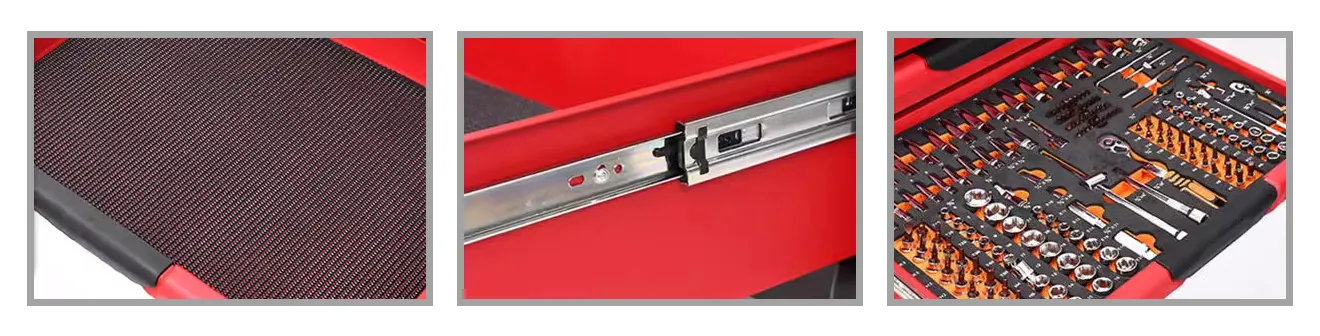
The construction of a 9-drawer tool cabinet typically involves a combination of materials, each selected for specific properties. The cabinet body is frequently fabricated from cold-rolled steel (e.g., SAE 1008, 1018) due to its high strength-to-weight ratio, weldability, and relatively low cost. Steel gauge selection is critical, ranging from 14 to 18 gauge depending on the intended load capacity. Drawer construction commonly utilizes similar cold-rolled steel for the sides and fronts, with drawer bottoms often employing heavier gauge steel or composite materials to prevent sagging under load. Drawer slides are typically manufactured from hardened steel alloys (e.g., 52100 bearing steel) to ensure smooth operation and resistance to wear. Manufacturing processes vary. The cabinet body is often formed through brake pressing and welding. Precision is paramount in welding to minimize distortion and maintain structural integrity. Drawers are assembled using techniques like spot welding, MIG welding, or clinching. Drawer slides are frequently installed using a combination of self-tapping screws and press-fit bushings. Surface finishing typically involves multi-stage processes including degreasing, phosphate coating (for corrosion resistance), and powder coating (for durability and aesthetic appeal). Powder coating formulations vary, with epoxy-based powders offering superior chemical resistance and polyester-based powders providing enhanced UV protection. Parameter control during powder coating – including film thickness, curing temperature, and curing time – is crucial for achieving optimal performance.

Performance & Engineering
Performance evaluation of a 9-drawer tool cabinet centers on its load-bearing capacity, structural rigidity, and operational smoothness. Force analysis is critical in designing drawer slides to withstand both static and dynamic loads. Finite Element Analysis (FEA) is often employed to simulate stress distribution under various loading conditions and optimize material thickness and weld placement. Drawer slide mechanisms must demonstrate minimal deflection under full load, preventing binding and ensuring smooth extension and retraction. Environmental resistance is another key consideration. Exposure to humidity, temperature fluctuations, and corrosive substances (e.g., cutting fluids, lubricants) can lead to corrosion and premature failure. Therefore, protective coatings and material selection are paramount. Compliance requirements vary by region and application. For example, cabinets used in aerospace or medical facilities may need to meet specific standards for electrostatic discharge (ESD) control. Ergonomic design focuses on drawer height, handle design, and cabinet overall height to minimize bending and reaching, reducing worker strain and improving efficiency. Locking mechanisms are also a critical engineering component, ensuring tool security and preventing unauthorized access. The design must consider resistance to picking and forced entry.
Technical Specifications
| Parameter | Unit | Typical Value (Light-Duty) | Typical Value (Heavy-Duty) |
|---|---|---|---|
| Overall Dimensions (H x W x D) | inches | 36 x 27 x 18 | 48 x 36 x 24 |
| Drawer Load Capacity (per drawer) | lbs | 50 | 100 |
| Steel Gauge (Cabinet Body) | gauge | 18 | 16 |
| Drawer Slide Type | - | Ball Bearing (Light-Duty) | Ball Bearing (Heavy-Duty, Full Extension) |
| Number of Drawers | - | 9 | 9 |
| Coating Type | - | Powder Coat (Epoxy) | Powder Coat (Epoxy/Polyester Hybrid) |
Failure Mode & Maintenance
Common failure modes in 9-drawer tool cabinets include drawer slide failure (due to wear, corrosion, or overload), structural fatigue cracking (particularly at weld points), coating delamination (due to impact or chemical exposure), and locking mechanism failure (due to wear or damage). Drawer slide failure often manifests as binding, uneven movement, or complete seizure. Fatigue cracking typically initiates at stress concentration points, such as corners and weld toes. Coating delamination can expose underlying steel to corrosion. Maintenance practices are crucial for prolonging cabinet lifespan. Regular lubrication of drawer slides (using silicone-based or lithium-based grease) is essential. Periodic inspection of welds for cracks is recommended, particularly in high-stress applications. Cleaning the cabinet surface with mild detergent and water helps prevent corrosion. Damaged coatings should be repaired promptly to prevent rust formation. Locking mechanisms should be checked periodically to ensure proper operation. Avoid overloading drawers, as this significantly accelerates wear and increases the risk of failure. In cases of significant structural damage, professional repair or replacement may be necessary. For cabinets used in corrosive environments, consider applying a sacrificial coating or using corrosion inhibitors.
Industry FAQ
Q: What steel gauge is recommended for a tool cabinet intended for storing heavy pneumatic tools?
A: For storing heavy pneumatic tools, a minimum of 14-gauge cold-rolled steel for the cabinet body and drawer sides is recommended. Heavier gauge steel provides greater structural rigidity and resistance to deformation under load. Consider reinforcing drawer bottoms with additional steel bracing.
Q: How does powder coating impact the long-term durability of the cabinet?
A: Powder coating provides a durable and corrosion-resistant finish. However, the specific type of powder coating is critical. Epoxy-based powders offer excellent chemical resistance, while polyester-based powders provide superior UV protection. Proper surface preparation and curing are essential for achieving optimal adhesion and performance.
Q: What are the key considerations when selecting drawer slides?
A: Key considerations include load capacity, slide length, extension type (full extension vs. 3/4 extension), and material. Ball bearing slides offer smooth operation and high load capacity. Full extension slides provide complete access to the drawer contents. Ensure the slides are appropriately sized for the drawer dimensions and intended load.
Q: How can I mitigate the risk of corrosion in a humid shop environment?
A: Select a cabinet with a phosphate coating under the powder coat. Regularly clean the cabinet surface to remove moisture and contaminants. Consider using desiccant packs inside the drawers to absorb humidity. Applying a corrosion inhibitor to exposed metal surfaces can also provide additional protection.
Q: What safety standards apply to tool cabinet locking mechanisms?
A: Depending on the application and region, various safety standards may apply. Consider standards relating to key control, access control, and resistance to forced entry. In some industries, compliance with OSHA regulations regarding tool security is also required.
Conclusion
The 9-drawer tool cabinet represents a foundational element in organized industrial storage. Its effectiveness is contingent upon careful material selection, robust manufacturing processes, and adherence to relevant engineering principles. The interplay between steel gauge, drawer slide design, and surface finishing significantly influences load capacity, durability, and long-term performance. Recognizing and mitigating potential failure modes through proactive maintenance is essential for maximizing cabinet lifespan and ensuring workplace safety.
Future advancements in tool cabinet design may focus on incorporating smart features such as inventory tracking, tool location sensors, and integrated power supplies. Furthermore, exploring alternative materials – such as aluminum alloys or high-strength polymers – could offer weight reduction and improved corrosion resistance. Continued refinement of ergonomic design and compliance with evolving safety standards will remain critical drivers of innovation in this sector.
