Introduction
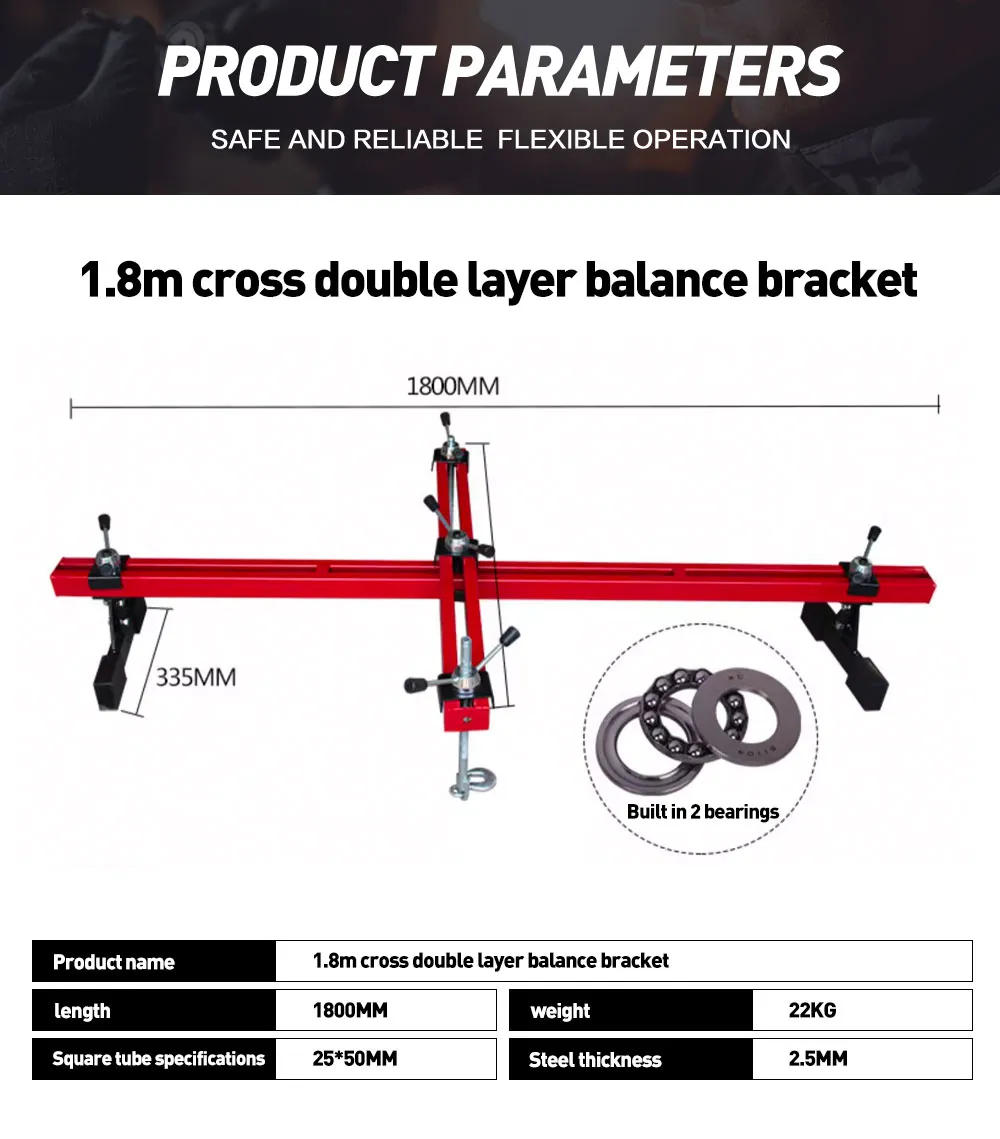
Engine support beams, critical components within internal combustion engines and large-scale power generation systems, are structural elements designed to bear significant static and dynamic loads. Positioned strategically to reinforce the engine block and cylinder head, they mitigate stress concentrations induced by combustion forces, inertial loads, and thermal expansion. These beams, often constructed from ductile cast iron, aluminum alloys, or high-strength steel, act as load-distributing members, enhancing engine reliability and longevity. Their core performance characteristics center around tensile strength, yield strength, fatigue resistance, and dimensional stability under sustained stress and temperature fluctuations. Addressing prevalent industry pain points such as vibration-induced fatigue cracking and thermal distortion, robust design and material selection are paramount in ensuring optimal engine performance and minimizing downtime.
Material Science & Manufacturing
The selection of materials for engine support beams is dictated by a balance of mechanical properties, thermal conductivity, and cost-effectiveness. Ductile cast iron (typically ASTM A48 Class 30) offers excellent vibration damping characteristics and machinability, but possesses relatively lower tensile strength. Aluminum alloys (such as A356-T6, meeting ASTM B85) are lighter, offering improved thermal dissipation, but demand more complex casting processes and are susceptible to creep at elevated temperatures. High-strength steels (e.g., AISI 4140, conforming to SAE J404) provide superior tensile and yield strength, crucial for high-performance applications, but require specialized heat treatment and corrosion protection. Manufacturing processes vary based on the chosen material. Cast iron beams are typically produced via sand casting, involving pattern creation, mold preparation, metal pouring, and finishing operations. Aluminum alloys commonly utilize die casting, enabling high production volumes and precise dimensional control. Steel beams often undergo forging or machining from billet stock, followed by stress relieving and surface treatments. Critical parameters during manufacturing include precise control of alloy composition, solidification rates, cooling rates, and heat treatment cycles to optimize microstructure and mechanical properties. Post-processing steps like shot peening are employed to enhance fatigue resistance by inducing compressive residual stresses on the surface.
Performance & Engineering
The performance of engine support beams is fundamentally governed by their ability to withstand complex loading conditions. Finite Element Analysis (FEA) is extensively used to model stress distribution under static and dynamic loads, accounting for factors like combustion pressure, piston inertia, and crankshaft torsional vibrations. Force analysis incorporates both tensile and compressive stresses, as well as bending moments induced by uneven loading. Environmental resistance is also crucial; beams are exposed to engine oil, coolant, and corrosive gases. Aluminum alloys require surface treatments like anodizing (meeting MIL-A-8625) to enhance corrosion protection. Steel components utilize coatings such as zinc phosphate or powder coating to prevent oxidation and rust. Compliance requirements vary by region and application. Automotive applications demand adherence to standards like ISO 16949 for quality management and stringent material specifications dictated by OEM requirements. For large industrial engines, ASME standards (e.g., ASME Section VIII, Division 1) govern pressure vessel design and construction, influencing beam design to accommodate associated loads. The implementation of damping materials, such as constrained layer damping composites, can further mitigate vibration and reduce noise levels. Proper bearing surface design and tolerances are critical to prevent localized stress concentrations and ensure uniform load distribution.
Technical Specifications
| Material Grade | Tensile Strength (MPa) | Yield Strength (MPa) | Elongation (%) |
|---|---|---|---|
| Ductile Cast Iron (ASTM A48 Class 30) | 200-350 | 120-250 | 5-10 |
| Aluminum Alloy (A356-T6, ASTM B85) | 280-350 | 200-280 | 3-7 |
| High-Strength Steel (AISI 4140, SAE J404) | 560-700 | 400-550 | 15-20 |
| Fatigue Strength (MPa) - Rotating Bending | 100-200 (Cast Iron) | 150-250 (Aluminum) | 300-450 (Steel) |
| Thermal Expansion Coefficient (x10-6 /°C) | 10-12 (Cast Iron) | 23-24 (Aluminum) | 11-13 (Steel) |
| Density (g/cm3) | 7.2-7.4 (Cast Iron) | 2.6-2.8 (Aluminum) | 7.8-8.0 (Steel) |
Failure Mode & Maintenance
Engine support beams are susceptible to several failure modes. Fatigue cracking, initiated by cyclic loading from combustion and engine vibrations, is a common concern. Crack propagation occurs from stress concentrators like corners, bolt holes, and surface imperfections. Creep, a time-dependent deformation under sustained load, can occur in aluminum alloys at elevated temperatures, leading to dimensional instability. Corrosion, particularly galvanic corrosion between dissimilar metals, can weaken the beam structure. Thermal fatigue can result from repeated thermal cycling, inducing tensile stresses and cracking. Delamination can occur in composite beams if the bond between layers is compromised. Oxidation, especially in steel components, leads to material loss and reduced section thickness. Maintenance procedures should include regular visual inspections for cracks, corrosion, and deformation. Non-destructive testing (NDT) methods like dye penetrant inspection (ASTM E165), ultrasonic testing (ASTM E797), and radiographic inspection (ASTM E94) are employed to detect subsurface flaws. Periodic stress relieving heat treatment can mitigate residual stresses. Protective coatings should be reapplied as necessary to prevent corrosion. Replacement is recommended when cracks exceed a critical size or when significant dimensional changes are detected. Proper torque specifications for mounting bolts must be followed to prevent overstressing the beam.
Industry FAQ
Q: What is the primary difference in fatigue life between cast iron and aluminum alloy support beams?
A: Aluminum alloy support beams generally exhibit lower fatigue life compared to ductile cast iron under equivalent loading conditions. This is primarily due to aluminum’s lower fatigue strength and susceptibility to crack initiation from surface imperfections. However, aluminum’s lighter weight can reduce overall dynamic loading, partially offsetting this disadvantage. Surface treatments like shot peening are crucial for enhancing the fatigue resistance of aluminum beams.
Q: How does the design of the beam’s cross-section influence its resistance to bending moments?
A: The cross-sectional geometry significantly impacts bending resistance. A larger moment of inertia (a geometric property calculated from the shape of the cross-section) indicates a higher resistance to bending. I-beam or box-section profiles are commonly used to maximize moment of inertia for a given material volume. Fillets at corners reduce stress concentrations and improve bending performance.
Q: What are the key considerations for selecting a corrosion-resistant coating for a steel engine support beam?
A: The selection of a corrosion-resistant coating depends on the specific operating environment and potential corrosive agents. Zinc phosphate coatings offer good base-level protection. Powder coating provides a durable and aesthetically pleasing finish. For harsh environments, multi-layer systems combining zinc-rich primers with epoxy or polyurethane topcoats are recommended. The coating's adhesion, permeability, and resistance to chemical attack must be carefully evaluated.
Q: How critical is precise machining of the beam’s mounting surfaces?
A: Precise machining of mounting surfaces is paramount. Deviations from flatness or improper alignment can induce localized stresses and uneven load distribution, significantly reducing fatigue life. Tight tolerances are essential to ensure proper contact with mating surfaces and prevent stress concentrations. Surface finish quality also plays a crucial role in minimizing stress risers.
Q: What role does Finite Element Analysis (FEA) play in optimizing engine support beam design?
A: FEA is a critical tool for optimizing beam design by simulating stress distribution under various loading scenarios. It allows engineers to identify areas of high stress concentration, assess the impact of geometric modifications, and validate design choices before physical prototyping. FEA helps to minimize material usage, reduce weight, and enhance structural integrity.
Conclusion
Engine support beams represent a crucial component in maintaining the structural integrity and operational reliability of internal combustion engines. The selection of appropriate materials, coupled with meticulous manufacturing processes and rigorous quality control, is paramount to ensuring their long-term performance. Understanding the various failure modes—ranging from fatigue cracking and corrosion to creep and thermal fatigue—allows for the implementation of effective preventative maintenance strategies and optimized design iterations.
Future advancements in engine support beam technology are likely to focus on the development of lighter-weight materials, such as advanced aluminum alloys and composite materials, to improve fuel efficiency and reduce emissions. Integration of sensor technologies for real-time stress monitoring and predictive maintenance will further enhance reliability and minimize downtime. Continued refinement of FEA modeling techniques will enable more accurate simulations and optimized designs tailored to specific engine applications.
