Introduction
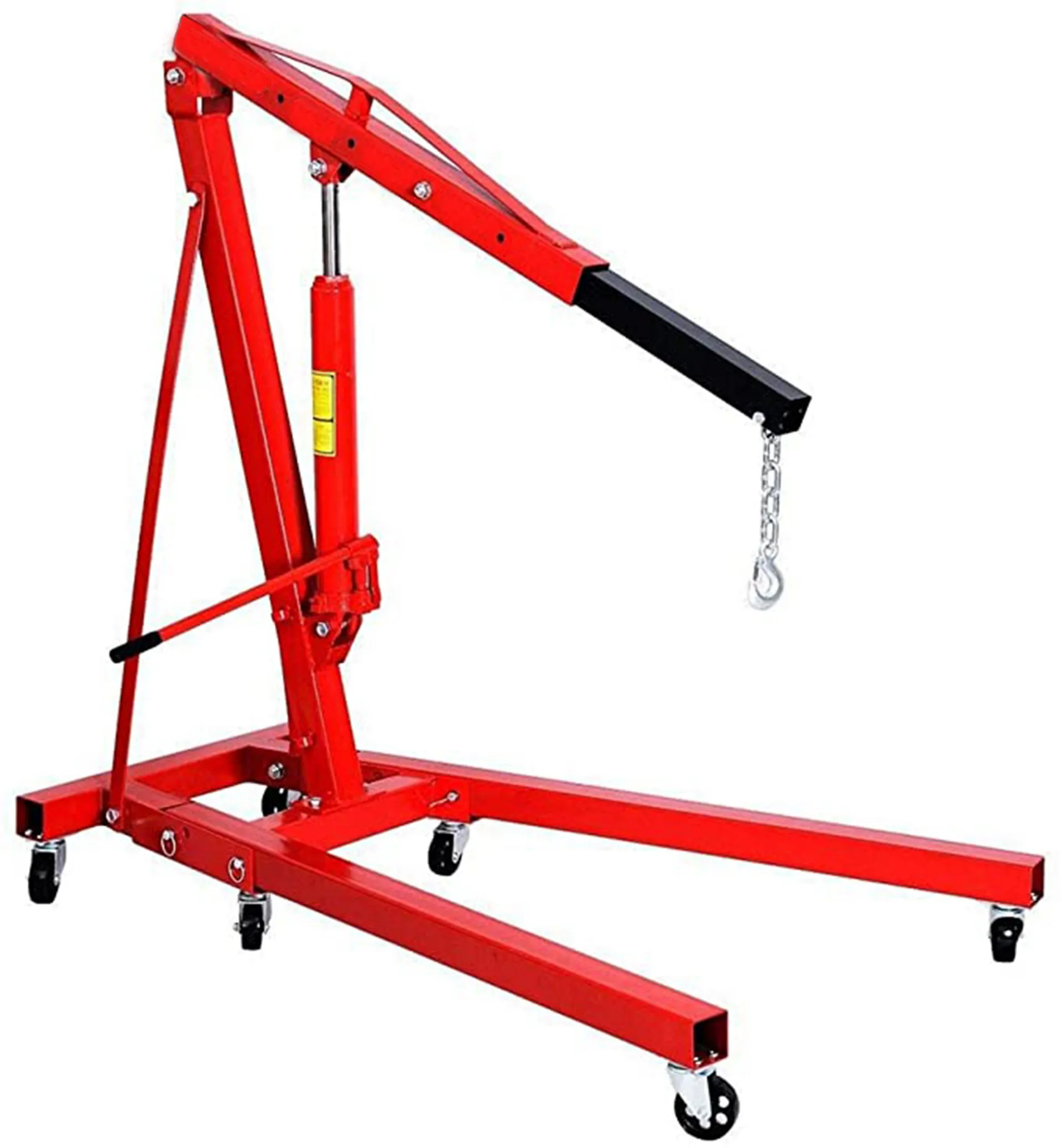
Fold away engine hoists represent a critical component in automotive maintenance and repair facilities, offering a solution for lifting and positioning internal combustion engines during removal, installation, and overhaul procedures. Positioned within the broader materials handling equipment industry, these hoists address the significant ergonomic and safety challenges associated with engine work. Unlike fixed-position overhead cranes or traditional floor cranes, the fold-away design prioritizes space optimization, crucial in workshops with limited footprint. Core performance characteristics are defined by lifting capacity (typically ranging from 2 tons to 4 tons), reach, stability under load, and the ease with which the hoist can be maneuvered and stored. A key industry pain point addressed by this equipment is the reduction of manual handling risks, minimizing potential musculoskeletal injuries for technicians. Furthermore, the quick deployment and storage contribute to increased workshop efficiency, enabling faster turnaround times for vehicle repairs.
Material Science & Manufacturing
The construction of fold away engine hoists relies on a combination of high-strength steels and engineered polymers. The primary load-bearing structures – the mast, boom, and lifting arm – are typically manufactured from structural steel (ASTM A36 or equivalent) exhibiting a yield strength of at least 36,000 psi. Steel selection is dictated by the necessity to withstand significant tensile, compressive, and bending stresses during operation. Welding processes, predominantly Shielded Metal Arc Welding (SMAW) or Gas Metal Arc Welding (GMAW), are utilized for joining the steel components, adhering to AWS D1.1 standards for structural welding. Post-weld heat treatment may be employed to relieve residual stresses and improve ductility. The hydraulic systems, critical for lift and swing functionality, employ hydraulic oil with a viscosity grade appropriate for the operating temperature range (typically ISO VG 46). Seals within the hydraulic cylinders are often constructed from nitrile rubber (NBR) or hydrogenated nitrile butadiene rubber (HNBR) to ensure compatibility with the hydraulic fluid and provide resistance to abrasion and degradation. The folding mechanism hinges utilize hardened steel pivot points with precision bearings to ensure smooth operation and minimize wear. The base frame is commonly constructed from carbon steel, often with a powder-coat finish for corrosion resistance. The chain or wire rope used for lifting is typically manufactured from alloy steel (Grade 80 or higher) and undergoes rigorous testing for tensile strength and fatigue life, adhering to EN 818-7 standards. Manufacturing parameter control involves precise welding parameter settings, dimensional accuracy verification, and hydrostatic testing of the hydraulic system to ensure leak-free operation.
Performance & Engineering
The performance of a fold away engine hoist is fundamentally governed by principles of statics and dynamics. Force analysis during operation necessitates consideration of the engine’s weight, the hoist’s arm length, and the angle of lift. Stability is paramount; the base frame must be adequately weighted or secured to the floor to prevent tipping under load. The design incorporates a safety factor, typically 3:1 or higher, to account for dynamic loads and potential overloading. Environmental resistance is a key engineering consideration. Exposure to moisture, chemicals, and temperature fluctuations can accelerate corrosion and degrade hydraulic components. Protective coatings, such as powder coating and corrosion inhibitors in the hydraulic fluid, mitigate these effects. Compliance requirements are dictated by OSHA regulations (specifically 29 CFR 1910.179 for Rigging Equipment) and regional safety standards. The hydraulic system is engineered to provide precise lift and swing control, minimizing the risk of engine damage during positioning. The folding mechanism is designed for repeated operation with minimal friction and wear. Finite element analysis (FEA) is often employed during the design phase to optimize structural integrity and identify potential stress concentration points. The hydraulic pressure relief valve serves as a critical safety component, preventing over-pressurization of the system and potential catastrophic failure.
Technical Specifications
| Lifting Capacity (tons) | Maximum Reach (meters) | Mast Height (meters) | Rotation Angle (degrees) |
|---|---|---|---|
| 2 | 2.0 | 2.5 | 360 |
| 3 | 2.5 | 3.0 | 360 |
| 4 | 3.0 | 3.5 | 360 |
| 2.5 | 2.2 | 2.8 | 360 |
| 3.5 | 2.7 | 3.2 | 360 |
| 5 | 3.2 | 3.7 | 360 |
Failure Mode & Maintenance
Common failure modes in fold away engine hoists include hydraulic leaks, component fatigue, and structural failure. Hydraulic leaks typically originate from worn seals within the cylinders or hoses. Fatigue cracking can occur in the mast, boom, or lifting arm due to repeated stress cycling, particularly if the hoist is consistently overloaded. Structural failure of the base frame is also possible, often resulting from corrosion or impact damage. Delamination of powder-coat finishes exposes the underlying steel to corrosive elements, accelerating degradation. Oxidation of metal components, particularly in humid environments, can lead to seizure of moving parts. Maintenance procedures should include regular inspection of hydraulic hoses and fittings for leaks, lubrication of pivot points and bearings, and visual assessment of the steel structures for signs of cracking or corrosion. Hydraulic fluid should be replaced according to the manufacturer’s recommendations (typically every 12-24 months) to maintain optimal performance and prevent component wear. Chain or wire rope should be inspected for wear, fraying, or deformation, and replaced if necessary. Periodic load testing is advisable to verify the hoist's lifting capacity and identify potential structural weaknesses. Proper storage when not in use, ideally indoors, will minimize exposure to environmental factors and prolong the equipment's lifespan. Preventive maintenance schedules and detailed record-keeping are crucial for ensuring long-term reliability and safety.
Industry FAQ
Q: What safety features are essential for a fold away engine hoist?
A: Essential safety features include a load-limiting device to prevent overloading, a pressure relief valve to prevent hydraulic overpressure, a robust locking mechanism to secure the boom in position, and a clearly labeled load capacity chart. Regular inspection and maintenance of these features are also critical.
Q: How does the folded storage configuration affect the structural integrity of the hoist?
A: The folding mechanism introduces stress points at the hinges. Therefore, the hinges must be manufactured from high-strength materials and designed to withstand repeated stress cycling. Regular inspection of the hinges for wear or damage is crucial.
Q: What type of hydraulic fluid is most suitable for these hoists, and why?
A: ISO VG 46 hydraulic fluid is commonly recommended due to its good viscosity characteristics over a wide temperature range and compatibility with common seal materials. Fluids with anti-wear additives are preferable to minimize component wear.
Q: What are the common causes of drift in the lifting mechanism, and how can it be addressed?
A: Drift can be caused by internal leakage within the hydraulic cylinders, worn seals, or air in the hydraulic system. Addressing it involves checking and replacing seals, bleeding the hydraulic system to remove air, and inspecting the cylinders for damage.
Q: What is the expected lifespan of a properly maintained fold away engine hoist?
A: With regular maintenance and adherence to load limits, a properly maintained fold away engine hoist can have a lifespan of 10-15 years or more. However, factors like usage frequency and environmental conditions can influence its longevity.
Conclusion
Fold away engine hoists represent a significant advancement in workshop efficiency and technician safety. Their space-saving design, coupled with robust engineering principles and adherence to stringent safety standards, makes them an indispensable tool for modern automotive repair facilities. The selection of appropriate materials, meticulous manufacturing processes, and regular maintenance are paramount to ensuring long-term reliability and preventing catastrophic failures.
Future advancements in this technology will likely focus on incorporating smart features such as load monitoring systems, predictive maintenance algorithms, and remote control operation. Further research into lightweight materials and improved hydraulic system efficiency could also lead to enhanced performance and reduced operational costs. The continuing evolution of these hoists underscores their critical role in supporting the ever-demanding needs of the automotive industry.
