Introduction
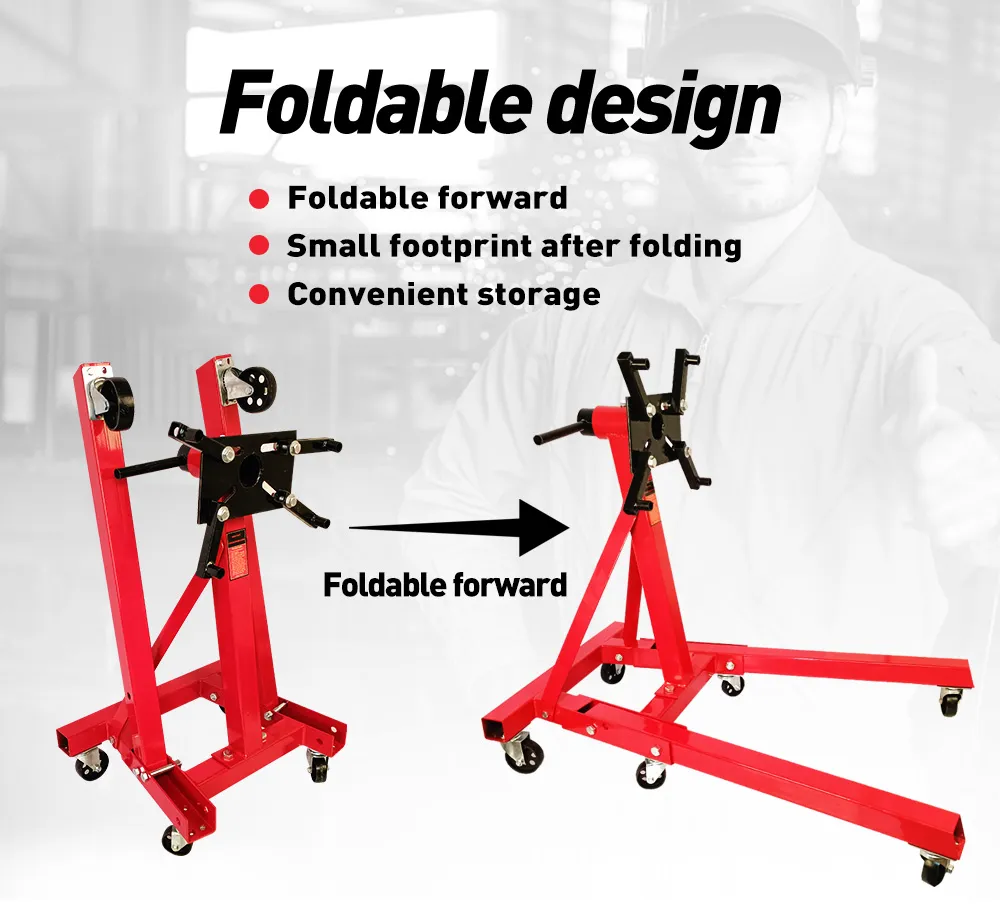
Folding engine hoists represent a specialized category within material handling equipment, primarily employed in automotive repair, heavy machinery maintenance, and industrial engine overhaul. Unlike fixed-boom hoists, their collapsible design facilitates storage and transport, addressing critical space constraints common in workshops and mobile service environments. This guide details the engineering principles, material composition, performance characteristics, and failure modes associated with folding engine hoists, aiming to provide a comprehensive technical resource for procurement professionals, maintenance engineers, and quality control personnel. Core performance is defined by lifting capacity, reach, stability under load, and the reliability of the folding mechanism. The industry faces recurring challenges related to structural integrity during repetitive folding/unfolding cycles, corrosion protection for outdoor storage, and ensuring precise load control to prevent damage to sensitive engine components. This document addresses these pain points through detailed analysis and recommended maintenance protocols.
Material Science & Manufacturing
The primary structural components of a folding engine hoist are typically manufactured from high-strength carbon steel, specifically ASTM A36 or equivalent, offering a balance of weldability, tensile strength, and cost-effectiveness. The boom arm often employs hollow structural sections (HSS) to maximize strength-to-weight ratio and reduce overall system mass. Critical load-bearing pins and hinges are commonly constructed from alloy steel (e.g., 4140) and subjected to heat treatment processes – specifically hardening and tempering – to achieve a Rockwell hardness of 50-55 HRC, enhancing wear resistance and yield strength. The hydraulic system, essential for lifting operation, utilizes hydraulic fluid conforming to ISO 6743/4 standards (typically a mineral oil-based hydraulic fluid with anti-wear additives). The folding mechanism’s locking pins are frequently produced from AISI 1045 steel, providing sufficient shear strength to maintain boom position. Manufacturing processes include robotic welding (SMAW, GMAW, or FCAW) for boom assembly, CNC machining for precision fitment of pins and hinges, and hydraulic cylinder fabrication involving honing and sealing. Key parameter control during manufacturing focuses on weld quality (penetration, porosity, and stress concentration), dimensional accuracy of critical components, and proper hydraulic fluid filtration to prevent component wear. Surface treatment includes powder coating (typically epoxy-based) to enhance corrosion resistance and aesthetic appeal. Failure to maintain precise tolerances during machining, inadequate weld penetration, or incorrect heat treatment can significantly compromise hoist structural integrity.

Performance & Engineering
Performance of a folding engine hoist is critically dependent on accurate force analysis under static and dynamic loading conditions. Finite Element Analysis (FEA) is routinely employed during the design phase to predict stress distribution within the boom arm, hinge points, and hydraulic cylinder. Stability is paramount; the base frame must be sufficiently weighted and have a wide enough footprint to prevent tipping under maximum load and extended reach. The lifting capacity is determined by the hydraulic cylinder’s bore size, pressure rating (typically 3000 psi), and the mechanical advantage of the boom arm geometry. Environmental resistance considerations include corrosion protection (salt spray testing per ASTM B117), UV resistance of the powder coat finish, and the operational temperature range of the hydraulic fluid. Compliance requirements often mandate adherence to ASME B30.9 standards for slings, and OSHA regulations for lifting operations. Functional implementation relies on a robust hydraulic system, including a check valve to prevent load drift during power interruptions, and a pressure relief valve to protect against overpressure conditions. The folding mechanism requires precise engineering to ensure smooth operation and secure locking of the boom in both folded and extended positions. Fatigue life, particularly of the hinges, is a critical design parameter and is assessed through cyclic loading tests simulating repetitive folding/unfolding cycles.
Technical Specifications
| Capacity (tons) | Maximum Reach (inches) | Minimum Folded Height (inches) | Base Width (inches) | Hydraulic Pump Type | Weight (lbs) |
|---|---|---|---|---|---|
| 2 | 78 | 72 | 55 | Manual | 85 |
| 3 | 86 | 78 | 63 | Manual | 110 |
| 4 | 94 | 84 | 71 | Manual | 135 |
| 2 | 78 | 72 | 55 | Electric | 98 |
| 3 | 86 | 78 | 63 | Electric | 125 |
| 4 | 94 | 84 | 71 | Electric | 150 |
Failure Mode & Maintenance
Common failure modes in folding engine hoists include fatigue cracking at hinge points due to repeated stress cycling, hydraulic leaks stemming from seal degradation or cylinder corrosion, deformation of the boom arm resulting from overloading, and failure of the locking mechanism due to wear or misalignment. Corrosion, particularly in marine or humid environments, is a significant concern, leading to weakening of structural components. Failure analysis reveals that inadequate lubrication of hinge pins accelerates wear and promotes cracking. Hydraulic fluid contamination (water ingress, particulate matter) causes cylinder damage and valve malfunction. Preventive maintenance should include regular inspection for cracks, corrosion, and hydraulic leaks. Lubrication of all moving parts (hinges, pins, cylinder rod) with a lithium-based grease is essential. Hydraulic fluid should be replaced annually or as recommended by the manufacturer, and the system should be flushed to remove contaminants. The boom arm should be inspected for deformation after each use, and any signs of bending or twisting should be addressed immediately. Locking mechanisms should be checked for proper engagement and adjusted as needed. Periodic load testing (using a calibrated dynamometer) can help identify structural weaknesses before they lead to catastrophic failure. Replace worn seals, hoses, and cylinders promptly. Correct any corrosion immediately with appropriate surface treatment and protective coating.
Industry FAQ
Q: What is the appropriate safety factor to consider when selecting an engine hoist for a specific application?
A: A safety factor of 4:1 is generally recommended for engine hoist applications, meaning the hoist’s rated capacity should be four times the maximum weight of the engine being lifted. This accounts for dynamic loading, shock loads, and potential inaccuracies in weight estimation. Exceeding this safety factor significantly increases the risk of structural failure.
Q: How often should the hydraulic fluid be tested for contamination?
A: Hydraulic fluid should be tested for contamination at least semi-annually, or more frequently in harsh operating environments (e.g., dusty workshops). Testing should include particle count analysis (ISO 4406 standard) and water content determination (Karl Fischer titration). High particle counts or water contamination indicate the need for fluid replacement and filter maintenance.
Q: What are the implications of using a non-OEM hydraulic cylinder?
A: Using a non-OEM (Original Equipment Manufacturer) hydraulic cylinder can compromise the hoist’s performance and safety. Aftermarket cylinders may not meet the original manufacturer’s dimensional tolerances, pressure ratings, or material specifications. This can lead to reduced lifting capacity, increased leakage, and premature failure. It is strongly recommended to use OEM replacement parts or cylinders that have been certified to meet the original specifications.
Q: How can I visually inspect the boom arm for fatigue cracking?
A: Visual inspection for fatigue cracking should focus on areas of high stress concentration, such as weld joints, hinge points, and areas near the cylinder attachment. Look for small, hairline cracks, discoloration, or evidence of previous repairs. Magnetic particle inspection (MPI) or ultrasonic testing (UT) are more reliable methods for detecting subsurface cracks.
Q: What type of corrosion protection is most effective for a folding engine hoist used outdoors?
A: For outdoor use, a multi-layer corrosion protection system is recommended. This should include thorough surface preparation (sandblasting to remove existing rust), application of a zinc-rich primer (sacrificial anode), and a durable epoxy or polyurethane topcoat. Regular inspection and touch-up of the coating are essential to maintain corrosion resistance.
Conclusion
Folding engine hoists, while offering significant advantages in portability and storage, represent complex mechanical systems demanding careful consideration of material science, manufacturing processes, and operational safety. Proper material selection, robust weld construction, and diligent maintenance protocols are paramount to ensuring long-term reliability and preventing catastrophic failure. Understanding the potential failure modes and implementing a proactive inspection and maintenance program are essential for maximizing the service life and minimizing the risk of downtime.
Future development in folding engine hoist technology is likely to focus on lightweight materials (e.g., high-strength aluminum alloys), improved hydraulic system efficiency, and the integration of smart sensors for real-time load monitoring and predictive maintenance. Furthermore, enhancing the corrosion resistance of folding mechanisms through advanced coating technologies and utilizing more durable materials will be crucial for extending operational life in harsh environments. Adherence to relevant industry standards and a commitment to continuous improvement will remain critical for manufacturers and end-users alike.
