Introduction
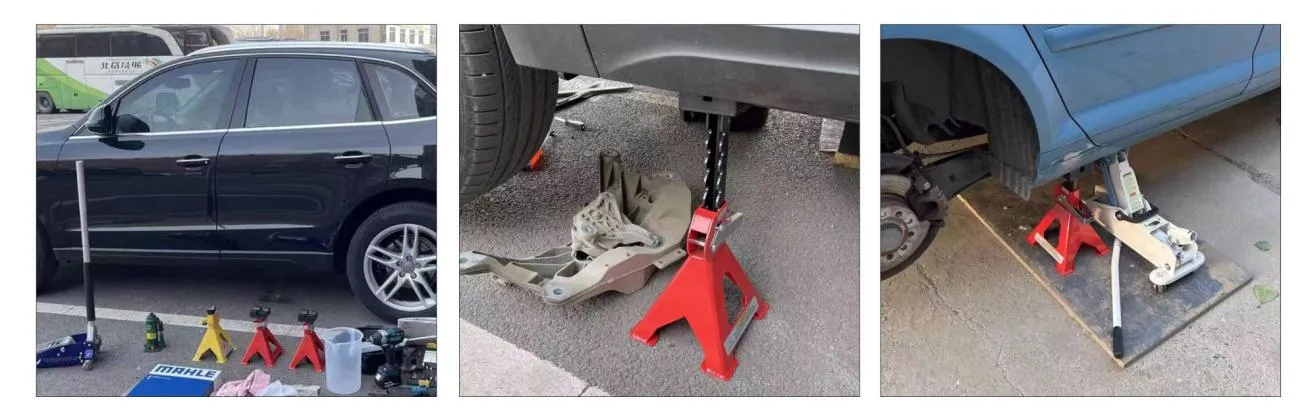
Scissor jacks are mechanical devices used to lift heavy loads, commonly vehicles, for maintenance or tire changes. Functionally, they operate on the principle of a diamond-shaped structure (the 'scissor' mechanism) expanding and contracting via a screw mechanism. While seemingly simple, scissor jacks exist in diverse configurations tailored to varying load capacities, operating environments, and actuation methods. These configurations range from manual, mechanically-actuated versions to hydraulic and pneumatic systems. Their technical position in the automotive and industrial equipment chain is as a crucial component within vehicle toolkits, maintenance workshops, and construction sites. Core performance characteristics revolve around lifting capacity (typically measured in tons), lifting height, stability under load, operational speed, and durability. The selection of the appropriate scissor jack type is dictated by these performance demands, alongside considerations of cost, portability, and safety.
Material Science & Manufacturing
The predominant material in scissor jack construction is carbon steel, specifically grades such as AISI 1045 or equivalent, due to its high tensile strength, yield strength, and weldability. The screw thread is often constructed from alloy steel (e.g., 4140) for increased wear resistance. Manufacturing processes vary significantly based on the jack type. Manual scissor jacks typically involve stamping or laser cutting of the scissor arms from steel plate, followed by bending and welding to form the assembled mechanism. Critical parameters during welding include maintaining low heat input to prevent distortion of the arms, achieving full penetration welds for structural integrity, and post-weld stress relief. Hydraulic scissor jacks add a hydraulic cylinder and pump system. The cylinder body is generally constructed from honed steel tubing, and the piston from hardened alloy steel, requiring precision machining to ensure leak-proof operation. Manufacturing of the hydraulic system necessitates stringent quality control of seals (typically nitrile rubber or Viton) to prevent fluid loss. Pneumatic scissor jacks employ similar steel construction for the scissor mechanism but integrate an air cylinder and valve system. Surface treatments, such as zinc plating or powder coating, are applied to all steel components to mitigate corrosion. Material hardness testing (Rockwell C scale) and non-destructive testing (NDT), such as ultrasonic testing, are crucial quality assurance steps. The manufacturing of the screw requires cold forging and precise threading to ensure smooth operation and longevity. Fatigue resistance of the steel components is paramount, demanding careful selection of manufacturing techniques that minimize stress concentrations.
Performance & Engineering
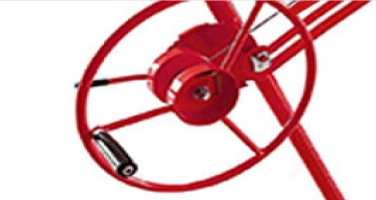
Performance of scissor jacks hinges on a thorough understanding of force analysis and material stress. The lifting force is primarily distributed along the scissor arms, creating significant bending moments. Engineering calculations must account for worst-case loading scenarios, including dynamic loads during vehicle movement and eccentric loading if the jack is not positioned correctly. Stability is crucial; the base of the jack must provide sufficient contact area to prevent tipping. Factors of safety are typically applied to all load-bearing components, generally ranging from 3:1 to 5:1, depending on the application criticality. Environmental resistance is also paramount. Exposure to moisture, road salt, and extreme temperatures can accelerate corrosion and reduce the fatigue life of the steel components. Hydraulic jacks require careful consideration of fluid compatibility (typically hydraulic oil conforming to ISO 32 or equivalent) and seal performance across a range of temperatures. Pneumatic jacks demand analysis of air pressure requirements and the design of appropriate safety valves to prevent over-extension. Compliance requirements vary by region but generally include adherence to ASME standards (particularly for hydraulic systems), and adherence to relevant vehicle safety standards. Finite Element Analysis (FEA) is commonly employed to optimize the geometry of the scissor arms and identify potential stress concentrations. Locking mechanisms are critical safety features, preventing the jack from lowering under load. These mechanisms are typically designed with redundant features to minimize the risk of failure.
Technical Specifications
| Type of Scissor Jack | Lifting Capacity (tons) | Minimum Lifting Height (mm) | Maximum Lifting Height (mm) |
|---|---|---|---|
| Manual Mechanical | 1.5 - 3 | 280 | 380 |
| Hydraulic Bottle Jack (Scissor Variant) | 2 - 20 | 300 | 450 |
| Pneumatic Scissor Lift | 3 - 5 | 350 | 600 |
| Heavy-Duty Manual Scissor Jack | 5 - 10 | 350 | 500 |
| Low-Profile Manual Scissor Jack | 1 - 2 | 80 | 320 |
| Hydraulic Floor Jack (Scissor Lift Integration) | 2.5 - 5 | 100 | 500 |
Failure Mode & Maintenance
Failure modes in scissor jacks are diverse and depend on the jack type and usage conditions. Manual jacks are susceptible to fatigue cracking at weld joints due to repeated stress cycles. Screw thread stripping is another common failure, especially if the jack is overloaded or improperly lubricated. Hydraulic jacks can fail due to seal degradation, leading to fluid leakage and loss of lifting capacity. Corrosion of the hydraulic cylinder can also cause significant problems. Pneumatic jacks are prone to failure of the air valve system or damage to the air cylinder. A common failure across all types is deformation of the scissor arms due to overloading or impact damage. Maintenance is crucial for extending the lifespan of scissor jacks. Regular lubrication of the screw thread (for manual jacks) and hydraulic cylinder (for hydraulic jacks) is essential. Inspection for corrosion, cracks, and loose fasteners should be performed periodically. Hydraulic fluid levels must be checked and replenished as needed, and seals replaced if they show signs of wear. Pneumatic systems require inspection of air lines and valves for leaks. Preventive maintenance includes protecting the jack from exposure to harsh environments and avoiding exceeding the rated lifting capacity. Failure analysis often reveals that inadequate lubrication or overloading are the primary contributing factors. Non-destructive testing, such as dye penetrant inspection, can help identify hairline cracks before they propagate into critical failures. Regularly checking the locking mechanism functionality is vital for safe operation.
Industry FAQ
Q: What is the primary difference between a mechanical scissor jack and a hydraulic scissor jack in terms of force multiplication?
A: A mechanical scissor jack relies on the mechanical advantage of the screw thread to amplify the applied force. This amplification is limited by the screw pitch and handle length. A hydraulic scissor jack, however, utilizes Pascal's principle to multiply force through hydraulic pressure. This allows for significantly higher force multiplication with less physical effort, making it suitable for lifting heavier loads.
Q: How does the material selection impact the longevity of a scissor jack exposed to marine environments?
A: Marine environments are highly corrosive due to salt spray. Standard carbon steel will rapidly corrode. To mitigate this, materials with enhanced corrosion resistance, such as stainless steel (316L grade) or components with robust protective coatings (e.g., epoxy powder coating, hot-dip galvanization), are essential. Regular cleaning and application of corrosion inhibitors are also vital.
Q: What are the critical safety considerations when using a pneumatic scissor jack?
A: The primary safety concern with pneumatic jacks is the potential for uncontrolled lowering if the air supply is interrupted. Redundant safety valves, a robust locking mechanism, and a stable base are critical. Users must also ensure the air compressor provides a clean, dry air supply to prevent damage to the pneumatic system.
Q: What types of nondestructive testing methods are commonly employed during scissor jack manufacturing?
A: Dye penetrant inspection is used to detect surface cracks in welded joints and stressed areas. Ultrasonic testing is employed to identify subsurface flaws in critical components like the scissor arms and screw threads. Radiographic testing (X-ray) can also be used for comprehensive flaw detection, though it is less common due to cost and safety considerations.
Q: How do different lifting heights and capacities influence the design parameters of the scissor mechanism?
A: Higher lifting heights and capacities demand stronger, thicker scissor arms to withstand the increased bending moments. The geometry of the scissor linkage must be optimized to maintain stability and minimize stress concentrations. For higher capacities, a larger screw diameter and more robust drive mechanism are necessary. The base width must be increased to prevent tipping.
Conclusion
Scissor jacks, despite their apparent simplicity, represent a sophisticated application of mechanical engineering principles. Their diverse configurations reflect a tailored approach to meeting specific lifting demands across various industries. Material selection, manufacturing processes, and adherence to rigorous quality control measures are paramount to ensuring safety, reliability, and longevity. Understanding the potential failure modes and implementing proactive maintenance strategies is crucial for maximizing operational lifespan and minimizing the risk of incidents.
Future developments in scissor jack technology are likely to focus on increased automation, integration of smart sensors for load monitoring and predictive maintenance, and the exploration of lightweight materials to improve portability. Furthermore, continued refinement of hydraulic and pneumatic systems will prioritize efficiency, responsiveness, and enhanced safety features. The evolution of scissor jack design will undoubtedly be driven by the ongoing need for safer, more reliable, and more efficient lifting solutions.
