Introduction
Scissor jacks are mechanical lifting devices utilizing a linked series of supports that expand or contract in a criss-cross pattern, resembling the opening and closing of a pair of scissors. Positioned within the industrial landscape, scissor jacks serve as critical components in a broad spectrum of applications, from automotive repair and construction to manufacturing and material handling. Their function extends beyond simple lifting; they provide controlled vertical movement for positioning, leveling, and accessing components. Core performance metrics for scissor jacks center around load capacity, lift height, stability under load, and operational safety. The demand for reliable and robust scissor jacks is driven by the need for efficient and safe lifting solutions in increasingly demanding industrial environments, particularly concerning maintenance, repair, and operational (MRO) procedures. Current industry trends prioritize lightweight designs, increased capacity for heavier loads, and enhanced safety features like anti-slip mechanisms and overload protection.
Material Science & Manufacturing
The core material in scissor jack construction is typically high-strength steel, specifically carbon steel grades such as AISI 1045 or equivalent. These steels offer a balance of tensile strength, yield strength, and ductility necessary to withstand significant compressive and tensile stresses. Manufacturing processes begin with the forging or rolling of steel into the required cross-sectional shapes for the scissor arms. Critical parameter control during forging includes maintaining consistent temperature profiles to avoid grain boundary weakness and precise die alignment to ensure dimensional accuracy. Welding, primarily shielded metal arc welding (SMAW) or gas metal arc welding (GMAW), is used to join the pivot points and structural elements. Welding parameter control – amperage, voltage, and travel speed – is paramount to avoid weld defects like porosity, undercut, and incomplete fusion. Surface treatments, including phosphatizing and powder coating, are applied to enhance corrosion resistance. Powder coating thickness is strictly monitored to ensure adequate protection against environmental degradation. The screw mechanism, responsible for driving the scissor action, is often manufactured from alloy steel (e.g., 4140) due to its higher hardness and wear resistance. Screw threads are created via rolling or machining, with thread pitch and surface finish meticulously controlled for smooth and efficient operation. The base plate, providing stability, commonly utilizes A36 steel. Material compatibility between steel grades is a critical consideration, especially in welded joints, to avoid galvanic corrosion. Quality control throughout the manufacturing process involves non-destructive testing (NDT) methods like ultrasonic testing and magnetic particle inspection to detect internal and surface flaws.
Performance & Engineering
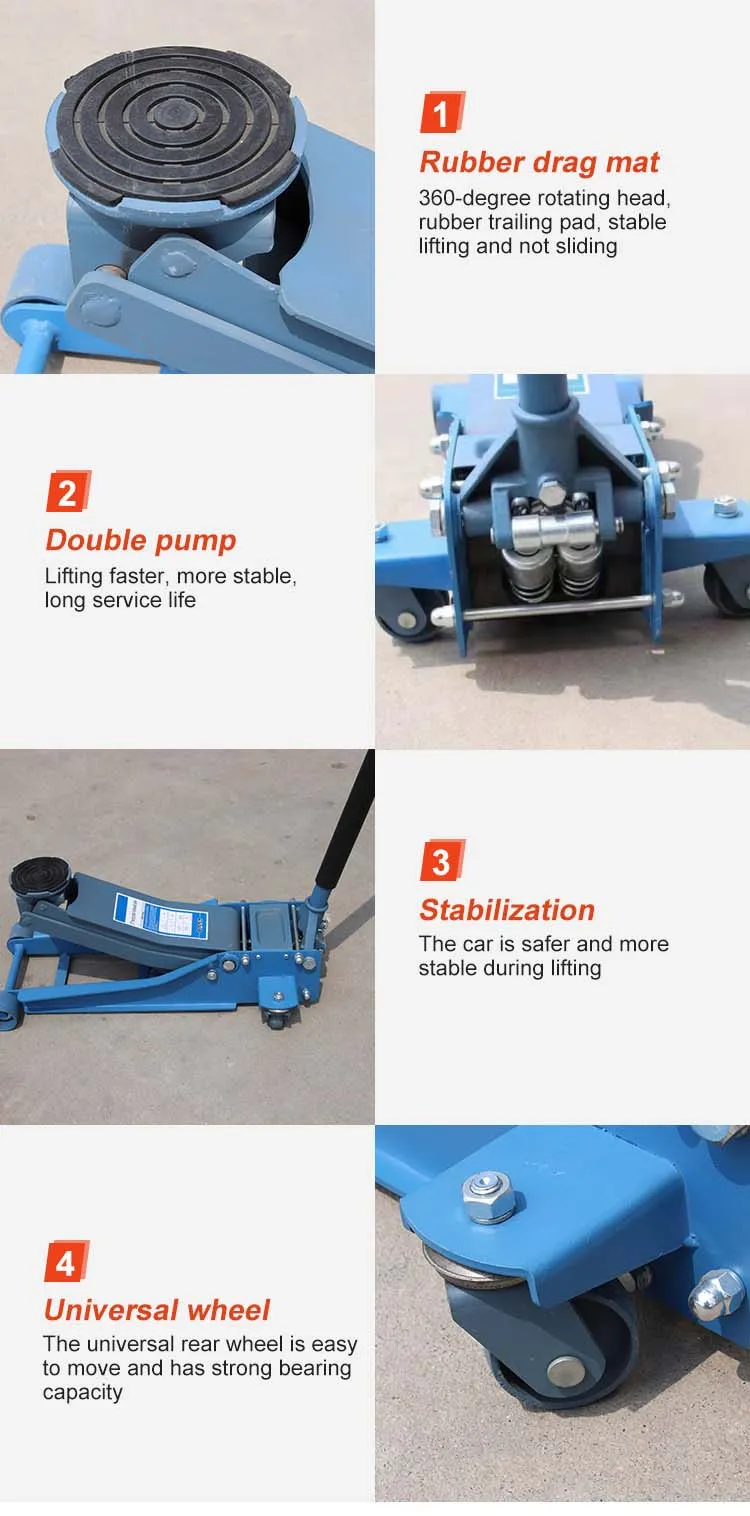
Scissor jack performance is fundamentally governed by principles of mechanical engineering, specifically force analysis and stress distribution. The load capacity is dictated by the yield strength of the steel used in the scissor arms and the geometry of the linkage. A static load analysis is performed to determine the maximum allowable load before permanent deformation or failure. Dynamic loading, including impact forces during operation, is also considered. Stability is a primary concern, particularly when lifting at maximum height. The base plate area and its coefficient of friction with the supporting surface are crucial factors. Anti-slip mechanisms, such as rubber pads or textured surfaces, are employed to prevent unwanted movement. Engineering designs must adhere to relevant safety standards, including ANSI/ASME B30.1 for lifts and hoisting equipment. Environmental resistance is addressed through material selection and protective coatings. Exposure to corrosive environments (e.g., saltwater, chemicals) can accelerate degradation and reduce load capacity. Finite element analysis (FEA) is used to optimize the design for stress concentration points, ensuring uniform load distribution and minimizing the risk of fatigue cracking. The screw mechanism is engineered to withstand high torsional stresses and prevent stripping or binding. Lubrication is critical to reduce friction and wear in the screw threads and pivot points. Compliance with relevant regulations, such as OSHA standards for workplace safety, is a non-negotiable requirement.
Technical Specifications
| Load Capacity (tons) | Lift Height (inches) | Base Width (inches) | Overall Height (closed) (inches) |
|---|---|---|---|
| 2 | 12 | 6 | 4 |
| 3 | 18 | 8 | 5 |
| 5 | 24 | 10 | 6 |
| 8 | 30 | 12 | 7 |
| 10 | 36 | 14 | 8 |
| 20 | 48 | 16 | 9 |
Failure Mode & Maintenance
Common failure modes in scissor jacks include fatigue cracking at the pivot points, particularly under cyclic loading. This is often initiated by stress concentration due to improper welding or surface imperfections. Another prevalent failure is screw thread stripping, resulting from excessive torque or inadequate lubrication. Corrosion, especially in humid or corrosive environments, can lead to material degradation and reduced load capacity. Delamination of powder coating is a common aesthetic failure but can also indicate underlying corrosion. Buckling of the scissor arms can occur if the load exceeds the design limits or if the arms are damaged. Failure analysis typically involves visual inspection, non-destructive testing (NDT), and metallurgical analysis of fractured components. Maintenance procedures include regular lubrication of the screw mechanism and pivot points with a high-quality grease. Periodic inspection for signs of corrosion, cracks, or wear is crucial. Tighten all fasteners to the specified torque values. Replace any damaged or worn components immediately. Avoid exceeding the rated load capacity. Store the jack in a clean, dry environment to prevent corrosion. Regularly check the condition of the base plate and anti-slip features. Implement a preventative maintenance schedule based on usage frequency and operating conditions.
Industry FAQ
Q: What is the impact of steel alloy composition on the service life of a scissor jack?
A: The steel alloy composition directly affects the jack’s resistance to fatigue, corrosion, and wear. Higher carbon content increases hardness and strength but reduces ductility. The addition of alloying elements like chromium, molybdenum, and vanadium enhances strength, toughness, and wear resistance. Selecting the appropriate alloy for the intended application and operating environment is critical for maximizing service life.
Q: How does the design of the base plate influence the jack’s stability?
A: The base plate's area and the material's coefficient of friction with the supporting surface are key determinants of stability. A larger base area distributes the load over a wider area, reducing the risk of tipping. The material should provide sufficient grip to prevent sliding. Anti-slip features like rubber pads or textured surfaces further enhance stability, especially on smooth or uneven surfaces.
Q: What are the common causes of screw thread failure in scissor jacks?
A: Screw thread failure is typically caused by excessive torque, improper lubrication, or material defects. Overloading the jack or applying excessive force during operation can strip the threads. Insufficient lubrication increases friction and wear, accelerating thread damage. Material flaws, such as inclusions or voids, can create stress concentration points and initiate cracking.
Q: How important is regular lubrication, and what type of lubricant is recommended?
A: Regular lubrication is paramount for extending the service life of a scissor jack. It reduces friction and wear in the screw mechanism and pivot points, preventing binding and premature failure. A high-quality lithium-based grease with extreme pressure (EP) additives is generally recommended. Avoid using penetrating oils, as they can wash away existing lubrication and attract dirt.
Q: What NDT methods are commonly used to inspect scissor jacks for defects?
A: Common NDT methods include visual inspection for surface cracks and corrosion, magnetic particle inspection to detect surface and near-surface flaws in ferrous materials, ultrasonic testing to detect internal flaws, and dye penetrant inspection to reveal surface cracks. These methods help identify defects that could compromise the jack's structural integrity and safety.
Conclusion
Scissor jacks represent a foundational lifting technology in numerous industrial sectors, their functionality predicated on a robust interplay of material science, precise manufacturing processes, and sound engineering principles. Optimizing performance requires a thorough understanding of load capacity calculations, stability considerations, and the potential failure modes inherent in the design. Implementing rigorous quality control measures throughout the manufacturing process, coupled with consistent preventative maintenance, is essential for ensuring long-term reliability and operational safety.
The future of scissor jack technology will likely focus on materials advancements—exploring lighter, higher-strength alloys—and the integration of smart features such as load monitoring sensors and automated safety mechanisms. Further refinement of designs to minimize stress concentration and enhance corrosion resistance will continue to be a priority. As industrial automation advances, the demand for scissor jacks capable of seamless integration into robotic systems and automated workflows will undoubtedly increase.
