
Introduction
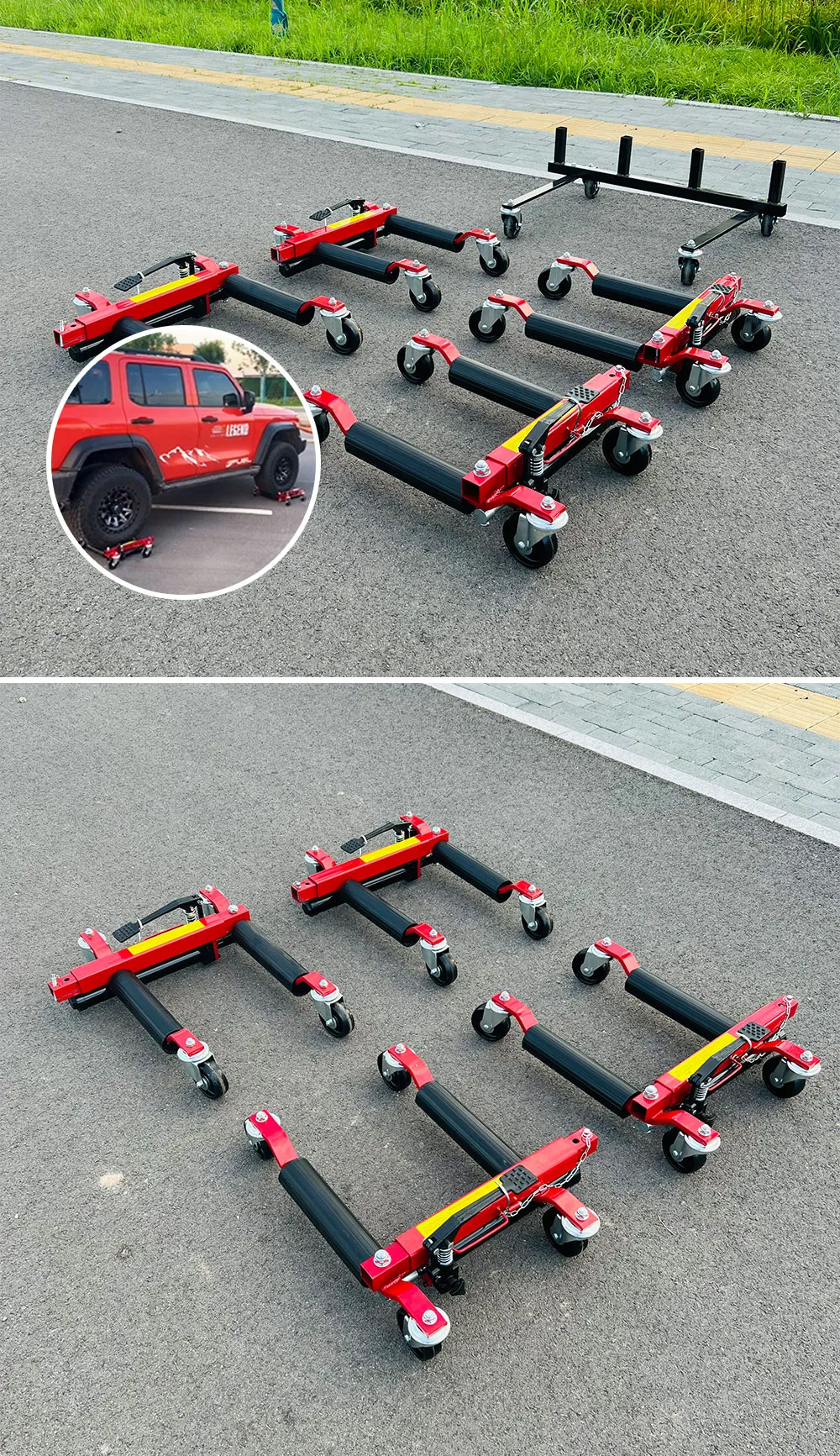
Tall jack stands for cars are essential safety devices utilized in automotive maintenance and repair, providing temporary support for a vehicle after lifting with a jack. Distinguished by their extended height capacity compared to standard jack stands, these units facilitate work on trucks, SUVs, and vehicles with substantial ground clearance. Their core function is to prevent catastrophic failure and potential injury during under-vehicle operations. The industry chain positions jack stands between vehicle lifting equipment manufacturers (jacks) and end-users (automotive professionals, DIY enthusiasts). Core performance characteristics center on static load capacity, stability under load, adjustable height range, and adherence to safety standards. A critical pain point within the industry is ensuring consistently reliable locking mechanisms and preventing material fatigue under repeated stress cycles. Furthermore, maintaining dimensional accuracy across different manufacturing batches is crucial for seamless operation and safe vehicle support.
Material Science & Manufacturing
The primary material utilized in tall jack stands is typically high-strength carbon steel, specifically AISI 1045 or equivalent, chosen for its balance of ductility, tensile strength, and weldability. Manufacturing often begins with steel plate or tubing, subjected to cutting, forming (pressing or rolling), and welding processes. Critical material properties include yield strength (minimum 36,000 psi), tensile strength (minimum 58,000 psi), and elongation (minimum 15%). Welding, commonly performed using Shielded Metal Arc Welding (SMAW) or Gas Metal Arc Welding (GMAW), requires stringent quality control to ensure complete fusion and prevent porosity. Post-welding, components undergo stress relieving to minimize residual stresses and enhance fatigue life. The pawl mechanism, responsible for locking the stand at desired heights, often utilizes hardened steel (e.g., SAE 52100) for enhanced wear resistance. Surface treatment, usually powder coating or zinc plating, provides corrosion protection. Key parameter control during manufacturing focuses on weld quality (penetration depth, absence of defects), dimensional accuracy of critical components (base, upright, pawl), and consistent material hardness across all load-bearing elements. The choice of paint is also crucial; epoxy-based powder coats offer superior chip resistance and durability compared to less robust alternatives.
Performance & Engineering
Performance of tall jack stands is governed by principles of statics and structural mechanics. Force analysis focuses on bending moments and shear stresses within the upright and base components when subjected to static loads. The design must ensure that the maximum stress experienced remains significantly below the material’s yield strength, incorporating a substantial safety factor (typically 4:1 or higher). Stability is paramount; the base footprint must be sufficiently large to prevent tipping under off-center loading conditions. Adjustable height mechanisms rely on a ratcheting system employing a pawl and a series of locking notches. Engineering considerations include the pawl’s engagement angle (optimizing for secure locking without excessive force) and the notch spacing (determining the available height adjustment increments). Environmental resistance necessitates protection against corrosion, particularly in climates with high humidity or road salt exposure. Compliance requirements vary by region but generally adhere to standards set by organizations such as ASME (American Society of Mechanical Engineers) in the US and EN (European Norms) in Europe. Finite element analysis (FEA) is frequently employed during the design phase to simulate stress distribution under various loading scenarios and identify potential weak points.
Technical Specifications
| Capacity (tons) | Minimum Height (in) | Maximum Height (in) | Base Diameter (in) |
|---|---|---|---|
| 3 | 16 | 29 | 7.5 |
| 5 | 18 | 36 | 8.5 |
| 6 | 20 | 42 | 9 |
| 8 | 22 | 48 | 10 |
| 10 | 24 | 54 | 11 |
| 12 | 26 | 60 | 12 |
Failure Mode & Maintenance
Common failure modes in tall jack stands include pawl failure (due to wear or fatigue cracking), weld fracture (resulting from excessive stress concentration or poor weld quality), and material deformation (yielding or buckling of the upright under overload). Fatigue cracking is particularly prevalent in the pawl and locking notches, initiated by repeated stress cycles. Delamination can occur in powder-coated surfaces due to inadequate pre-treatment or impact damage. Corrosion, especially in areas exposed to moisture and salt, can weaken the steel structure. Maintenance should include regular visual inspection for cracks, deformation, and corrosion. The pawl mechanism should be checked for smooth operation and secure engagement. Lubrication of moving parts (pawl pivot point, height adjustment mechanism) with a light oil or grease is recommended to reduce friction and wear. Avoid exceeding the rated load capacity, and always use jack stands on a level and solid surface. If any signs of damage are detected, the jack stand should be immediately removed from service. Periodic torque checks on critical fasteners are also advisable, verifying they meet the manufacturer's specifications. Replacement of worn components is essential for maintaining safety and preventing catastrophic failure.
Industry FAQ
Q: What is the significance of the ASME PASE-2019 standard, and how does it impact jack stand design?
A: ASME PASE-2019 (Performance Test Codes) provides comprehensive testing protocols and safety requirements for lift equipment, including jack stands. It dictates load testing procedures (static and dynamic), stability tests, and material specifications. Compliance with PASE-2019 ensures the jack stand can reliably support its rated capacity without failure and minimizes the risk of accidents. Designs must incorporate features and materials that can withstand the rigorous testing outlined in the standard.
Q: How does the steel grade affect the lifespan of a jack stand?
A: Higher grades of steel, such as AISI 1045 or equivalent, possess superior yield strength, tensile strength, and fatigue resistance. This translates to a longer lifespan, particularly under repeated loading and unloading cycles. Lower grade steels are more susceptible to deformation and cracking, reducing the stand’s overall durability and safety.
Q: What is the role of the pawl engagement angle in ensuring secure locking?
A: The pawl engagement angle directly impacts the force required to dislodge the pawl from the locking notch. A steeper angle provides greater resistance to accidental disengagement but may require more force to raise or lower the stand. Optimal angles, typically between 15 and 20 degrees, balance security with usability.
Q: What are the best practices for preventing corrosion in jack stands?
A: Corrosion prevention involves a multi-faceted approach. Thorough surface preparation prior to painting is crucial, including degreasing and removal of mill scale. Epoxy-based powder coatings provide superior corrosion resistance compared to standard paints. Regular cleaning and application of a protective lubricant can also mitigate corrosion, especially in harsh environments.
Q: How do I determine the correct jack stand capacity for my vehicle?
A: The jack stand capacity must exceed half the vehicle's weight. It’s best practice to consult your vehicle’s owner’s manual for the Gross Vehicle Weight Rating (GVWR) and divide that by two. Always err on the side of caution and select a jack stand with a higher capacity than strictly necessary. Consider the distribution of weight as well; if working on a heavier end of the vehicle, use stands with increased capacity on that side.
Conclusion
Tall jack stands represent a critical safety component within the automotive maintenance landscape. Their performance hinges on a combination of robust material selection, precise manufacturing processes, and adherence to stringent engineering principles. Understanding the interplay between material properties, load capacity, and potential failure modes is paramount for ensuring reliable and safe operation. The selection of appropriate jack stands, coupled with diligent maintenance practices, directly contributes to a secure working environment for both professional mechanics and DIY enthusiasts.
Future developments in jack stand technology may focus on incorporating advanced materials (e.g., high-strength low-alloy steels) to further enhance load capacity and reduce weight. Integration of smart sensors to monitor load distribution and alert users to potential overload conditions could also improve safety. Continual refinement of manufacturing techniques, coupled with stricter adherence to industry standards, will be essential for maintaining the integrity and reliability of these vital safety devices.
