Introduction
The ton scissor jack is a mechanical lifting device utilizing a rhomboid (scissor) mechanism to translate rotational force into vertical lift. Positioned within the broader material handling and automotive maintenance sectors, it serves as a critical component for vehicle repair, industrial equipment maintenance, and construction support. Unlike hydraulic jacks that rely on fluid dynamics, scissor jacks operate on principles of mechanical advantage, leveraging linked levers to amplify force. Core performance characteristics are defined by lifting capacity (typically 1 to 20 tons), maximum lift height, folded height for storage, and operational safety features, including locking mechanisms. This guide provides a detailed technical overview of ton scissor jacks, encompassing material science, manufacturing processes, performance analysis, failure modes, and relevant industry standards.
Material Science & Manufacturing
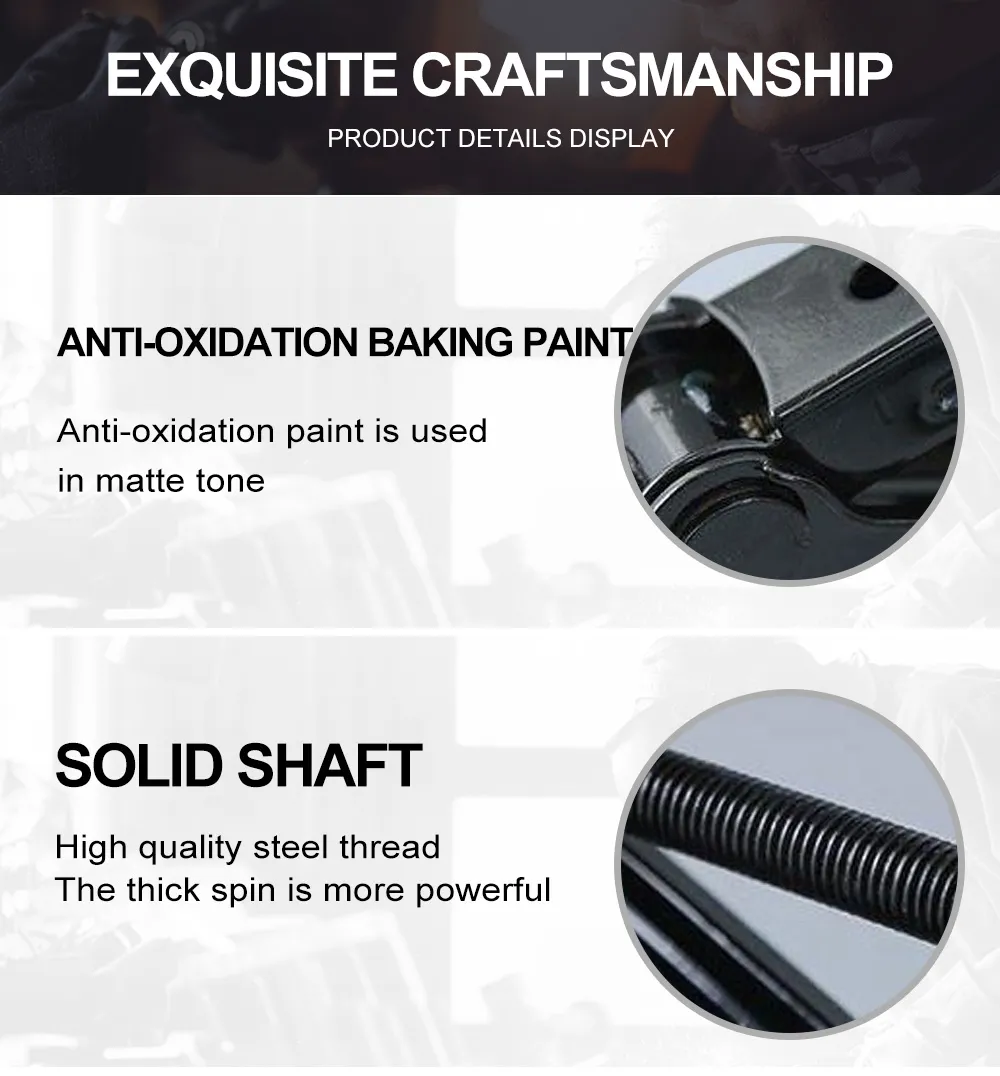
The primary material for ton scissor jack construction is typically carbon steel, specifically AISI 1045 or equivalent. This steel grade provides a balance of tensile strength (approximately 570 MPa), yield strength (approximately 310 MPa), and weldability, crucial for fabricating the scissor linkage. Critical components like the gear drive and screw mechanism are often manufactured from case-hardened steel (e.g., AISI 8620) to enhance surface hardness and wear resistance. The baseplate and supporting structures commonly utilize thicker gauge steel for increased stability. Manufacturing begins with steel plate cutting, typically via laser or plasma cutting, to achieve precise dimensions. The scissor linkages are then formed through bending and stamping operations. Welding, predominantly shielded metal arc welding (SMAW) or gas metal arc welding (GMAW), joins the individual linkages and structural components. Post-welding, stress relieving heat treatment minimizes residual stresses and improves the jack's overall durability. The gear drive is typically manufactured through machining and hobbing processes, requiring tight tolerances to ensure smooth operation and prevent backlash. Surface treatments, including phosphating and powder coating, provide corrosion resistance. Parameter control during welding is paramount; maintaining appropriate heat input and shielding gas coverage prevents porosity and ensures weld integrity. The hardness of case-hardened components is meticulously controlled via carburizing and quenching processes, typically verified through Rockwell hardness testing (HRC scale).

Performance & Engineering
The performance of a ton scissor jack is fundamentally governed by the principles of mechanical advantage and stress analysis. The lifting capacity is directly related to the applied force at the handle and the mechanical advantage of the scissor linkage. Force analysis involves calculating the forces acting on each member of the linkage, considering the load, geometry, and friction within the joints. Environmental resistance is a critical performance aspect. Exposure to moisture, corrosive agents, and temperature fluctuations can compromise the jack’s structural integrity. Corrosion prevention strategies, including surface coatings and material selection, are essential. Compliance requirements often necessitate adherence to safety standards, such as ASME B30.1 (Slings, Alloys Steel Chain, and Synthetic Slings) for load handling equipment. The functional implementation relies on a robust gear and screw mechanism to translate rotational force into linear extension of the scissor linkage. Bearing surfaces within the linkage are often lubricated with high-viscosity grease to minimize friction and wear. Stability is also a key engineering consideration; the baseplate design must provide sufficient support to prevent tipping or instability during lifting. Finite Element Analysis (FEA) is frequently employed during the design phase to optimize structural components and predict stress concentrations under various load conditions. Fatigue life assessment is also performed to determine the jack's resistance to repeated loading and unloading cycles.
Technical Specifications
| Parameter | Unit | Typical Value (10 Ton Jack) | Tolerance |
|---|---|---|---|
| Lifting Capacity | Ton | 10 | ±5% |
| Minimum Lift Height | mm | 280 | ±10mm |
| Maximum Lift Height | mm | 460 | ±10mm |
| Base Width | mm | 180 | ±5mm |
| Base Length | mm | 350 | ±5mm |
| Net Weight | kg | 35 | ±2kg |
Failure Mode & Maintenance
Common failure modes in ton scissor jacks include fatigue cracking at weld joints, particularly at points of high stress concentration. This is exacerbated by repeated loading and unloading cycles. Another prevalent failure mode is gear tooth wear, leading to reduced lifting efficiency and eventual mechanism seizure. Corrosion, especially in humid environments, can cause significant degradation of steel components, weakening the structure and impairing functionality. Delamination of the surface coating provides a pathway for corrosion to initiate. Screw thread stripping, caused by excessive force or improper lubrication, can render the jack inoperable. Failure analysis often reveals that many failures are a consequence of inadequate maintenance. Recommended maintenance procedures include regular lubrication of all moving parts with a high-viscosity grease, inspection for weld cracks and corrosion, and periodic tightening of bolts and fasteners. A thorough visual inspection should be performed before each use, checking for signs of damage or wear. If fatigue cracking is detected, the jack should be immediately removed from service. Replacement of worn gear teeth or stripped screws is crucial for restoring functionality. Proper storage in a dry environment is essential for preventing corrosion. Preventive maintenance schedules, documented and adhered to, significantly extend the lifespan and enhance the safety of the scissor jack. Regular load testing, while less common, can proactively identify structural weaknesses before catastrophic failure.
Industry FAQ
Q: What is the impact of steel grade on the jack's overall lifespan?
A: The steel grade directly impacts the jack’s fatigue resistance and load-bearing capacity. Higher tensile strength steels, like AISI 1045, offer improved fatigue life but may be more susceptible to brittle fracture if not properly heat-treated. Lower grades may yield more easily under load, leading to permanent deformation and reduced lifespan. The correct steel grade, combined with appropriate heat treatment, is crucial for maximizing durability.
Q: How does environmental exposure affect the jack's performance?
A: Environmental exposure, particularly to moisture and corrosive agents, significantly accelerates corrosion. Corrosion weakens the steel structure, reducing its load capacity and increasing the risk of failure. Temperature fluctuations can also induce thermal stresses, contributing to fatigue cracking. Protective coatings, such as powder coating or galvanizing, mitigate these effects.
Q: What is the significance of the locking mechanism, and what failure modes are associated with it?
A: The locking mechanism is a critical safety feature that prevents the jack from lowering under load. Failure modes include pawl wear, ratchet tooth damage, and spring failure. A malfunctioning locking mechanism poses a severe safety hazard. Regular inspection and replacement of worn components are essential.
Q: What are the limitations of scissor jacks compared to hydraulic jacks?
A: Scissor jacks typically have a slower lifting speed and require more physical effort than hydraulic jacks. They also generally have a lower lifting capacity for a given size and weight. However, scissor jacks are often more robust and less prone to leaks than hydraulic jacks, making them suitable for applications where reliability and minimal maintenance are priorities.
Q: What is the recommended inspection frequency for a heavily used scissor jack in an automotive repair shop?
A: For a heavily used jack, a visual inspection should be conducted before every use. A more detailed inspection, including checking weld integrity, lubrication levels, and locking mechanism functionality, should be performed weekly. A comprehensive inspection, involving load testing and component replacement if necessary, should be conducted annually.
Conclusion
The ton scissor jack, while a seemingly simple device, embodies significant engineering principles related to material science, mechanics, and safety. Its performance is critically dependent on the selection of appropriate materials, precise manufacturing processes, and rigorous quality control. Understanding the potential failure modes and implementing a proactive maintenance schedule are paramount for ensuring safe and reliable operation.
Looking forward, advancements in material science, such as the adoption of high-strength low-alloy (HSLA) steels and advanced coatings, could further enhance the durability and corrosion resistance of scissor jacks. Continued refinement of manufacturing techniques, including robotic welding and automated inspection, can improve consistency and reduce the risk of defects. Ultimately, a comprehensive understanding of the underlying engineering principles is essential for optimizing the design, manufacturing, and maintenance of these vital lifting devices.
