Introduction
Tool trolleys, specifically those finished in blue powder coat, represent a critical component in modern industrial organization and workflow efficiency. Positioned within the broader landscape of material handling equipment, their primary function is the secure and mobile storage of tools, parts, and equipment utilized in manufacturing, maintenance, repair, and operations (MRO). Unlike static storage solutions such as tool chests or wall-mounted racks, tool trolleys facilitate the point-of-work availability of essential items, reducing downtime and improving operational speed. The blue finish, commonly applied via electrostatic powder coating, offers a balance between aesthetic identification, corrosion resistance, and durability, addressing a key pain point in industrial environments susceptible to moisture, chemicals, and abrasive impact. Core performance characteristics of a tool trolley are defined by its load capacity, maneuverability, drawer organization, and structural integrity – all factors that directly influence the productivity and safety of the end-user. This guide provides a comprehensive technical overview of tool trolley blue, addressing materials, manufacturing, performance, failure modes, and relevant industry standards.
Material Science & Manufacturing
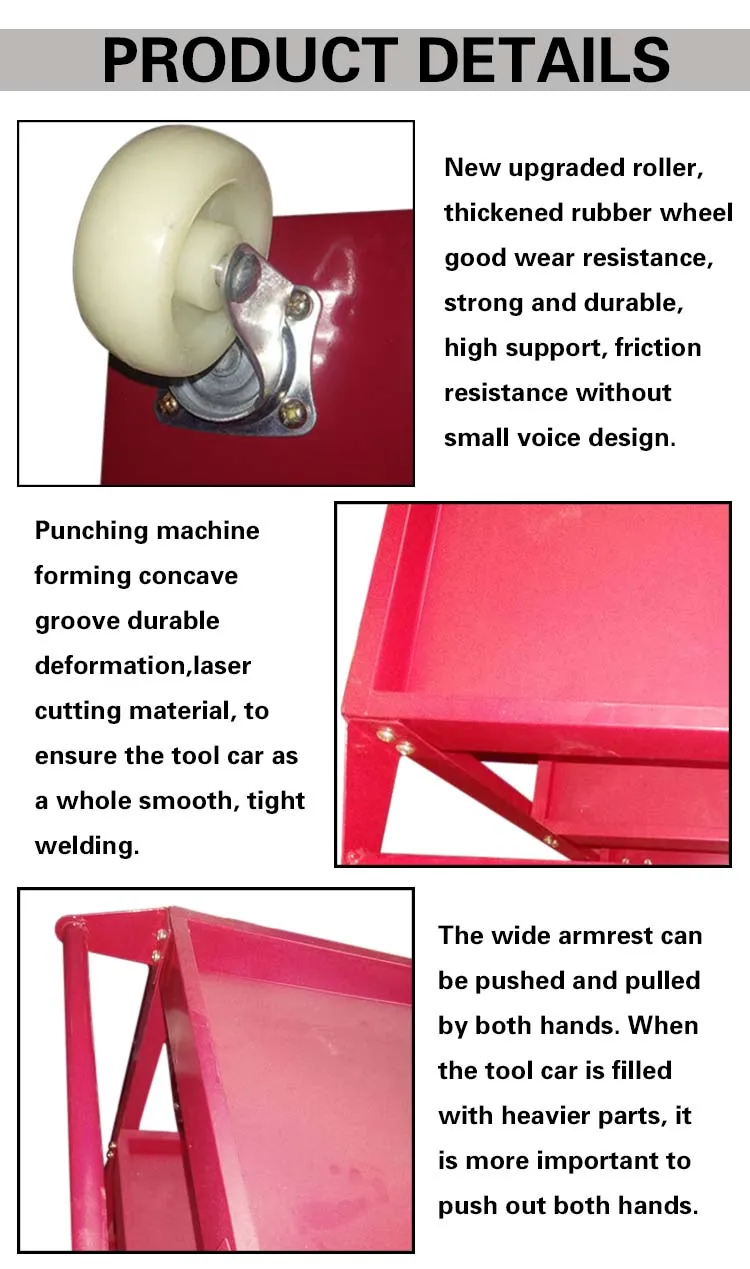
The construction of a typical tool trolley blue involves a combination of materials selected for their specific properties. The primary structural components are generally manufactured from cold-rolled steel, chosen for its high strength-to-weight ratio and weldability. Steel grade selection (typically SAE 1008 or equivalent) dictates the trolley's ultimate load-bearing capacity. Drawer fronts and sides are also typically steel, but thinner gauge, allowing for easier operation. Drawer slides are frequently constructed from heavy-duty polymer composites, offering low friction and load distribution. The casters, essential for maneuverability, are typically made of polyurethane on a steel core, providing a balance of durability, load capacity, and floor protection.
Manufacturing processes begin with steel sheet metal cutting, typically utilizing laser or plasma cutting for precision. Forming processes – bending, stamping, and pressing – are then employed to create the trolley's frame and drawer components. Welding, predominantly MIG (Gas Metal Arc Welding) or TIG (Gas Tungsten Arc Welding), joins the structural elements. Welding parameter control – amperage, voltage, wire feed speed, and shielding gas composition – are crucial to ensure weld integrity, preventing cracking and porosity. Following fabrication, the entire assembly undergoes surface preparation: degreasing, phosphating, and then electrostatic powder coating. The powder coating process, utilizing a typically epoxy-polyester blend for durability and color retention, involves applying an electrically charged powder to the grounded metal, followed by curing in an oven at temperatures between 180-200°C. This creates a robust, corrosion-resistant finish. Quality control at each stage – dimensional accuracy, weld inspection (visual and potentially NDT - Non-Destructive Testing), and coating thickness verification – are vital to ensure product reliability.
Performance & Engineering
Tool trolley performance is critically linked to its structural integrity under load. Force analysis involves considering both static and dynamic loads. Static load refers to the weight of tools and parts stored within the trolley, while dynamic load accounts for forces experienced during movement – acceleration, deceleration, and impacts. Finite Element Analysis (FEA) is commonly employed during the design phase to optimize the frame geometry and material thickness, ensuring the trolley can withstand anticipated stresses without deformation or failure. Drawer slide engineering focuses on minimizing friction while maximizing load capacity. Linear bearing principles are applied, with slide mechanisms designed to distribute weight evenly across the entire bearing surface. Caster selection and mounting configuration also play a significant role. The caster's swivel radius and load capacity directly affect maneuverability, particularly in confined spaces.
Environmental resistance is also a key performance consideration. The powder coat finish provides a degree of protection against corrosion, but exposure to harsh chemicals or prolonged humidity can lead to degradation. Material compatibility is therefore important; the trolley should be suitable for the intended operating environment. Compliance requirements vary by region, but generally focus on safety standards such as caster braking performance (ensuring the trolley remains stationary on slopes), drawer interlock mechanisms (preventing drawers from opening during transport), and overall structural stability. Adherence to ergonomic principles is also crucial, influencing handle height, drawer opening angles, and overall trolley dimensions to minimize strain on operators.
Technical Specifications
| Parameter | Specification | Test Method | Tolerance |
|---|---|---|---|
| Load Capacity (Total) | 500 kg (1102 lbs) | Static Load Test – ASTM E499 | ± 10% |
| Load Capacity (Per Drawer) | 50 kg (110 lbs) | Static Load Test – Internal Procedure | ± 5% |
| Frame Material | Cold-Rolled Steel (SAE 1008 Equivalent) | Material Certification | Chemical Composition per ASTM A36 |
| Caster Material | Polyurethane on Steel Core | Hardness Test – Shore D | Shore D 70 ± 5 |
| Powder Coating Thickness | 60-80 µm (2.36 – 3.15 mils) | Magnetic Thickness Gauge – ISO 2808 | ± 10% |
| Drawer Slide Type | Full Extension, Ball Bearing | Load Capacity & Cycle Test | 10,000 Cycles @ 50kg |
Failure Mode & Maintenance
Tool trolleys are subject to several potential failure modes. Fatigue cracking can occur in the frame, particularly around weld points, due to repeated loading and unloading cycles. This is exacerbated by poor weld quality or the presence of stress concentrators. Drawer slide failure typically manifests as binding or excessive play, resulting from bearing wear or corrosion. Corrosion, particularly in humid or corrosive environments, can affect the steel frame and casters, leading to reduced strength and functionality. Degradation of the powder coat finish, caused by abrasion or chemical exposure, reduces corrosion resistance and aesthetic appeal. Caster failure, including wheel cracking or bearing seizure, is a common issue stemming from overloading or impact damage. Oxidation of steel components can also occur over time, particularly if the powder coating is compromised.
Preventative maintenance is crucial to extend the trolley's lifespan. Regular inspection for weld cracks, corrosion, and loose fasteners is recommended. Lubrication of drawer slides with a silicone-based lubricant reduces friction and prevents binding. Periodic cleaning of the powder coat finish with a mild detergent removes contaminants and maintains its protective properties. Caster inspection should focus on wheel condition and bearing smoothness. Replacement of worn or damaged casters is essential. In cases of significant corrosion, localized repair with a rust converter followed by touch-up painting may be necessary. For heavily loaded trolleys, periodic torque checks of all fasteners are advisable to ensure structural integrity. Avoid exceeding the specified load capacity, and protect the trolley from prolonged exposure to harsh chemicals or extreme temperatures.
Industry FAQ
Q: What is the primary difference between a powder-coated finish and a wet-painted finish in terms of durability for a tool trolley?
A: Powder coating generally offers superior durability compared to wet painting. Powder coating creates a thicker, more uniform coating that is more resistant to chipping, scratching, and corrosion. The electrostatic application and curing process results in a harder, more chemically resistant finish. Wet paint, while offering a wider range of color options, typically requires multiple coats and is more susceptible to runs, drips, and uneven coverage, leading to premature failure.
Q: How do I determine the appropriate load capacity for a tool trolley based on the tools I need to store?
A: Begin by listing all the tools and parts you intend to store in the trolley, and accurately weigh each item. Add up the total weight. It's crucial to add a safety margin of at least 20% to this weight to account for dynamic loading and potential future additions. Select a trolley with a load capacity that exceeds this calculated value.
Q: What type of caster is most suitable for use on epoxy-coated concrete floors?
A: Polyurethane casters on steel cores are typically the best choice for epoxy-coated concrete floors. Polyurethane provides a non-marking, abrasion-resistant surface that won't damage the epoxy coating. The steel core offers excellent durability and load-bearing capacity. Avoid hard rubber or nylon casters, as they can leave marks or scuffs.
Q: What are the key indicators that a drawer slide is about to fail and needs replacement?
A: Key indicators include binding or sticking drawers, excessive play or wobble, unusual noises during operation (e.g., grinding or squeaking), and visible damage to the slide components (e.g., bent or broken rails). If lubrication does not resolve the issue, replacement is recommended to prevent further damage and ensure safe operation.
Q: How can I prevent corrosion on a tool trolley used in a high-humidity environment?
A: Maintaining a clean and dry environment is paramount. Regularly wipe down the trolley to remove moisture and contaminants. Inspect the powder coat finish for any chips or scratches, and touch up damaged areas promptly. Consider using a dehumidifier in the work area to reduce humidity levels. Storing tools and parts in sealed containers within the trolley can also help prevent corrosion.
Conclusion
The tool trolley blue, as a vital component of industrial workflows, requires careful consideration of material science, manufacturing processes, and performance characteristics. The combination of cold-rolled steel construction, robust powder coat finishing, and appropriately engineered drawer and caster systems dictates its longevity and effectiveness. Understanding potential failure modes and implementing preventative maintenance procedures are essential to maximizing the return on investment and ensuring operator safety. The selection of the correct tool trolley necessitates a thorough assessment of load requirements, environmental conditions, and compliance standards.
Future developments in tool trolley technology may focus on incorporating smart features, such as integrated tool tracking systems, ergonomic enhancements based on anthropometric data, and the use of more sustainable materials. Furthermore, advancements in powder coating technology could lead to even more durable and chemically resistant finishes. By continuing to prioritize robust design, meticulous manufacturing, and proactive maintenance, the tool trolley blue will remain an indispensable asset in industrial settings for years to come.
