Introduction
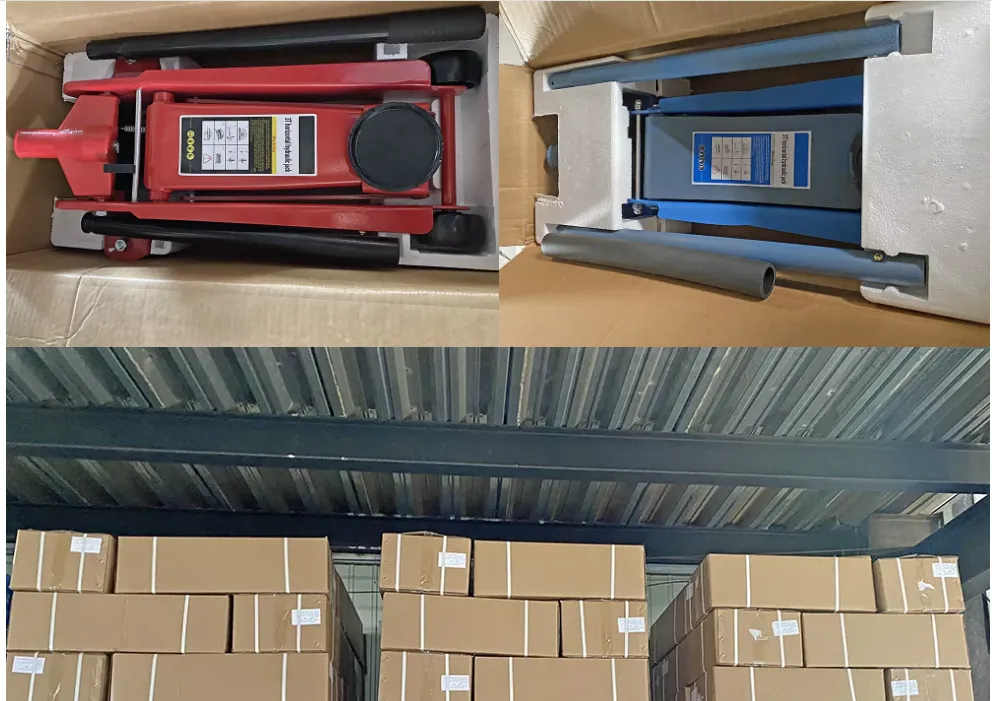
The 2-ton hydraulic floor jack is a critical piece of equipment in automotive maintenance and repair, falling within the lifting and positioning category of workshop tools. Its primary function is to provide a controlled lifting mechanism for vehicles, enabling technicians to perform tasks such as tire changes, brake repairs, and undercarriage maintenance. Unlike pneumatic lifts or screw jacks, hydraulic jacks utilize Pascal's principle – fluid pressure – to generate significant lifting force with minimal physical exertion. Within the automotive supply chain, it represents a mid-tier component, reliant on steel manufacturing, hydraulic component production, and final assembly. Core performance characteristics include lifting capacity (2 tons / 4000 lbs), minimum lifting height, maximum lifting height, and operational safety features such as overload protection and a stable base. A key industry pain point revolves around ensuring long-term reliability, preventing hydraulic fluid leaks, and maintaining consistent lifting performance under repeated stress cycles. Furthermore, meeting stringent safety standards and addressing concerns about corrosion resistance are paramount.
Material Science & Manufacturing
The construction of a 2-ton auto jack relies on a combination of materials selected for their strength, durability, and cost-effectiveness. The jack's housing and lifting arm are typically constructed from carbon steel, specifically AISI 1045 or equivalent. This grade provides a good balance of tensile strength (around 570 MPa) and weldability. The hydraulic cylinder is often made from honed steel tubing, requiring tight tolerances to prevent fluid leakage. Piston seals are commonly manufactured from nitrile butadiene rubber (NBR) due to its excellent resistance to hydraulic fluids and abrasion. The hydraulic fluid itself is typically a mineral oil-based formulation, specifically designed for hydraulic systems, with viscosity ranging from 22-46 cSt at 40°C. Manufacturing processes include steel plate forming (for the housing), welding (to join structural components), and precision machining (for the cylinder and piston). Critical parameter control during welding includes maintaining appropriate heat input to prevent distortion and ensuring complete penetration of the weld. Cylinder honing requires precise control of surface finish to minimize friction and prevent seal damage. Heat treatment of the steel components is crucial for achieving the desired hardness and tensile strength. Quality control involves hydrostatic testing of the cylinder to verify its pressure-holding capacity and dimensional inspections of critical components.
Performance & Engineering
The performance of a 2-ton auto jack is governed by fundamental principles of fluid mechanics and structural engineering. The lifting force is calculated using the formula F = P A, where F is the force, P is the pressure applied to the hydraulic fluid, and A is the area of the piston. The mechanical advantage of the jack is determined by the ratio of the piston areas. Force analysis focuses on the stress distribution within the lifting arm and the cylinder under load. Finite Element Analysis (FEA) is frequently employed to optimize the design and minimize stress concentrations, preventing premature failure. Environmental resistance is a critical concern. The jack must withstand exposure to moisture, road salt, and temperature fluctuations. Corrosion prevention strategies include applying a phosphate coating followed by a durable paint finish. Compliance requirements vary by region but typically include adherence to ASME PASE 2015 (Safety Standard for Portable Hydraulic Lifting Devices) and CE marking for European markets. The stability of the jack is engineered through a wide base and a low center of gravity. Locking mechanisms, employing mechanical ratchets or spring-loaded pins, are essential to prevent accidental lowering of the vehicle during maintenance. Fatigue analysis is performed to assess the jack's durability under repeated loading cycles.
Technical Specifications
| Parameter | Specification | Testing Standard | Tolerance |
|---|---|---|---|
| Lifting Capacity | 2000 kg / 4400 lbs | ASME PASE 2015 | ±5% |
| Minimum Lifting Height | 75 mm / 3 inches | Internal QC Procedure | ±5 mm |
| Maximum Lifting Height | 380 mm / 15 inches | Internal QC Procedure | ±10 mm |
| Hydraulic Fluid Type | ISO VG 32 Hydraulic Oil | ISO 3448 | Viscosity within range |
| Pump Stroke Length | 150 mm / 6 inches | Internal QC Procedure | ±2 mm |
| Steel Grade (Housing/Arm) | AISI 1045 | ASTM A36 | Chemical Composition per ASTM |
Failure Mode & Maintenance
Common failure modes in 2-ton auto jacks include hydraulic fluid leaks, piston seal failure, bending or fracturing of the lifting arm, and corrosion of structural components. Hydraulic fluid leaks often originate from worn or damaged seals, loose fittings, or cracks in the cylinder. Piston seal failure can result from abrasion, chemical degradation, or excessive heat. Lifting arm failure typically occurs due to fatigue cracking caused by repeated loading or overloading. Corrosion is accelerated by exposure to moisture and road salt. Failure analysis techniques include visual inspection for cracks and corrosion, hydrostatic testing to identify leaks, and metallurgical analysis to determine the root cause of material failure. Maintenance procedures include regular inspection of the jack for damage, checking the hydraulic fluid level, and lubricating moving parts. Hydraulic fluid should be replaced every 12-24 months, depending on usage. Seals should be replaced proactively during scheduled maintenance. The lifting arm should be inspected for signs of bending or cracking. Corrosion can be mitigated by applying a protective coating and storing the jack in a dry environment. Overloading the jack significantly reduces its lifespan and increases the risk of catastrophic failure. Regular visual inspection for any signs of fluid leaks, structural deformation, or compromised locking mechanisms is paramount.
Industry FAQ
Q: What is the typical lifespan of a 2-ton auto jack under regular commercial use?
A: Under regular commercial use (daily operation in a repair shop), a well-maintained 2-ton auto jack typically has a lifespan of 3-5 years. This is highly dependent on the frequency of use, the loads lifted, and the quality of maintenance performed. Higher-quality jacks with robust seals and corrosion protection will generally last longer.
Q: What are the key differences between single-stage and double-stage hydraulic jacks?
A: Single-stage jacks require more pump strokes to reach the maximum lifting height but offer more precise control. Double-stage jacks provide a faster initial lift with fewer strokes, making them more efficient for lifting vehicles quickly, but may have slightly less precise height adjustment.
Q: How critical is the quality of the hydraulic fluid in preventing premature jack failure?
A: The quality of the hydraulic fluid is extremely critical. Using the incorrect fluid type (e.g., automotive brake fluid) can cause seal swelling, corrosion, and reduced lubricity, leading to rapid jack failure. ISO VG 32 hydraulic oil is the recommended standard. Maintaining fluid cleanliness is also important, as contaminants can accelerate wear.
Q: What safety features are essential when selecting a 2-ton auto jack?
A: Essential safety features include a robust locking mechanism (ratchet or pin), overload protection (a bypass valve that prevents lifting beyond the rated capacity), and a stable base design. A properly functioning release valve is also crucial for controlled lowering.
Q: What is the impact of temperature on the performance of a hydraulic jack?
A: Temperature can significantly impact performance. Cold temperatures increase fluid viscosity, slowing down lifting speed and potentially reducing efficiency. High temperatures can reduce fluid viscosity and cause seals to expand, increasing the risk of leaks. Hydraulic fluids designed for a wide temperature range are recommended.
Conclusion
The 2-ton hydraulic floor jack remains an indispensable tool in the automotive industry, providing a reliable and efficient means of lifting vehicles for maintenance and repair. Its performance is fundamentally rooted in principles of fluid mechanics and material science, demanding careful attention to material selection, manufacturing processes, and quality control. Addressing the inherent pain points – hydraulic leakage, structural fatigue, and corrosion – requires diligent maintenance practices and adherence to industry safety standards.
Future advancements in jack technology may focus on integrating smart sensors for load monitoring and predictive maintenance, employing lightweight materials like aluminum alloys to reduce weight, and developing more environmentally friendly hydraulic fluids. Ensuring consistent performance and longevity will remain paramount, ultimately impacting the efficiency and safety of automotive workshops worldwide.
