Introduction
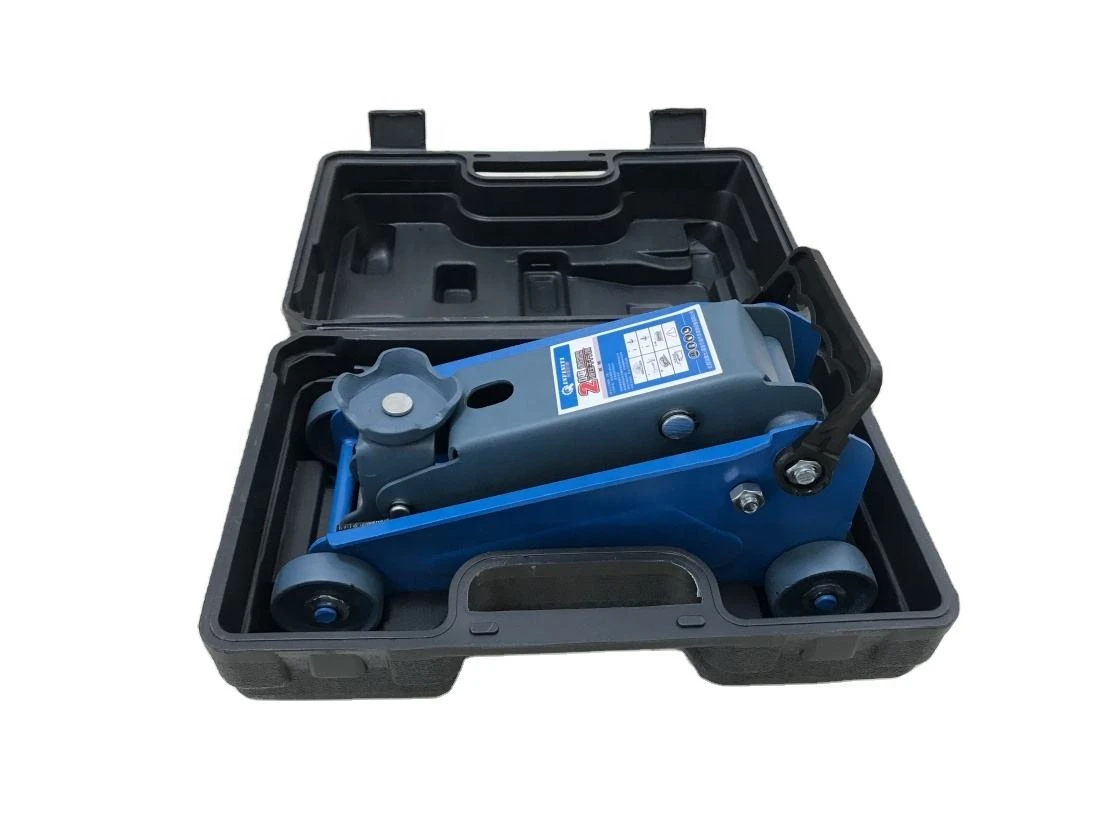
A 2-ton hydraulic floor jack with a carrying case is a ubiquitous tool in automotive maintenance and repair, functioning as a critical component in vehicle lifting for various procedures, including tire changes, brake work, and undercarriage inspections. Positioned within the broader automotive lifting equipment supply chain, it serves as a fundamental piece of equipment for professional mechanics, automotive enthusiasts, and emergency roadside assistance services. Its core performance characteristics are defined by its lifting capacity (2 tons or approximately 4,400 lbs), lift range (typically 5.1" to 33.5"), and operational safety features. The presence of a carrying case facilitates portability and protection against damage and corrosion during storage and transport. Modern 2-ton jacks increasingly incorporate features like dual piston designs for faster lifting, overload protection valves, and robust steel construction to meet stringent safety standards and user demands. Core industry pain points include maintaining consistent quality control to prevent hydraulic seal failures, ensuring long-term durability against corrosive environments, and adhering to evolving safety regulations.
Material Science & Manufacturing
The construction of a 2-ton floor jack relies on a combination of materials chosen for their strength, durability, and cost-effectiveness. The main body and lifting arm are typically manufactured from carbon steel (AISI 1045 or equivalent) due to its high tensile strength and weldability. Hydraulic cylinders utilize a high-strength alloy steel (typically 4140 or similar) for the cylinder walls and piston rods to withstand the substantial pressures generated during operation. Seals within the hydraulic system are commonly made from nitrile rubber (NBR) or hydrogenated nitrile butadiene rubber (HNBR) for their compatibility with hydraulic fluids and resistance to wear. The carrying case is generally constructed from polypropylene (PP) or high-density polyethylene (HDPE) via injection molding, offering impact resistance and lightweight characteristics.
Manufacturing processes involve several critical stages. Steel components undergo cutting, stamping, and welding processes. Welding, predominantly shielded metal arc welding (SMAW) or gas metal arc welding (GMAW), must adhere to AWS D1.1 standards to ensure weld integrity and structural soundness. Hydraulic cylinder production involves honing and polishing the internal cylinder bore to achieve a precise surface finish, crucial for seal longevity. The hydraulic fluid (typically ISO VG 32 or equivalent) is filled and the system is pressure-tested multiple times to identify leaks. Injection molding of the case requires precise temperature and pressure control to achieve dimensional accuracy and a consistent surface finish. Key parameters monitored during manufacturing include weld penetration depth, hydraulic fluid viscosity, cylinder bore roughness, and plastic melt flow index. Quality control is paramount, with non-destructive testing (NDT) methods like ultrasonic testing employed to detect internal flaws in critical components.
Performance & Engineering
The performance of a 2-ton floor jack is fundamentally governed by Pascal’s Law, which dictates the relationship between pressure applied to a confined fluid and the force it exerts. The hydraulic system amplifies the force applied to the handle, enabling the lifting of heavy loads. Force analysis reveals that the stress on the hydraulic cylinder and lifting arm increases exponentially with the load. Engineering design focuses on minimizing stress concentrations through careful geometric design and material selection. Environmental resistance is a critical consideration; exposure to moisture, road salts, and extreme temperatures can lead to corrosion and seal degradation. Protective coatings, such as zinc plating or powder coating, are applied to steel components to mitigate corrosion.
Compliance requirements are defined by industry standards such as ASME PALD (Portable Automotive Lift Device) which sets forth safety guidelines for the design, construction, and testing of floor jacks. This standard mandates specific testing procedures, including load testing, durability testing, and stability testing. The jack's stability is directly related to its base width and the position of the lifting point relative to the center of gravity. A wider base provides greater stability. The functional implementation relies on a precisely engineered hydraulic circuit, incorporating a release valve to control the lowering speed and a safety overload valve to prevent exceeding the rated capacity. The pump mechanism, typically a manual screw-type pump, must provide consistent flow rate and efficient energy transfer.
Technical Specifications
| Parameter | Specification | Testing Method | Tolerance |
|---|---|---|---|
| Lifting Capacity | 2 Ton (4,400 lbs) | Static Load Test (ASME PALD) | ±5% |
| Minimum Lift Height | 5.1 inches (130 mm) | Dimensional Measurement | ±0.1 inches |
| Maximum Lift Height | 33.5 inches (850 mm) | Dimensional Measurement | ±0.1 inches |
| Handle Length | 18.5 inches (470 mm) | Dimensional Measurement | ±0.2 inches |
| Pump Strokes per Inch Lift | Approximately 5 | Operational Measurement | ±1 stroke |
| Hydraulic Fluid Type | ISO VG 32 Equivalent | Viscosity Measurement (ASTM D445) | ±5% viscosity |
Failure Mode & Maintenance
Common failure modes for 2-ton floor jacks include hydraulic seal failure leading to pressure loss, cylinder wall corrosion due to moisture ingress, weld cracking in the lifting arm under fatigue loading, and deformation of the lifting saddle. Fatigue cracking is a particularly insidious failure mode, often initiated at stress concentration points around weld joints. Delamination of the hydraulic seals can occur due to incompatibility with the hydraulic fluid or excessive heat. Oxidation of the hydraulic fluid can lead to sludge formation and reduced system efficiency. Corrosion, particularly in coastal environments, can weaken steel components, reducing their load-bearing capacity.
Preventive maintenance is crucial for extending the jack's lifespan. This includes regular inspection of the hydraulic fluid level and condition (replacing it annually or as needed), lubrication of moving parts, checking for signs of corrosion, and inspecting weld joints for cracks. If the jack exhibits a slow descent or inability to maintain lift, it likely indicates a seal failure and requires immediate attention. Proper storage in a dry environment is essential to prevent corrosion. Avoid exceeding the rated capacity. For weld cracks, professional repair by a certified welder is necessary. Replacement of worn seals should be performed using manufacturer-approved parts. Thoroughly bleed the system after any maintenance involving the hydraulic fluid.
Industry FAQ
Q: What is the typical lifespan of a 2-ton hydraulic floor jack under professional use?
A: Under heavy professional use (daily operation in an automotive shop), a well-maintained 2-ton hydraulic floor jack typically has a lifespan of 5-7 years. Lifespan is highly dependent on maintenance schedules, load frequency, and operating environment. Consistent adherence to preventative maintenance procedures, including regular fluid changes and seal inspections, can significantly extend its useful life.
Q: What are the key differences between single-piston and dual-piston jacks, and how do they affect performance?
A: Single-piston jacks utilize one hydraulic cylinder to lift the load, resulting in a slower lifting speed. Dual-piston jacks incorporate two cylinders, effectively doubling the pumping capacity and reducing the number of strokes required to reach the desired lift height. This translates to faster lifting and increased efficiency, particularly advantageous in high-volume repair shops.
Q: How important is the quality of the hydraulic fluid, and what type is recommended?
A: The quality of the hydraulic fluid is paramount. Using incorrect fluid can cause seal damage, corrosion, and reduced system performance. ISO VG 32 equivalent hydraulic fluid is the generally recommended type, as it provides adequate lubrication and viscosity for the operating temperatures and pressures involved. Avoid using automotive brake fluid or other substitutes, as they can be incompatible with the jack’s seals.
Q: What safety features should be present in a high-quality 2-ton floor jack?
A: Essential safety features include an overload protection valve that prevents lifting beyond the rated capacity, a stable base design to minimize tipping risk, and a slow-release control valve for controlled lowering. A robust locking mechanism that securely holds the load at the desired height is also critical. Conformance to ASME PALD standards indicates adherence to rigorous safety requirements.
Q: What are the implications of using a floor jack in environments with high humidity or exposure to road salts?
A: High humidity and road salts significantly accelerate corrosion of steel components. This can weaken the lifting arm, cylinder walls, and other critical parts, potentially leading to catastrophic failure. Regular cleaning with a corrosion inhibitor and the application of protective coatings (such as wax or oil) are recommended to mitigate these risks. Consider using a jack with enhanced corrosion-resistant materials or coatings in such environments.
Conclusion
The 2-ton hydraulic floor jack with a carrying case remains an indispensable tool in the automotive industry, providing a reliable and efficient means of lifting vehicles for maintenance and repair. Its performance is fundamentally rooted in the principles of hydraulics, materials science, and meticulous manufacturing processes. Adherence to stringent industry standards, such as ASME PALD, is vital to ensure operational safety and longevity. Understanding the potential failure modes and implementing a consistent preventative maintenance program are essential for maximizing the jack’s service life and minimizing the risk of accidents.
Future advancements in floor jack technology are likely to focus on enhanced safety features, improved ergonomics, and increased durability through the use of advanced materials and coatings. Integration of smart technologies, such as load sensors and remote monitoring capabilities, could further enhance safety and efficiency. Ultimately, the selection and proper utilization of a 2-ton floor jack represents a critical investment in safety and productivity for both professional mechanics and automotive enthusiasts.
