
Introduction
A 2-ton hydraulic floor jack is a mechanical lifting device utilized extensively in automotive repair, industrial maintenance, and construction. Positioned as a critical component within the vehicle servicing and heavy equipment handling chain, it provides a controlled lifting mechanism for various applications, including vehicle tire changes, undercarriage repairs, and equipment repositioning. Its core performance relies on Pascal's principle, converting relatively small manual force into substantial lifting capacity. Modern 2-ton hydraulic floor jacks typically feature a steel construction for durability, integrated safety mechanisms such as overload protection and controlled lowering, and a range of lift heights to accommodate diverse operational needs. The industry faces challenges regarding long-term seal integrity, preventing metal-to-metal contact during operation, and ensuring consistent performance across varying temperature ranges. This guide provides an in-depth technical overview of these jacks, encompassing material science, manufacturing processes, performance characteristics, failure modes, and relevant industry standards.
Material Science & Manufacturing
The primary material in a 2-ton hydraulic floor jack is steel, specifically AISI 1045 or equivalent carbon steel, selected for its high yield strength (approximately 360 MPa) and good weldability. The hydraulic cylinder utilizes honed steel tubing to minimize friction and maximize seal life. Piston rods are typically manufactured from medium carbon steel and coated with hard chrome plating (approximately 25 μm thickness) to provide corrosion resistance and enhanced wear protection. Seals are predominantly composed of nitrile butadiene rubber (NBR) with a hardness of 70-90 Shore A, chosen for its compatibility with hydraulic fluid and resistance to deformation under pressure. Manufacturing begins with steel plate cutting and forming using CNC laser cutting and hydraulic presses. The hydraulic cylinder is produced via deep drawing and honing. Welding, primarily shielded metal arc welding (SMAW) and gas metal arc welding (GMAW), joins the structural components. Critical parameters include weld penetration depth, heat input control to minimize distortion, and post-weld heat treatment to relieve residual stresses. The hydraulic system assembly involves precision machining of valve components, careful selection of seal dimensions, and rigorous testing for leak tightness. Quality control measures at each stage include dimensional inspection, non-destructive testing (NDT) via magnetic particle inspection (MPI) to detect surface cracks, and hydrostatic pressure testing of the hydraulic system to verify its integrity.
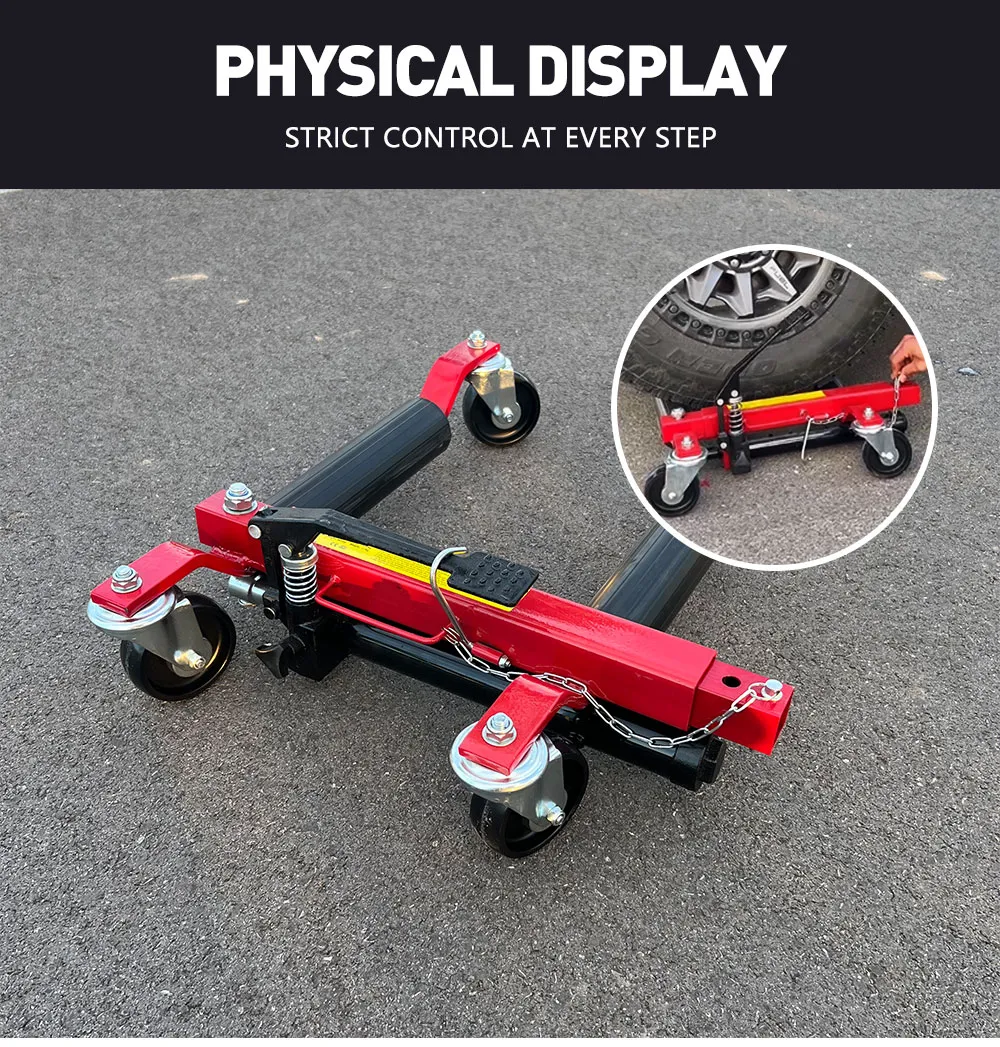
Performance & Engineering
The performance of a 2-ton hydraulic floor jack is fundamentally governed by Pascal’s Law: pressure applied to a confined fluid is transmitted equally in all directions. The force amplification ratio is directly proportional to the ratio of the piston areas. Engineering considerations focus on maintaining structural integrity under load, preventing hydraulic fluid leakage, and ensuring controlled descent. Force analysis involves calculating bending moments on the lifting arm and shear stresses in the cylinder. Finite Element Analysis (FEA) is commonly used to optimize the design and identify potential stress concentration points. Environmental resistance is achieved through surface coatings (powder coating or zinc plating) to protect against corrosion. The lifting mechanism must comply with ASME B30.2 standards, requiring safety features like a pressure relief valve to prevent overloading and a controlled lowering valve to prevent rapid descent. Jack stability is a crucial aspect; the base must have a sufficiently large footprint to prevent tipping, and the lifting saddle must be properly aligned with the vehicle’s jacking points. Fatigue analysis is vital, considering the repetitive loading and unloading cycles during use. Hydraulic fluid selection significantly impacts performance; a viscosity index of 150 or higher is preferred to maintain consistent performance across temperature variations. The system's operational temperature range typically spans from -20°C to 80°C, demanding fluid compatibility and seal resilience within these limits.
Technical Specifications
| Parameter | Specification | Testing Method | Tolerance |
|---|---|---|---|
| Lifting Capacity | 2000 kg (4409 lbs) | Static Load Test | ±5% |
| Minimum Lifting Height | 75 mm (2.95 inches) | Dimensional Measurement | ±3 mm |
| Maximum Lifting Height | 380 mm (15 inches) | Dimensional Measurement | ±5 mm |
| Handle Length | 1400 mm (55.1 inches) | Dimensional Measurement | ±10 mm |
| Hydraulic Fluid Type | ISO VG 32 Hydraulic Oil | Viscosity Measurement (ASTM D445) | ±5 cSt |
| Operating Temperature Range | -20°C to 80°C (-4°F to 176°F) | Performance Test at Extreme Temperatures | ±2°C |
Failure Mode & Maintenance
Common failure modes in 2-ton hydraulic floor jacks include hydraulic seal failure leading to pressure loss, piston corrosion due to moisture ingress, bending or cracking of the lifting arm due to overload, and valve malfunctions causing erratic operation. Failure analysis reveals that seal degradation is often accelerated by fluid contamination and exceeding the operating temperature range. Metal-to-metal contact within the cylinder, arising from seal wear, generates abrasive particles that further compromise seal life. Fatigue cracking of the lifting arm typically initiates at stress concentration points, such as weld joints. Maintenance procedures should include regular inspection of seals for leaks, checking hydraulic fluid level and condition (replacing annually or as needed), lubricating moving parts with appropriate grease, and inspecting the lifting arm for cracks. Prevention of corrosion involves storing the jack in a dry environment and applying a protective coating to exposed metal surfaces. When replacing seals, it’s crucial to use compatible materials and follow the manufacturer’s specifications. Periodic pressure testing can identify early signs of hydraulic system degradation. Avoid exceeding the rated lifting capacity, and always use the jack on a level and stable surface. Inspect the saddle for damage or wear. A thorough inspection should be performed annually, or more frequently in heavy-duty applications.
Industry FAQ
Q: What is the typical lifespan of a 2-ton hydraulic floor jack under moderate commercial use?
A: Under moderate commercial use (e.g., automotive repair shop, 5-10 lifts per day), a well-maintained 2-ton hydraulic floor jack typically has a lifespan of 5-7 years. This is contingent upon consistent adherence to maintenance schedules, avoiding overload conditions, and proper storage practices. Seal degradation is usually the limiting factor.
Q: What are the key considerations when selecting a hydraulic fluid for a 2-ton floor jack?
A: Key considerations include viscosity index (preferably 150 or higher for consistent performance across temperatures), corrosion inhibition properties, compatibility with NBR seals, and resistance to oxidation. ISO VG 32 is a common recommendation, but always verify compatibility with the jack manufacturer's specifications.
Q: How can you mitigate the risk of hydraulic fluid leakage?
A: Regular inspection of seals, ensuring proper torque on fittings, and using high-quality seals are critical. Maintaining hydraulic fluid cleanliness through filtration is also essential. Avoid using abrasive fluids or fluids containing contaminants. Regularly check for any signs of fluid buildup around the seals and connections.
Q: What safety features are essential in a 2-ton hydraulic floor jack?
A: Essential safety features include a pressure relief valve to prevent overloading, a controlled lowering valve to prevent rapid descent, a stable base to prevent tipping, and a safety lock mechanism to prevent accidental lowering. Adherence to ASME B30.2 standards is a critical indicator of safety compliance.
Q: How does temperature affect the performance of a hydraulic floor jack?
A: Lower temperatures increase hydraulic fluid viscosity, potentially slowing down lifting speed and increasing resistance. Higher temperatures can reduce fluid viscosity and accelerate seal degradation. Selecting a fluid with a high viscosity index and operating within the specified temperature range are vital for optimal performance.
Conclusion
The 2-ton hydraulic floor jack remains a fundamental tool in numerous industries, providing a reliable and efficient lifting solution. Its performance is dictated by a complex interplay of material properties, manufacturing precision, and adherence to stringent engineering principles. Understanding the underlying principles of hydraulics, material science, and potential failure modes is critical for ensuring safe and long-term operation.
Continued advancements in seal technology, lightweight materials, and automated control systems will likely drive future improvements in the design and functionality of hydraulic floor jacks. Maintaining a proactive maintenance schedule, utilizing appropriate fluids, and respecting the jack's operational limits are paramount for maximizing its lifespan and ensuring workplace safety.
