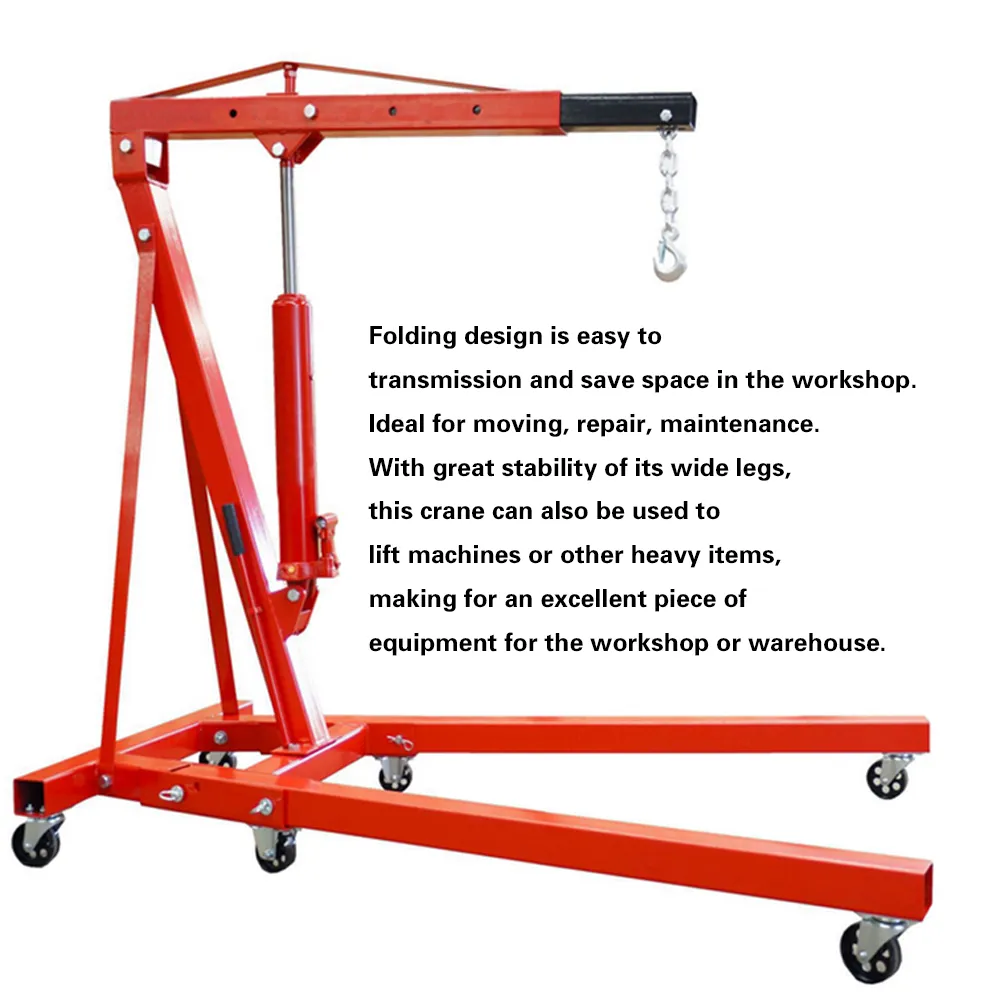
Introduction
Adjustable floor jacks are hydraulically powered lifting devices employed in automotive, industrial, and construction sectors for safely raising heavy loads. Positioned within the broader material handling equipment chain, they represent a critical element for vehicle maintenance, repair, and industrial assembly processes. Core performance characteristics center around lifting capacity, minimum and maximum height reach, stability under load, and operational safety features. The jack’s functionality relies on Pascal’s principle, utilizing a hydraulic fluid system to transmit force. A key industry pain point is ensuring long-term reliability and preventing catastrophic failure under sustained or repeated use, stemming from material degradation and seal integrity issues. Furthermore, maintaining dimensional accuracy and minimizing potential damage to the lifted object are significant operational challenges.
Material Science & Manufacturing
The primary material for the jack’s body and lifting arm is typically high-strength carbon steel, specifically AISI 1045 or equivalent, selected for its tensile strength and weldability. Hydraulic cylinders employ AISI 1046 steel, honed for a smooth internal surface to minimize friction and wear. Piston seals are commonly manufactured from nitrile rubber (NBR) or hydrogenated nitrile butadiene rubber (HNBR) due to their excellent resistance to hydraulic fluid and temperature fluctuations. The hydraulic fluid itself is generally a mineral oil-based fluid, specifically formulated with anti-wear additives and corrosion inhibitors.
Manufacturing involves several key processes. Steel components are typically formed through forging or casting, followed by machining to precise tolerances. Welding, utilizing shielded metal arc welding (SMAW) or gas metal arc welding (GMAW), joins structural elements. Critical welding parameters, including current, voltage, and travel speed, are tightly controlled to prevent porosity and ensure joint strength. Hydraulic cylinder manufacturing involves honing the cylinder bore to achieve a specific surface finish (Ra < 0.8 μm), followed by seal installation. The hydraulic system is assembled under cleanroom conditions to prevent contamination. Finally, the jack undergoes rigorous testing, including static load testing, dynamic load testing, and leak testing, to verify performance and safety.
Performance & Engineering
Force analysis in floor jack design centers on the hydraulic cylinder and lifting arm. The lifting force is calculated using the formula F = P A, where F is the force, P is the hydraulic pressure, and A is the piston area. The lifting arm geometry dictates the mechanical advantage, influencing the required hydraulic pressure. Stability is a critical engineering consideration, addressed by a wide base design and a low center of gravity. Finite Element Analysis (FEA) is employed to simulate stress distribution under maximum load, identifying potential weak points and optimizing structural design. Environmental resistance is addressed through surface coatings, such as powder coating, to prevent corrosion.
Compliance requirements include adherence to ASME B30.1 standards for mobile hydraulic lifts. These standards dictate design, construction, inspection, and maintenance procedures to ensure safe operation. Specifically, the jack must demonstrate a safety factor of at least 2:1, meaning it can withstand twice its rated capacity without failure. Jack stability is assessed through tilt tests, ensuring the jack does not tip over when loaded to its rated capacity on a specified slope. Release valve performance is critical; it must prevent uncontrolled descent in the event of hydraulic system failure. The design must incorporate a bypass mechanism to allow for controlled lowering even with a compromised hydraulic system.
Technical Specifications
| Lifting Capacity (tons) | Minimum Lifting Height (mm) | Maximum Lifting Height (mm) | Pump Handle Strokes per Full Lift |
|---|---|---|---|
| 2 | 75 | 380 | 12 |
| 3 | 70 | 465 | 15 |
| 5 | 85 | 520 | 18 |
| 10 | 90 | 680 | 25 |
| 20 | 110 | 800 | 30 |
| 30 | 120 | 950 | 35 |
Failure Mode & Maintenance
Common failure modes include hydraulic seal degradation leading to fluid leakage, cylinder wall scoring due to contamination, and fatigue cracking in the lifting arm or base. Seal degradation is accelerated by temperature extremes and fluid incompatibility. Cylinder wall scoring occurs when abrasive particles enter the hydraulic system, damaging the honed surface. Fatigue cracking is initiated by stress concentrations at weld points or geometric discontinuities. Oxidation of the hydraulic fluid can also lead to corrosion within the hydraulic system, causing valve malfunctions.
Preventative maintenance is crucial. Regularly check hydraulic fluid levels and inspect for leaks. Replace hydraulic fluid every 12-24 months, or as recommended by the manufacturer. Lubricate all moving parts, including the pump linkage and lifting arm pivot points, with a suitable grease. Inspect the lifting arm and base for cracks or other damage. Regularly inspect and replace worn or damaged seals. Avoid exceeding the rated lifting capacity. Store the jack in a clean, dry environment to prevent corrosion. For repairs, use only manufacturer-approved parts. A full hydraulic system flush should be performed every 36 months to remove contaminants and maintain optimal performance.
Industry FAQ
Q: What is the impact of hydraulic fluid viscosity on jack performance?
A: Hydraulic fluid viscosity directly impacts jack performance. Too low a viscosity can lead to increased leakage and reduced efficiency, while too high a viscosity can cause sluggish operation and increased energy consumption. Optimal viscosity ensures smooth operation and efficient power transmission. Temperature significantly influences viscosity; a fluid with a high viscosity index is preferred to maintain consistent performance across a wide temperature range.
Q: How does the quality of steel affect the lifespan of the jack’s lifting arm?
A: The quality of steel is paramount. Higher carbon content increases hardness but reduces ductility. Lower alloy steels may be less resistant to fatigue cracking. Heat treatment processes, such as quenching and tempering, are critical for achieving the desired balance of strength, toughness, and ductility. Proper surface treatment, like phosphate coating, improves corrosion resistance. A detailed material certification is essential to verify compliance with specified mechanical properties.
Q: What are the best practices for preventing hydraulic fluid contamination?
A: Preventing contamination requires a multi-faceted approach. Use a sealed hydraulic fluid reservoir. Employ filters with a micron rating appropriate for the fluid and system components. Regularly inspect and replace filters. Ensure clean connections during fluid transfer. Avoid introducing contaminants during maintenance procedures. Perform regular fluid analysis to detect the presence of abrasive particles or water.
Q: What is the significance of the safety valve, and how should it be tested?
A: The safety valve (relief valve) is a critical safety component that prevents over-pressurization of the hydraulic system. It’s designed to automatically release fluid if the pressure exceeds the rated limit, preventing catastrophic failure. Testing involves slowly increasing the pressure beyond the rated capacity and verifying that the valve opens at the specified pressure and returns to its closed position when the pressure is reduced. Regular testing ensures the valve is functioning correctly.
Q: What considerations are important when selecting seals for different operating temperatures?
A: Seal selection is highly temperature-dependent. NBR seals are suitable for moderate temperatures (-40°C to 120°C). HNBR offers improved temperature resistance (-30°C to 150°C) and resistance to abrasion. Viton (FKM) provides the highest temperature resistance (-20°C to 200°C) and excellent chemical compatibility but is more expensive. The operating temperature range, hydraulic fluid compatibility, and pressure requirements must all be considered when selecting the appropriate seal material.
Conclusion
Adjustable floor jacks, while seemingly simple devices, are complex systems relying on precise material selection, manufacturing processes, and adherence to stringent safety standards. Their performance is directly linked to the integrity of the hydraulic system, the strength of structural components, and the effectiveness of preventative maintenance. Understanding the underlying engineering principles and potential failure modes is crucial for ensuring safe and reliable operation.
Continued advancements in material science, particularly in seal technology and high-strength steels, will drive improvements in jack performance and lifespan. Future designs may incorporate advanced sensors for real-time monitoring of hydraulic pressure and load distribution, enhancing safety and predictive maintenance capabilities. Adherence to evolving industry standards and a proactive approach to maintenance will remain paramount for ensuring the long-term reliability of these essential lifting tools.
