
Understanding 30 Mesh Stainless Steel Screen Applications and Material Properties

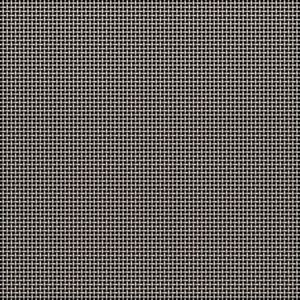
In demanding industrial environments where failure is not an option, material selection is paramount. Monel wire mesh stands as a superior engineered material, offering an exceptional combination of strength, durability, and unparalleled resistance to a vast array of corrosive agents. Manufactured from high-nickel Monel alloys, typically Monel 400 (UNS N04400) or Monel K500 (UNS N05500), this specialized wire cloth is engineered to perform reliably in the harshest conditions, from deep-sea operations to aggressive chemical processing. As a leading supplier in the international industrial marketplace, we provide premium-grade monel wire mesh tailored for critical filtration, sieving, shielding, and structural applications where other materials falter.
Monel wire mesh is a woven fabric produced from wires drawn from Monel alloy, a nickel-copper alloy renowned for its robustness. Unlike standard stainless steels, Monel maintains excellent mechanical properties and corrosion resistance across a wide temperature range, including sub-zero and elevated temperature environments. The mesh is available in various weaves—such as plain weave, twill weave, and Dutch weave—each offering distinct filtration characteristics and strength profiles. This versatility makes monel wire mesh an indispensable component in sectors that prioritize longevity, safety, and minimal maintenance. Our inventory includes rolls, cut-to-size pieces, and custom-fabricated components like filter baskets and screens, ensuring a perfect fit for your specific engineering requirements.
Our monel wire mesh is manufactured to exacting international standards, including ASTM, ASME, and ISO. The specifications below detail our standard range; custom weaves and alloys are available upon request.
| Parameter | Specification Details | Available Options / Notes |
|---|---|---|
| Primary Alloy | Monel 400 (UNS N04400) | Monel K500 (age-hardenable) for enhanced strength |
| Typical Composition | Ni 63-70%, Cu 28-34%, Fe 2.5% max, Mn 2.0% max | Trace elements as per ASTM B164 |
| Mesh Count | 2 Mesh to 400 Mesh | Standard range; finer/courser weaves possible |
| Wire Diameter | 0.025 mm to 3.0 mm | Varies with mesh count and weave type |
| Weave Types | Plain Weave, Twill Weave, Dutch Weave (Plain & Twilled) | Dutch weaves for fine micron filtration |
| Width of Mesh | Up to 2000 mm (78.7 inches) in roll form | Custom widths available for fabricated parts |
| Filtration Rating | From coarse straining to micron-level filtration | Dependent on mesh count and wire diameter |
| Form | Rolls, Sheets, Custom Cut Pieces, Fabricated Components | Ready for integration or further fabrication |
The unique properties of monel wire mesh make it the material of choice for mission-critical applications across diverse industries.
Selecting monel wire mesh provides distinct operational and economic benefits compared to standard stainless steel or plastic meshes.
Partnering with us for your monel wire mesh needs means accessing more than just a product; it means gaining a dedicated technical partner committed to your project's success.
A: Monel 400 is the standard, solid-solution alloy with excellent overall corrosion resistance. Monel K500 is a precipitation-hardenable version of Monel 400, with added aluminum and titanium. After heat treatment, Monel K500 mesh offers significantly higher strength and hardness while maintaining good corrosion resistance. It is chosen for applications requiring greater mechanical load, such as high-pressure filter elements or abrasive environments.
A: Yes, monel wire mesh can be successfully welded. Gas Tungsten Arc Welding (GTAW/TIG) and Gas Metal Arc Welding (GMAW/MIG) are commonly used. It is crucial to use matching Monel filler metal (e.g., ERNiCu-7) and to maintain a clean work area to prevent contamination. Proper technique is needed to manage the alloy's higher thermal expansion and lower thermal conductivity compared to steel. We often provide pre-fabricated welded components to ensure optimal quality.
A: Monel wire mesh excels in reducing environments, particularly against sulfuric and hydrofluoric acids, and in seawater where it resists chloride-induced pitting and crevice corrosion exceptionally well. The super austenitic stainless steels generally offer better performance in highly oxidizing conditions (e.g., hot nitric acid). The choice depends on the specific chemical composition, temperature, and concentration of the process media. Our technical team can assist with material selection for your unique environment.
A: We typically supply monel wire mesh in rolls (standard widths up to 2 meters) or flat-cut sheets. Custom-cut discs, rectangles, and fully fabricated parts are also standard offerings. Lead times vary: standard mesh specifications are often in stock or available within 2-4 weeks. Custom weaves, special wire diameters, or large fabricated items may require 6-8 weeks. We prioritize clear communication of timelines upon order confirmation.
A: While monel wire mesh performs well at elevated temperatures, its use above 540°C (1000°F) for prolonged periods requires careful consideration. Oxidation resistance decreases, and prolonged exposure can lead to embrittlement due to carbide precipitation. For continuous high-temperature service in oxidizing atmospheres, nickel-chromium alloys like Inconel may be more suitable. We can guide you on the appropriate material for your specific temperature and atmosphere conditions.
For a detailed quotation, technical datasheet, or to discuss your specific application for monel wire mesh, please contact our sales engineering team. We are here to provide solutions that enhance the reliability and efficiency of your operations.
PREV:4x4 wire mesh for concrete
NEXT:wire mesh size
Understanding 30 Mesh Stainless Steel Screen Applications and Material Properties

Understanding 304 Stainless Steel Mesh Screen for Industrial Applications

Understanding 20 mesh stainless steel screen Applications and Performance

Detailed Analysis of 2mm Stainless Steel Mesh Properties and Applications
Understanding the Versatility of 10 mesh stainless steel screen Applications
Ready to move your project from technical blueprint to precision reality? Whether you require large-scale CNC machining, complex structural assembly, or specialized fabrication with rare alloys like Titanium and Nickel, our engineering team is prepared to assist. At metalfabricationcn.com, we solve the manufacturing challenges that others find too large or too complex. Reach out today to discuss your specific requirements, and let us help you optimize your supply chain with ISO 9001 certified reliability.